
Jina Park
Editorial byline
Jina Park is an editorial byline for Science and Exploration, with a focus on Tech & Innovation, Applied Technology. Biographical credentials and external profiles are published only after verification.
Learn more about our editorial process and use of automation in our AI & Automation disclosure.
Coverage Areas
Latest Articles
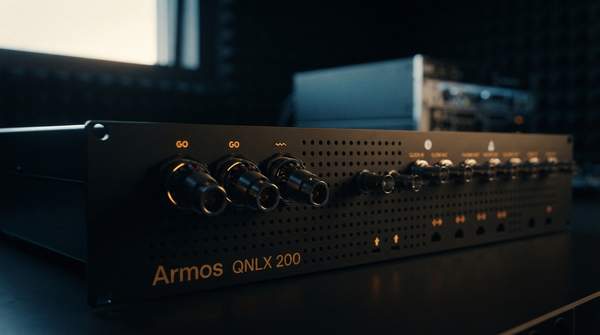
Quantum Entanglement Explained: How It Powers Quantum Key Distribution—and Why the NSA Still Urges Caution
Quantum Key Distribution (QKD) leverages quantum entanglement to create secure communication keys, promising eavesdropping detection. However, the NSA and research highlight that its security is highly implementation-dependent, not solely assured by physics, due to practical limitations and vulnerabilities.
Nov 1, 2026 · 6 min read

Four Kinds of Wearables, Four Different Jobs: How to Tell Them Apart
This guide classifies major wearable categories—smartwatches/rings, smart clothing, dedicated health monitors, and AR/VR headsets—comparing their functions, use cases, and form factors. It helps users choose the right device by distinguishing between consumer wellness and medical-grade applications.
Oct 29, 2026 · 5 min read

From Cancer Therapy to Colliders: What Particle Accelerators Actually Do
Particle accelerators propel charged particles to high speeds, serving critical roles in medicine, materials science, industry, and fundamental research. Beyond their public image as "atom smashers," these versatile machines are vital for cancer therapy, material analysis, and unlocking the universe's secrets.
Oct 24, 2026 · 6 min read

Shor's vs. Grover's: The Two Quantum Algorithms That Define the Field's Promise
Shor's and Grover's algorithms are foundational quantum computing proofs of advantage, demonstrating exponential speedup for factoring (threatening cryptography) and quadratic speedup for search, respectively. Their distinct capabilities highlight both the immense promise and inherent limits of quantum computation.
Oct 24, 2026 · 5 min read

The AI-Driven Workflow for Accelerating Sustainable Energy Materials Discovery
Artificial intelligence is revolutionizing sustainable energy materials discovery by compressing years of trial-and-error into weeks. AI-driven predictive and generative models intelligently navigate vast chemical spaces and guide experimentation within a closed-loop workflow, accelerating the development of crucial technologies like batteries and catalysts.
Oct 21, 2026 · 5 min read

Why Quantum Computers Simulate Molecules Better: VQE, QPE and the Limits of DFT and CCSD(T)
Quantum computers possess a structural advantage for molecular simulation by operating on the same quantum-mechanical rules that govern chemistry, outperforming classical methods like DFT and CCSD(T) for complex molecules. Algorithms such as VQE and future QPE promise higher accuracy and scalability for drug discovery and materials science where classical approaches falter.
Oct 19, 2026 · 6 min read

Lithium-ion vs. Flow Batteries: Which Grid-Scale Storage Technology Fits Which Job?
Lithium-ion batteries currently dominate grid-scale storage for short-duration, high-power needs due to their energy density and falling costs. Flow batteries are emerging as the leading candidate for long-duration storage, offering superior cycle life and scalability, though their costs are currently higher.
Oct 18, 2026 · 5 min read

How Superposition and Entanglement Give Qubits Their Exponential Edge Over Classical Bits
Quantum computers derive their power from superposition, allowing qubits to exist in multiple states simultaneously, and entanglement, which binds qubits into a single interdependent system. Together, these principles enable n qubits to occupy a superposition of 2^n states, providing an exponential computational advantage over classical bits.
Oct 17, 2026 · 4 min read

Where Quantum Computing Actually Helps in Drug Discovery—and How to Tell If Your Problem Qualifies
Quantum computing is a specialized tool for computationally intractable pre-clinical drug discovery problems, with near-term value found in hybrid quantum-classical approaches for molecular simulation and protein folding. Evaluating its applicability requires identifying classical bottlenecks, matching them with specific quantum algorithms, and assessing feasibility within current hardware constraints.
Oct 15, 2026 · 4 min read

From Variant Calling to Drug Discovery: How AI Is Reshaping Genomics Research
Artificial intelligence is fundamentally reshaping genomics research by enabling the analysis of massive sequencing data volumes, accelerating drug discovery, and advancing personalized medicine. Machine learning tools are essential for extracting meaningful insights from exabyte-scale datasets, transforming everything from variant calling to clinical decision-making.
Oct 15, 2026 · 5 min read

AFM vs. STED vs. Light-Sheet: Choosing the Right Microscope for Your Biological Experiment
The choice between Atomic Force Microscopy (AFM), STED, and light-sheet microscopy hinges on whether your experiment requires measuring physical surfaces and mechanics or visualizing fluorescently labeled molecules. Each technique presents unique trade-offs in resolution, sample preparation, and live-cell suitability, guiding the selection based on specific biological questions.
Oct 14, 2026 · 5 min read

A Systematic Framework for Evaluating AI Tools in Education
Educators need a systematic framework to evaluate AI tools, ensuring they align with pedagogical goals, uphold ethical standards, and preserve educator judgment. This guide offers a multi-dimensional checklist to make informed, responsible decisions on AI adoption in education.
Oct 12, 2026 · 5 min read
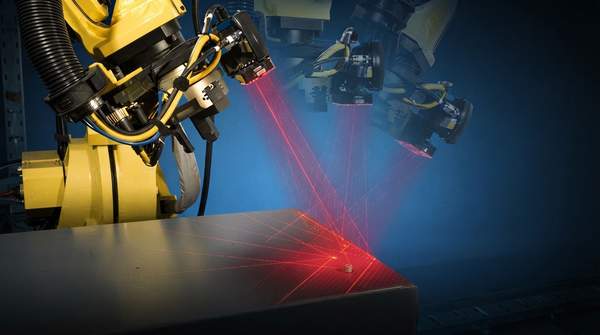
Direct vs. Indirect Time-of-Flight: Choosing the Right 3D Sensor
Time-of-Flight (ToF) 3D sensing technologies, Direct (dToF) and Indirect (iToF), differ fundamentally in how they measure light travel time. dToF uses precise pulse timing for long range and outdoor robustness, while iToF employs phase shift for high resolution in shorter-range applications.
Oct 9, 2026 · 5 min read
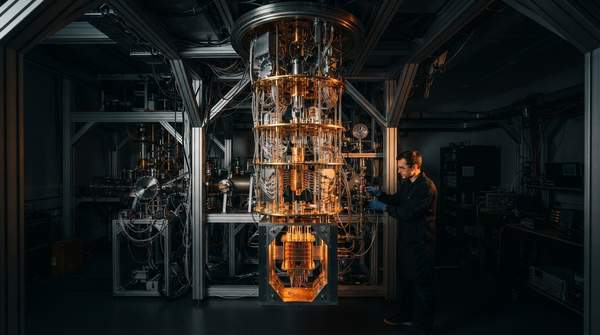
How Dilution Refrigerators Create the Deep Freeze for Quantum Computers
Dilution refrigerators are complex, multi-stage systems that leverage helium isotopes to achieve the ultra-low temperatures required for superconducting quantum computers to operate. Overcoming significant engineering challenges in heat management, vibration isolation, and scalable testing is key to advancing this technology.
Oct 6, 2026 · 5 min read

A Timeline of Early Human Ingenuity: How Stone Tools Trace Our Cognitive Evolution
Stone tools provide a tangible record of early human evolution, tracing cognitive development from simple choppers to complex, specialized implements over millions of years. The progression of toolmaking technologies directly reflects advancements in problem-solving, planning, and cultural transmission among our ancestors.
Oct 6, 2026 · 5 min read

Quantum Annealing vs. Gate-Based Computing: Two Distinct Paths to Quantum Power
Quantum computing is not monolithic, featuring two main approaches: specialized quantum annealing for optimization and universal gate-based computing for general algorithms. Understanding their distinct operational principles, problem-solving niches, and hardware maturity is key to choosing the right quantum technology.
Oct 3, 2026 · 5 min read

Insilico Medicine Unveils AI Toolkit for Aging Research
An AI-designed drug, rentosertib, has already demonstrated its capability to reverse predicted biological age by up to six years in a specific aging clock during a Phase 2a trial.
Sep 18, 2026 · 4 min read

Scientists Expand Genetic Alphabet From 4 to 8 Letters
E. coli RNA polymerase, the core enzyme of bacterial gene expression, accurately transcribes a synthetic eight-letter DNA alphabet, effectively doubling life's fundamental information capacity, accord
Sep 5, 2026 · 3 min read

Biochar Market Surges: Agtech's Climate Resilience Driver
The global biochar market, a key player in sustainable agriculture, is projected to surge from USD 995.
Sep 4, 2026 · 3 min read

G20 Summit Adopts US-Backed 'Lighter Touch' AI Guidelines
Top US tech bosses, including Nvidia chief Jensen Huang and OpenAI's Sam Altman, directly urged G20 ministers to build AI data centres, just before the group unanimously adopted guidelines for 'lighte
Sep 3, 2026 · 4 min read