
Climate Change
29 articles
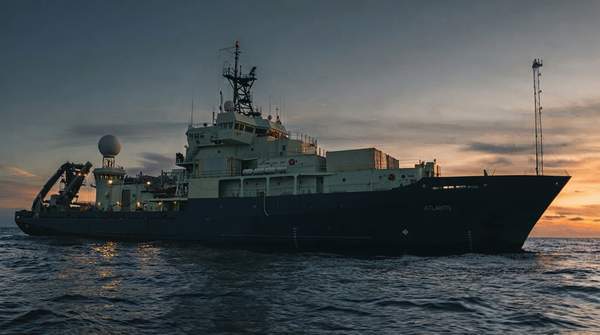
How the Atlantic's Overturning Circulation Works — and What Its Weakening Means for the Planet
The Atlantic Meridional Overturning Circulation (AMOC) is a vital ocean current system that transports heat globally. Evidence suggests it is weakening, potentially leading to significant regional climate shifts and global impacts.

Global warming fuels record July temperatures and extreme weather
In 2022 alone, extreme heat claimed over 60,000 lives across the WHO European Region .

Anthropocene's Earth Impact Endures Despite Epoch Rejection
In a binding vote, 88% of the Anthropocene Working Group's experts favored formally recognizing a new human-defined geological epoch.

Private Satellites' AI Powers New Earth Observation Climate Insights
An ambitious initiative in Asia is building one of the world's most high-resolution remote sensing ecosystems, promising to deliver climate insights with exceptional detail, according to Intelligent L

Arctic warming sprouts knee-high jungles, threatening ancient ecosystems.
In 2025, sub-Arctic Fennoscandia endured a record three-week heatwave, with temperatures near and within the Arctic Circle soaring past 30°C, a stark warning from the World Meteorological Organization

Global warming: UN 1.5C climate target now unattainable
The Earth is now about 1.44°C warmer than it was in the pre-industrial era (1850-1900), according to the UN.

What is Permafrost Thaw in Arctic Riverbeds and its Climate Implications?
More than one-third of the Arctic-boreal region, a vast expanse once revered as a critical carbon sink, has now transitioned into a net source of carbon, actively pumping greenhouse gases into the atm

Environmental amnesia is erasing our connection to nature, threatening conservation efforts.
In Abu Dhabi, the International Union for Conservation of Nature (IUCN) congress is set to vote on a proposal to ban genetically modified wildlife, a decision that could shape the future of biodiversi

Eocene Forests Faced Warming Like Ours, Offering Climate Change Lessons
In Wyoming's Bighorn Basin, fossil records reveal that during an ancient global warming event 56 million years ago, forests lost a staggering 60% of their canopy, according to The Guardian .

What is Ocean Acidification and Why Does It Threaten Marine Life?
The ocean's acidity has surged by 25-30% since the pre-industrial era, a rate faster than any known change in ocean chemistry in the last 50 to 60 million years.

Subglacial Lakes and Aquifers Now Serve as Climate Observatories
Beneath two miles of Antarctic ice, a recently sampled subglacial lake, isolated for millions of years, revealed a thriving, ancient ecosystem.

Sustainable Aviation Fuel: Investment & Transition Challenges
By 2026, global Sustainable Aviation Fuel (SAF) production is projected to reach 2.

Estonia Tops Environmental Performance Index Amidst Global Sustainability Setbacks
Out of 177 countries assessed for environmental performance, the small Baltic nation of Estonia has emerged as the global leader, far surpassing economic giants and even other developed nations.

Europe's Rapid Warming Fuels Accelerating Climate Change Impacts on Societies
Western Europe experienced its hottest June on record in 2026.

Black Sea Pollution Fuels Alarming Environmental Changes
In spring and summer 2026, the Black Sea and its surrounding waterways transformed into a milky blue spectacle, a vibrant hue visible even from space.

Lake Naivasha's rising waters flood homes, displace thousands
Dickson Ngome's farm, leased in 2008, lay over 2 kilometers from Lake Naivasha's shore.

Scientists Discover Super Reefs Thriving Amidst Global Coral Bleaching
More than 84% of the world’s reefs have been hit by temperatures hot enough to cause bleaching, according to Nature .

One Warming Atmosphere, Two Water Catastrophes: Why Climate Change Deepens Droughts and Worsens Floods
Climate change paradoxically intensifies both droughts and floods by altering the water cycle. Rising global temperatures cause warmer air to hold more moisture, leading to heavier rains, while simultaneously increasing evaporation from land, resulting in more severe dry spells.

Global Environmental Stewardship Project for 2026
Global temperatures surged past 1.

Tyndall Glacier's retreat reveals ancient marine life on exposed bedrock
In just five months since November 2022, Tyndall Glacier in Patagonia lost 2.

Biscayne Bay Ecosystems Face Intensifying Threats Despite Seagrass Recovery
In a bay increasingly defined by rising temperatures and acidity, Biscayne Bay's overall condition surprisingly improved from "poor" to "fair" in its 2026 Report Card, according to CBS News , even as

Koalas Crashed Once Before: Genomic Study Dates a 100,000-Year-Old Population Collapse
A genomic study reveals koalas suffered a severe population collapse around 100,000 years ago, driven by climate upheaval before humans arrived in Australia. Modern koalas descend from a single surviving population, and understanding this ancient history is key to addressing current human-caused threats.

Wildfire smoke significantly boosts U.S. ground-level ozone
Ground-level ozone pollution, once steadily declining, has reversed course since 2015, now rising by 0.

New Satellite Data Tracks 2026 El Niño Precursor Events
By mid-May 2026, satellite data revealed seas around Peru surged more than 5.

UN report: Climate change accelerates, 2024 breaches key threshold
Global average temperatures in 2024 reached 1.55°C above pre-industrial levels, temporarily breaching a critical climate threshold.

NASA Releases Draft Request for Landsat 10 Spacecraft
After a two-decade hiatus, NASA has officially opened the bidding process for its next dedicated Earth-observing satellite, Landsat 10.

Wildfires and Political Shifts Shape America's Future
Between 1988 and 2022, nearly 700,000 square miles of the continental U.

Satellite megaconstellations fuel unregulated geoengineering, scientists warn
Each day, a minimum of 500 kilograms (1,100 pounds) of incinerated satellite trash plunges into Earth's atmosphere—a phenomenon scientists gravely describe as an unregulated geoengineering experiment.

EPA Permits Deep-Ocean Carbon Sequestration Research for Carboniferous
On March 27, 2026, the U.