Science and Exploration

What is the role of microbiomes in ecosystem health?

The unseen world beneath our feet holds profound influence over our planet's vital processes.

EO
Dr. Elena Ortiz

June 29, 2026 · 5 min read

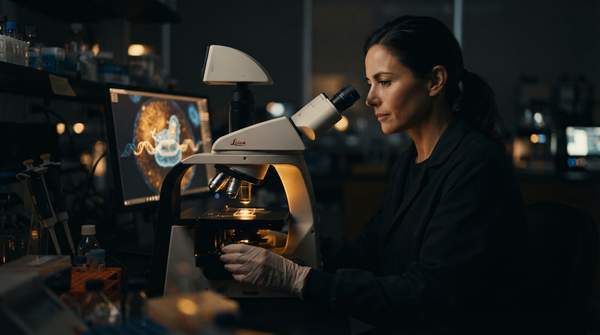
Microscopic view of diverse microbial communities in soil, showcasing the intricate networks essential for ecosystem health and function.

The unseen world beneath our feet holds profound influence over our planet's vital processes. In lake sediments, for instance, the intricate dance of microbial diversity and specific gene activity, particularly those encoding oxidase enzymes, can explain as much variation in carbon dioxide production as more visible factors like pH levels and the quantity or quality of organic matter, according to ecosystem microbiome science - pmc - nih. demonstrating the critical, yet often overlooked, role of microbiomes in ecosystem health and stability.

Yet, a troubling disconnect persists: microbiomes are fundamental to the stability and function of every ecosystem, but our current research largely fails to capture their complex, interconnected dynamics at an ecosystem level. This fragmented understanding creates significant blind spots.

Without a more integrated approach to studying these vital microbial communities, we risk severely underestimating their role in ecosystem resilience and remaining unprepared for the unpredictable consequences of environmental change.

The silent, bustling communities of microorganisms profoundly shape the planet's fundamental processes, often unnoticed by the casual observer. In the murky depths of lake sediments, for example, the sheer variety of microbial species, alongside the activity of oxidase-encoding genes, drives carbon dioxide production to an extent comparable to the influence of macroscopic factors like pH and the amount and type of organic matter present, according to ecosystem microbiome science - pmc - nih. The unseen microbial world acts as a foundational driver of critical ecosystem functions, often on par with more obvious environmental indicators. The unseen microbial world illustrates an invisible lever for ecosystem health and climate regulation, one that policymakers and environmental managers are largely overlooking in their current strategies.

More Than Just Microbes: An Ecosystem's Hidden Engine

Microbiomes extend beyond simple collections of microbes; they represent complex, interconnected communities essential for ecosystem function and stability. These intricate networks perform vital roles, from nutrient cycling and energy transfer to decomposition and detoxification, underpinning the viability of larger life forms and entire food webs. However, the influence of these microbial communities is not static or universally dominant. Present-day environmental conditions and even historical events, such as past differences in how microbes dispersed across landscapes, can exert a greater influence over ecosystem function than the sheer diversity or abundance of microbial taxa and genes, according to microbiome functioning depends on individual and interactive ... - pmc. indicating that a microbiome's impact is not solely about its internal composition but is deeply intertwined with its environment and historical context, making it a dynamic, context-dependent engine of ecosystem health.

The Limits of Our Lens: Why We Don't See the Whole Picture

Despite their recognized importance in global biogeochemical cycles and ecosystem resilience, our current approaches to studying microbiomes remain fragmented, hindering a comprehensive, ecosystem-level understanding. Most microbiome studies have historically focused on individual hosts, like specific plants or animals, or particular environmental compartments, such as soil or water samples, which limits a full grasp of microbiome dynamics across an entire ecosystem, explains ecosystem microbiome science - pmc - nih. This narrow lens means researchers often miss the crucial interconnectedness of microbial communities and their vast, intricate interactions within broader ecological systems. To overcome this critical limitation, the theory and tools of ecosystem ecology should be applied to investigate the connectivity of microorganisms and their interactions throughout entire ecosystems. Such a shift towards a broader ecological framework is essential to move beyond siloed insights and unlock a more complete picture of microbial influence.

When the Unseen World Falters: Cascading Consequences

The vulnerability of microbiomes to various stressors presents a critical threat to ecosystem stability and, by extension, to human well-being. Natural disturbances, like volcanic eruptions or severe droughts, and human-caused impacts, such as pollution or habitat destruction, can trigger cascading effects across the microbiome, leading to unpredictable outcomes, according to ecosystem microbiome science - pmc - nih. These disruptions are not merely theoretical; they can manifest as severe ecological shifts that ripple through entire food webs. For example, such impacts can lead to outbreaks of emerging infectious diseases, threatening both wildlife and human populations, or alter crucial mutualistic interactions within ecosystems, thereby disrupting nutrient flow and productivity, as highlighted by ecosystem microbiome science - pubmed. Environmental disturbances can initiate unpredictable and severe disruptions within microbiomes, thereby threatening ecosystem stability and potentially leading to new public health crises that we are ill-equipped to face.

Investing in the Invisible: The Future of Microbiome Research

What are the key functions of microbiomes in ecosystems?

Microbiomes perform a wide array of vital functions within ecosystems, far beyond just carbon cycling. They drive nutrient cycling, converting elements like nitrogen and phosphorus into usable forms for plants and other organisms. Additionally, microbiomes facilitate the decomposition of organic matter, detoxify pollutants, and even protect hosts from pathogens, all essential for maintaining ecological balance.

How do microbiomes contribute to ecosystem resilience?

Microbiomes enhance ecosystem resilience by providing functional redundancy and adaptability to environmental changes. A diverse microbial community can maintain essential functions even when some members are stressed, acting as a buffer against disturbance. Recognition of this role led to the establishment of programs like the EDGE awards, first made in FY2017, which support research into these complex interactions.

Our Interconnected Future: Protecting the Unseen

The scientific community's growing understanding confirms that microbiomes are not merely passengers but active, foundational drivers of ecosystem health and stability. Our current fragmented research, however, creates blind spots that prevent us from fully grasping their complex, interconnected dynamics across entire environments. This limited understanding means environmental stressors are already triggering unpredictable, cascading ecological collapses that we are ill-equipped to predict or prevent, leaving ecosystems and human societies vulnerable.

Policymakers and environmental managers overlook a critical, invisible lever for ecosystem health and climate regulation by not prioritizing microbiome research on par with traditional environmental monitoring. Consistent warnings from scientific sources about unpredictable cascading effects, including outbreaks of emerging infectious diseases, show that our fragmented approach to microbiome studies actively creates blind spots that could lead to widespread ecological and public health crises. Continued investment in programs like the Plant Biotic Interactions (PBI) program, which also made its first awards in FY2017, is essential to foster the integrated research needed to protect these critical, yet vulnerable, ecosystem components.

To safeguard our planet's future, a concerted shift towards ecosystem-level microbiome research is imperative. By 2026, scientific bodies and funding agencies must significantly expand interdisciplinary collaboration and funding for integrated microbiome studies to avert potential ecological and public health crises that loom without a deeper, more comprehensive understanding of these unseen worlds. The stability of our natural systems depends on this crucial shift in scientific focus.