
Dr. Alistair Finch
Editorial byline
Dr. Alistair Finch is an editorial byline for Science and Exploration, with a focus on Deep Space Missions (JWST, Roman), International Space Agencies (NASA, ESA, CNSA), Black Hole Physics. Biographical credentials and external profiles are published only after verification.
Learn more about our editorial process and use of automation in our AI & Automation disclosure.
Coverage Areas
Latest Articles
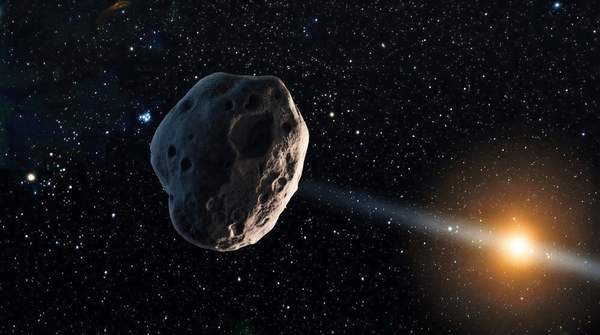
How Earth Captures Mini-Moons—And Why It Always Lets Them Go
Earth occasionally captures small asteroids as temporary "mini-moons," which orbit unstably for months before escaping back into solar orbit due to complex gravitational forces. These transient visitors are scientifically valuable as accessible targets for sample-return missions and for understanding near-Earth objects.
Nov 7, 2026 · 5 min read
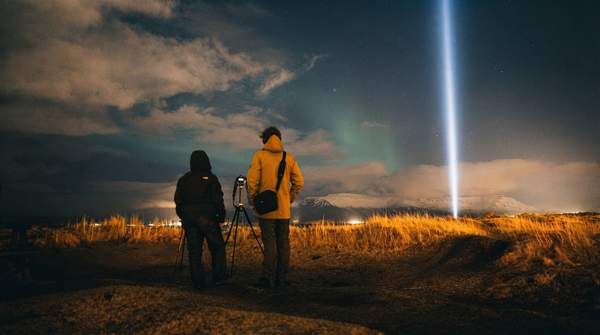
Reflect Orbital's "Sunlight at Night" Test Was Ground Spotlights, Not a Space Mirror
Reflect Orbital's recent "sunlight at night" demonstration utilized powerful ground-based spotlights to simulate future space-based illumination, clarifying it was not a test of orbiting mirror technology. The company plans to launch mirror satellites for applications like search and rescue and solar energy, with its first in-space test upcoming.
Nov 6, 2026 · 4 min read

Why Star Lite Tech Co. Clicks With Remote Workers: 5 Reasons That Matter
The professional landscape has fundamentally shifted, with remote and hybrid models becoming a permanent fixture for millions. This transition has placed a new emphasis on creating home workspaces that are not just funct…
Sponsored by Star Lite Tech Co. · Nov 4, 2026 · 5 min read
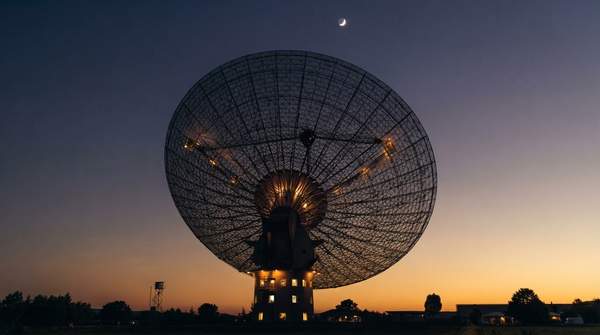
How the Big Bang's Leftover Light Reveals What the Universe Is Made Of
The Cosmic Microwave Background (CMB) is faint microwave radiation filling the sky, the richest source of data about the universe's earliest observable moments. By measuring its temperature variations, scientists have determined the universe's composition, including dark energy, dark matter, and ordinary matter.
Oct 31, 2026 · 6 min read
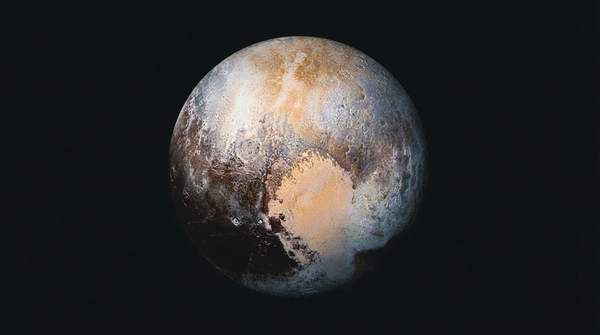
Dwarf Planets Explained: The Three IAU Rules and Why 2026 ED138 May Be the Sixth
Learn the International Astronomical Union's three rules for classifying dwarf planets and explore why the newly discovered object 2026 ED138 is a strong candidate to become the solar system's sixth.
Oct 30, 2026 · 4 min read
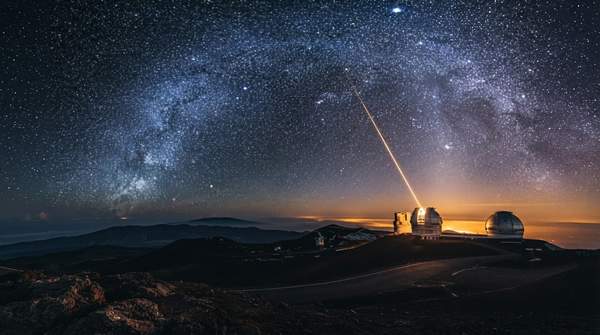
Oxygen Is the Exoplanet Biosignature Scientists Want Most—and the Hardest to Trust
Oxygen is a prime exoplanet biosignature candidate due to its link with photosynthesis on Earth, but abiotic processes can mimic its presence. Distinguishing life from non-life requires comprehensive analysis of the entire planetary environment, not just a single gas detection.
Oct 28, 2026 · 5 min read
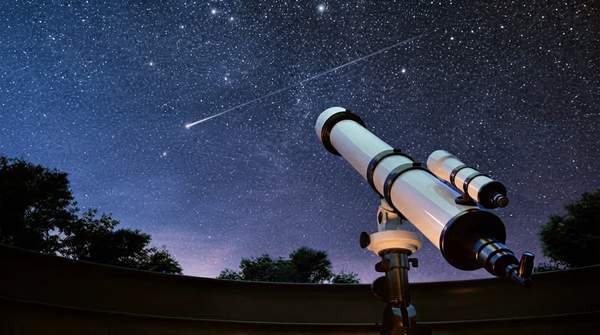
Four Ways Astronomers See the Invisible: How Black Holes Are Actually Studied
Astronomers study black holes indirectly using four principal techniques: tracking stellar motion, detecting X-rays from accretion disks, radio interferometry imaging, and listening for gravitational waves. Each method reveals different physical phenomena and properties, making a combined approach essential for understanding these elusive objects.
Oct 28, 2026 · 6 min read
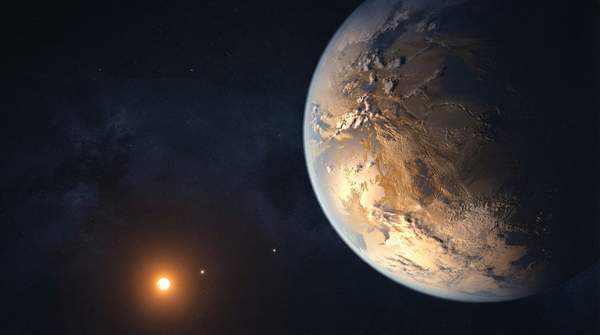
Beyond the Goldilocks Zone: Why a Planet's Location Is Only the First Test for Habitability
The 'habitable zone' is only the first test for exoplanet habitability; factors like stellar stability, atmospheric protection, and bioessential elements are critical. Accurately identifying biosignatures, distinguishing them from abiotic processes, remains the ultimate challenge in finding life beyond Earth.
Oct 26, 2026 · 5 min read
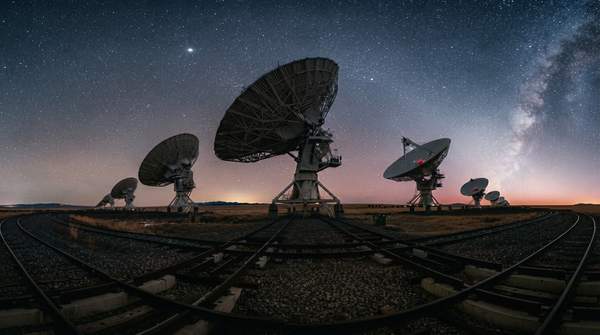
Four Ways Scientists See Inside Rocky Exoplanets—and Why None of Them Sees Clearly
Scientists infer the interiors of rocky exoplanets using limited data like mass and radius, facing a core challenge of parameter degeneracy where different compositions yield identical measurements. This article compares mass-radius relationships, Bayesian inference, and machine learning models, explaining why none provide a definitive view.
Oct 25, 2026 · 6 min read
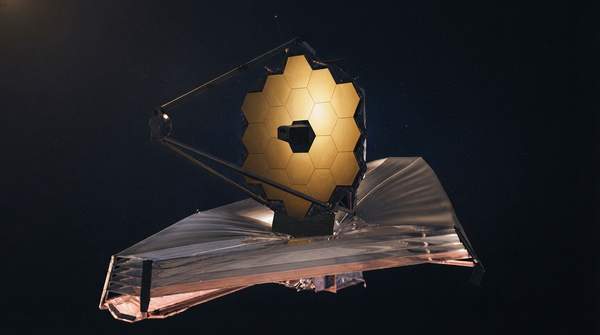
How the James Webb Space Telescope Photographs Exoplanets: Coronagraphs, Spectra and the Fight Against Starlight
The James Webb Space Telescope uses coronagraphs to block host star glare and spectrographs to analyze planetary light, enabling direct imaging and atmospheric composition studies of exoplanets. This technique is particularly effective for young, wide-separation gas giants.
Oct 25, 2026 · 5 min read
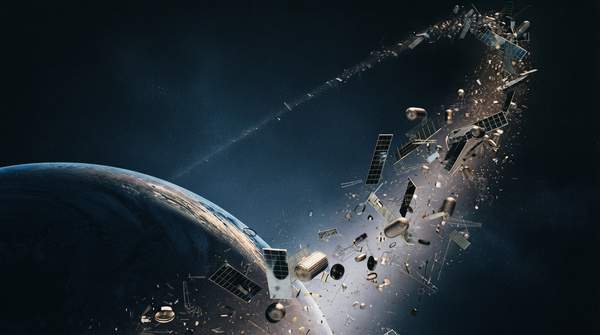
Four Ways to Fight Space Debris: How Active Removal, Disposal, Design, and Collision Avoidance Compare
Space debris management relies on four strategies: design for mitigation, post-mission disposal, collision avoidance, and active debris removal. While the first three are preventive and established, active removal is an emerging necessity as debris growth outpaces mitigation efforts.
Oct 23, 2026 · 6 min read

Property Management IT Support Through the Eyes of ProtectMyIT Customers
For commercial real estate (CRE) and SMB finance leaders in Northern New Jersey, navigating the complexities of IT management and cybersecurity is a constant challenge. The threat of digital disruption is not just an inc…
Sponsored by ProtectMyIT · Oct 23, 2026 · 6 min read
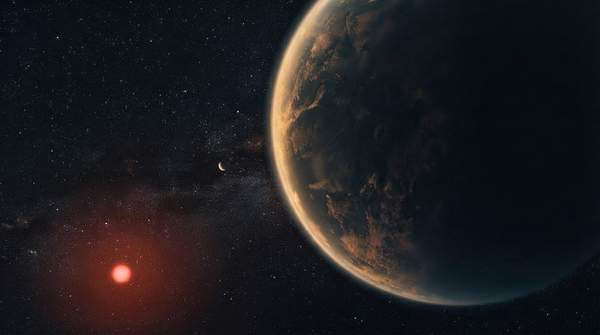
From Super-Earths to Classification Codes: How Scientists Formally Sort Exoplanets
Common exoplanet labels are descriptive but imprecise; a new formal classification system by Plávalová & Rosaev uses four measurable parameters—mass, temperature, eccentricity, and density—to generate a compact code for systematic scientific analysis and habitability assessment.
Oct 18, 2026 · 6 min read
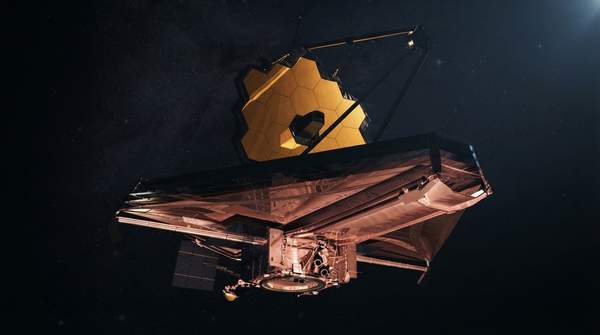
How JWST Reads Exoplanet Air: Transmission and Emission Spectroscopy Compared
The James Webb Space Telescope employs transmission and emission spectroscopy to analyze exoplanet atmospheres, revealing their composition, temperature, and weather patterns. These complementary techniques are crucial for understanding alien worlds and advancing the search for life beyond Earth.
Oct 18, 2026 · 5 min read
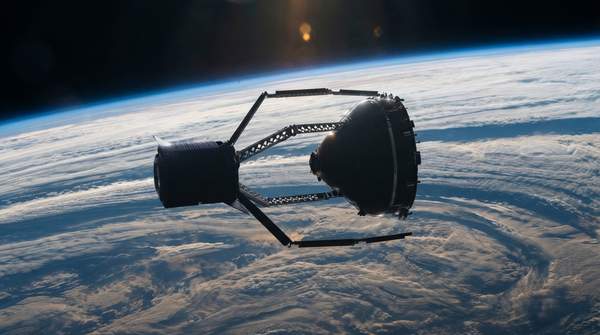
Three Ways to Clean Orbit: How Drag Sails, Lasers, and Robotic Capture Actually Differ
Space debris mitigation employs three distinct engineering philosophies: passive drag augmentation, contactless laser nudging, and active physical capture. The choice and development of these technologies are increasingly driven by the economic imperative to remove multiple objects per mission.
Oct 17, 2026 · 5 min read
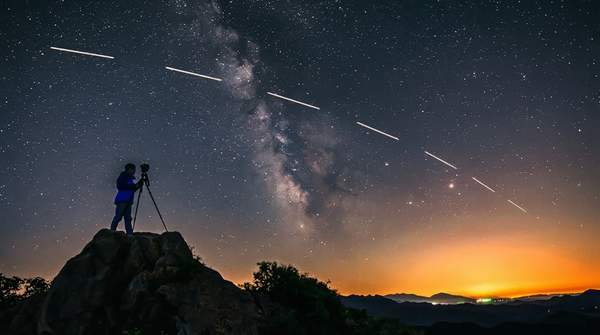
Three Ways Satellite Megaconstellations Disrupt Astronomy — and the Fixes Being Built for Each One
Satellite megaconstellations interfere with astronomy through optical, radio, and infrared channels, posing a growing challenge to observations. A multi-faceted response is underway, involving satellite engineering, observatory operations, and international policy coordination to mitigate these disruptions.
Oct 14, 2026 · 7 min read

Why Simon Schell Clicks With German Shop Owners: 5 Reasons That Matter
For many German shop owners, establishing a professional online presence feels like a gamble. High upfront costs, complex technical demands, and uncertain results can make building a website a daunting task. Simon Schell…
Sponsored by Simon Schell · Oct 13, 2026 · 7 min read
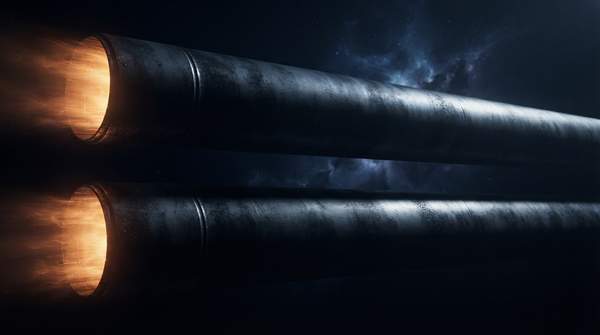
Chemical vs. Electric Propulsion: Matching the Engine to the Mission
Spacecraft propulsion systems, chemical and electric, offer a fundamental trade-off between high thrust for rapid maneuvers and superior fuel efficiency for long journeys. Understanding this distinction is crucial for selecting the right engine to match specific mission objectives and phases.
Oct 9, 2026 · 4 min read
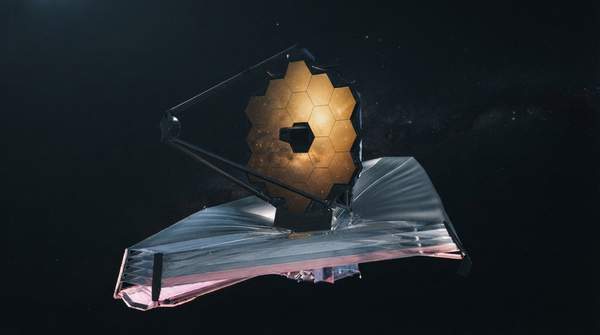
Webb Telescope Reveals Star Formation Stages in New ‘Cosmic Cauldron’ Image
The James Webb Space Telescope has captured a detailed image of the NGC 7129 stellar nursery, revealing multiple stages of star formation simultaneously. Webb's infrared vision pierces through dust to show protostars and young stars actively shaping their cosmic environment.
Oct 8, 2026 · 4 min read
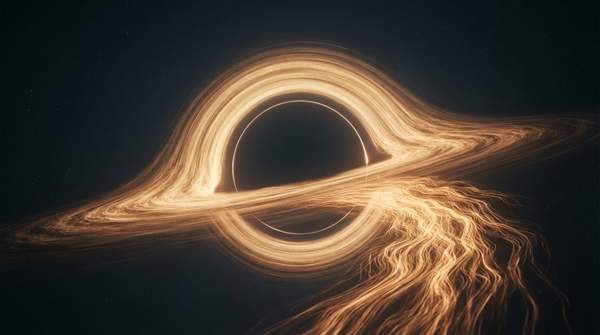
A Guide to the Four Types of Black Holes
Black holes are classified into four main types: stellar-mass, intermediate-mass, supermassive, and primordial, each distinguished by mass, origin, and observational status. This guide explores their unique characteristics and the ongoing scientific quest to understand these cosmic phenomena.
Oct 5, 2026 · 5 min read