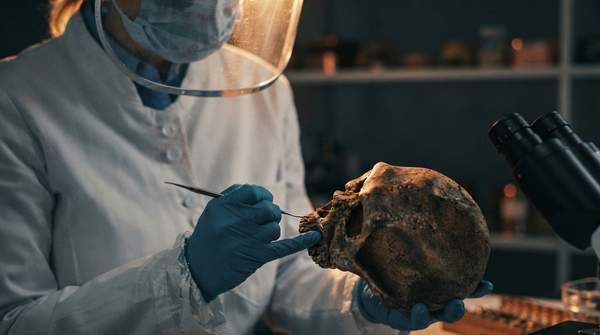
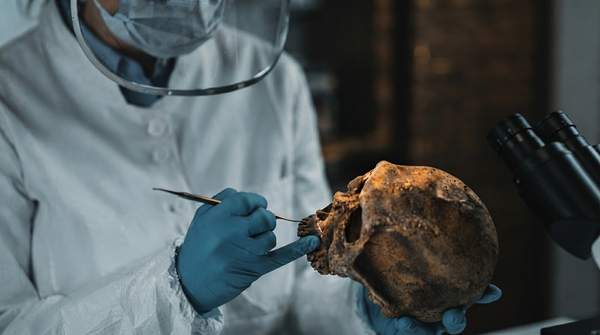
An ancient jawbone recovered from Peştera cu Oase, a Romanian cave, revealed a human individual whose genetic makeup indicated a Neanderthal ancestor as recent as four to six generations prior, offering a direct genetic snapshot of ancient human-Neanderthal interactions. This remarkable find provides a precise, intimate view into the interbreeding events that shaped early modern human populations. The genetic evidence from this single individual contradicts broad assumptions about the nature of these ancestral meetings.
Popular culture, however, frequently portrays widespread, continuous interspecies romance between Neanderthals and humans, often simplifying the complex genetic exchanges. Scientific evidence, in contrast, consistently points to specific, time-bound, and geographically varied interbreeding events, challenging these popular narratives. This tension between popular imagination and scientific data forms a crucial point of analysis.
Our understanding of ancient human-Neanderthal interactions should therefore shift from a broad 'love story' to a more nuanced appreciation of specific, impactful genetic exchanges that shaped modern human diversity, grounded in rigorous scientific evidence rather than romanticized interpretations.
The genetic footprint of Neanderthals remains consistently present in modern human populations across the globe, with all non-African individuals carrying approximately 1–4% Neanderthal DNA, according to interbreeding between archaic and modern humans. This figure is further refined by genomic analyses, which indicate the Neanderthal component typically represents only about 2% of non-African genomes on average, as detailed in pmc.ncbi.nlm.nih.gov. Such a widespread, yet specific, genetic legacy underscores a crucial and time-bound period of interaction that fundamentally shaped the diversity within modern human lineages, challenging any simplistic view of our ancestral past.
This enduring genetic inheritance from Neanderthals, far from being a uniform blend, points to a complex history of genetic exchange. The consistent presence of this DNA across vast geographical areas suggests early, impactful encounters that were significant enough to leave a lasting mark, yet not so pervasive as to fully integrate the two populations.
The Enduring Myth of Ancient Romance
Modern genetic analysis now pinpoints the main period of interbreeding between Neanderthals and modern humans. This genetic exchange began around 50,500 years ago and persisted for approximately 7,000 years, according to a new timeline for neanderthal interbreeding with modern humans. Further genomic studies corroborate this, indicating a primary timeframe for admixture between 50,000 and 60,000 years Before Present (BP), as reported by pmc.ncbi.nlm.nih.gov. Precise timelines, derived from the breakdown of Neanderthal segments in modern human genomes, offer a stark contrast to the generalized notions of ancient, continuous mixing often found in popular discourse.
Precise timelines and genetic signatures reveal a specific, limited window of interbreeding, rather than a continuous, widespread romantic mingling often depicted in popular culture. The scientific consensus emphasizes distinct periods of genetic exchange that were significant but not perpetual, demanding a re-evaluation of how these interactions are commonly perceived.
Beyond the Simple Narrative: Evidence of Specific Encounters
The jawbone from Peştera cu Oase provided compelling evidence of incredibly direct interbreeding, revealing an individual with a likely 6-9% Neanderthal genetic contribution from an ancestor as recent as four to six generations prior, as reported by here's what we know sex with neanderthals was like. This starkly contrasts with the 1-2% of Neanderthal genes typically found in modern Eurasian genomes today, according to a new timeline for neanderthal interbreeding with modern humans The Ust’-Ishim individual’s genome also exhibits similar levels of Neanderthal ancestry as modern Eurasians, consistent with an admixture episode occurring approximately 52,000–58,000 BP. The genetic snapshot from Oase indicates that while some interbreeding was very direct and recent, its overall contribution was quickly diluted, suggesting rarity rather than widespread, continuous interaction.
The Oase jawbone, with its remarkably recent Neanderthal ancestry, shatters the romanticized notion of widespread human-Neanderthal 'love stories,' revealing instead that our genetic inheritance comes from a few, highly impactful, and often fleeting encounters. While such profound individual interbreeding events clearly occurred, the overall low percentage of Neanderthal DNA in the broader modern Eurasian population suggests these were significant but not universally widespread or continuous interactions across the continent.
The Uneven Genetic Legacy: A Story of Regional Variation
Genetic analyses reveal a notable geographical disparity in Neanderthal ancestry, with East Asians carrying approximately 20% more Neanderthal genes than their European and West Asian counterparts, according to a new timeline for neanderthal interbreeding with modern humans This observation is supported by findings that Neanderthal ancestry is higher by about 12–20% in modern East Asian individuals compared to modern European individuals, as detailed in pmc.ncbi.nlm.nih.gov. Such distinct regional differences in Neanderthal ancestry underscore that interbreeding was a complex, multi-faceted phenomenon shaped by geography and distinct migratory patterns, rather than a uniform process across Eurasia.
The varying levels of Neanderthal DNA across different modern human populations, particularly the higher percentage in East Asians, indicates that interbreeding was not a single, uniform event, but a series of distinct, geographically and temporally specific interactions that shaped regional human evolution differently. This regional variation implies localized 'hotspots' of genetic exchange, where opportunities for interbreeding were more frequent or successful.
Reframing Our Ancestral Story
Understanding the precise timelines of early human-Neanderthal genetic exchange is essential for a complete ancestral narrative. Neanderthals from the Altai mountains, for instance, may have shared 1-7% of their genetics with the ancestors of modern humans who lived approximately 100,000 years ago, according to here's what we know sex with neanderthals was like. This earlier genetic sharing predates the main interbreeding period for modern humans, which started around 50,500 years ago, highlighting distinct, geographically and temporally separated encounters and challenging the idea of a singular admixture event.
Intricate details of ancient migrations and early genetic exchanges provide a richer, more accurate picture of how our species diversified and adapted across continents. The initial migration of modern humans from Africa into Eurasia was largely completed over 43,500 years ago, according to a new timeline for neanderthal interbreeding with modern humans This broad migratory context, combined with specific interbreeding events, reveals that human-Neanderthal genetic exchange was a series of distinct interactions, each contributing uniquely to our genetic tapestry.
Despite the popular narrative of ancient, continuous mixing, the genetic evidence suggests that the enduring Neanderthal legacy in our DNA is a testament to the power of rare, successful interspecies encounters rather than widespread integration, challenging our understanding of early human-Neanderthal relationships. This refined perspective allows geneticists and anthropologists in 2026 to construct a more accurate and nuanced understanding of human evolutionary history, moving beyond romanticized fictions to embrace the scientific precision of our deep past.