
Sofia Petrova
Editorial byline
Sofia Petrova is an editorial byline for Science and Exploration, with a focus on Data-driven storytelling, Geological sciences (plate tectonics, seismology), Climate data visualization. Biographical credentials and external profiles are published only after verification.
Learn more about our editorial process and use of automation in our AI & Automation disclosure.
Coverage Areas
Latest Articles

Beyond CRISPR-Cas9: How to Choose Between ZFNs, TALENs, Base Editors and Prime Editors
Choosing the right gene editing tool involves understanding the distinct mechanisms and applications of platforms like CRISPR-Cas9, ZFNs, TALENs, base editors, and prime editors. This guide helps researchers select the optimal technology based on desired genetic outcomes, specificity needs, and design complexity.
Nov 9, 2026 · 6 min read
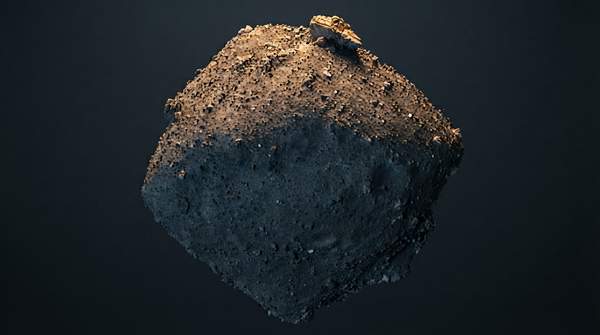
All Five Genetic Letters of Life Confirmed in Pristine Asteroid Ryugu Samples
Researchers have detected all five canonical nucleobases—the building blocks of DNA and RNA—in pristine samples returned from asteroid Ryugu, providing the strongest evidence yet that life's fundamental genetic ingredients were present in space before life emerged on Earth.
Nov 9, 2026 · 4 min read

AI in Science: A Five-Principle Self-Assessment Framework for Ethical Research
This article introduces a five-principle self-assessment framework to help researchers navigate the ethical risks of AI in scientific research. The framework addresses human oversight, transparency, fairness, privacy, and continuous risk management, offering diagnostic questions to identify and mitigate ethical exposure.
Nov 6, 2026 · 6 min read

Why Low-Cost Air Quality Sensors Drift, Skew and Sometimes Lie — and What to Do About It
Low-cost air quality sensors offer dense atmospheric monitoring but are prone to drift, environmental interference, and deployment mismatches. Understanding these issues and applying co-location studies and data correction techniques are crucial for reliable measurements.
Nov 5, 2026 · 4 min read

Shotgun Metagenomics vs. Metatranscriptomics: Choosing Between a Microbiome's Potential and Its Activity
Shotgun metagenomics sequences DNA to reveal a microbial community's genetic potential and composition, acting as a 'static map'. Metatranscriptomics sequences RNA to show real-time gene expression and activity, providing a 'dynamic image'.
Oct 31, 2026 · 4 min read

From Sharp Flakes to Symmetrical Handaxes: How Stone Tools Rewired Hominin Minds and Meals
The evolution of stone tool industries, from simple Oldowan flakes to symmetrical Acheulean handaxes, reflects and drove significant advancements in hominin cognitive abilities and dietary adaptations. This progression created a feedback loop between technology, diet, and brain growth over millions of years.
Oct 31, 2026 · 6 min read

Choosing the Right Wildlife Monitoring Technology: A Field Guide to Bio-loggers, Telemetry, Camera Traps, Acoustics and eDNA
Selecting the right wildlife monitoring technology hinges on data retrieval feasibility and animal welfare, balancing continuous individual data from tags against population-level insights from passive methods like camera traps, acoustics, and eDNA.
Oct 30, 2026 · 5 min read
How CRISPR Gene Editing Became a Disease Detector: The Collateral Cleavage Principle Behind SHERLOCK and DETECTR
CRISPR enzymes, originally for gene editing, have been repurposed into powerful diagnostic tools through the collateral cleavage mechanism. This principle enables highly sensitive and specific detection of pathogens and disease biomarkers, forming the basis of platforms like SHERLOCK and DETECTR.
Oct 26, 2026 · 5 min read
Matching the Monitor to the Question: Where Ground Stations, Mobile Platforms, and Satellites Each Win
Choosing the right air quality monitoring technology depends on the specific goal, whether it's precise regulatory compliance with fixed stations, dynamic spatial assessment with mobile platforms, or broad regional overview from satellites. Integrating these approaches provides a comprehensive understanding of air quality.
Oct 24, 2026 · 5 min read

Who Is There, What Can They Do, or What Are They Doing? Choosing a Human Microbiome Analysis Method
Choosing the right human microbiome analysis method—16S rRNA sequencing, shotgun metagenomics, or metatranscriptomics—is crucial for obtaining meaningful biological insights, as each method answers a distinct question about community composition, potential, or activity.
Oct 21, 2026 · 5 min read
Beyond the Cut: How CRISPR Regulates Genes, Detects Viruses, and Rewrites the Epigenome
CRISPR technology extends far beyond gene editing, enabling precise control over gene regulation, rapid nucleic acid diagnostics, and epigenome modification without altering DNA sequences. By repurposing Cas enzymes, researchers can silence or boost genes, detect pathogens, and study epigenetic effects with remarkable specificity.
Oct 20, 2026 · 6 min read
Choosing Your Method: A Researcher's Guide to 16S rRNA vs. Metagenomic Sequencing
This guide helps researchers choose between 16S rRNA gene sequencing and metagenomic sequencing for microbiome studies. It details their differences in taxonomic resolution, functional insight, cost, and complexity to inform method selection.
Oct 13, 2026 · 3 min read
Genetic Secrets of 194-Year-Old Tortoise Jonathan Reveal Clues to Longevity
A genetic analysis of Jonathan, the world's oldest land animal, reveals a unique biological strategy behind his extreme longevity. Researchers found specialized gene variants for cellular repair and stable epigenetic control preserving youthful gene expression, offering clues to aging.
Oct 12, 2026 · 4 min read

Ancient Genetic Shake-Up Offers New Clue to Octopus Intelligence
New research proposes that a major, ancient reorganization of the octopus genome, driven by 'jumping genes' and changes in DNA's 3D architecture, is a key factor in the evolution of their extraordinary intelligence. This genomic shake-up may offer a shared evolutionary mechanism with humans for developing complex cognition.
Oct 11, 2026 · 4 min read
How Cross-Dating Unlocks the Secrets of Tree Rings
Dendrochronology uses cross-dating, the matching of unique tree-ring patterns across multiple trees, to assign exact calendar years to annual growth layers. This precise dating unlocks detailed insights into past climates, archaeological sites, and ecological events.
Oct 10, 2026 · 4 min read
Sizing Up Alien Worlds: A Guide to Three Key Exoplanet Characterization Methods
Astronomers use three key methods—direct imaging, transmission spectroscopy, and radial velocity—to characterize exoplanets, revealing details about their atmospheres, mass, and density. Combining these techniques is essential for a comprehensive understanding of distant worlds.
Oct 9, 2026 · 4 min read

De-Extinction: A Framework for Evaluating the Science, Ethics, and Ecology
De-extinction, the revival of extinct species, presents complex scientific, ethical, and ecological challenges. A comprehensive evaluation framework is crucial for informed decision-making on these proposals.
Oct 7, 2026 · 5 min read
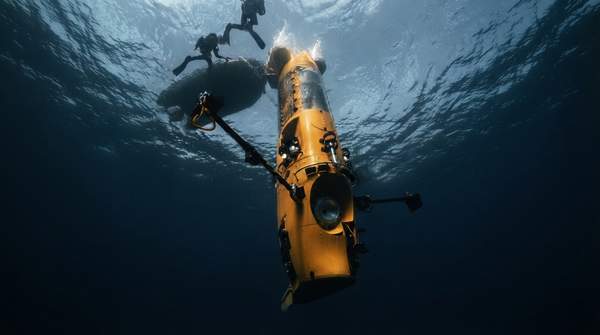
Comparing Key Technologies for Hydrothermal Vent Research
This article compares Remotely Operated Vehicles (ROVs), Human-Occupied Submersibles, Autonomous Underwater Vehicles (AUVs), and Submersible Incubation Devices (Vent-SIDs) for deep-sea hydrothermal vent research. It details their distinct capabilities to aid scientists in selecting the most appropriate tools for their specific research objectives.
Sep 30, 2026 · 5 min read
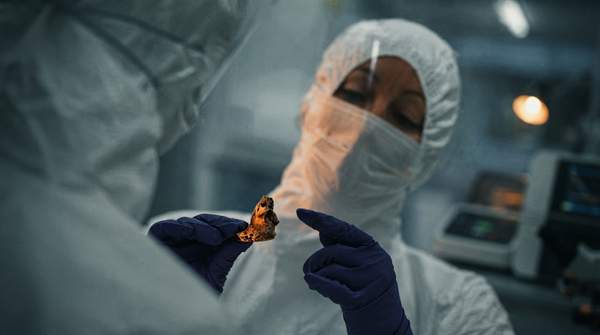
Navigating Ancient DNA Analysis: Methods, Contamination Control, and Ethical Engagement
Ancient DNA analysis offers profound insights into history but faces challenges from sample degradation and contamination, requiring specialized methods and rigorous ethical frameworks. Responsible research integrates advanced techniques with community engagement and respect for human remains.
Sep 29, 2026 · 6 min read

Dating Paleolithic Cave Art: The Chronometric Toolkit
A red ochre block, discovered in South Africa's Blombos Cave, was precisely dated to 77,000 years ago using luminescence, revealing an artistic impulse far older than many believed possible.
Sep 20, 2026 · 4 min read