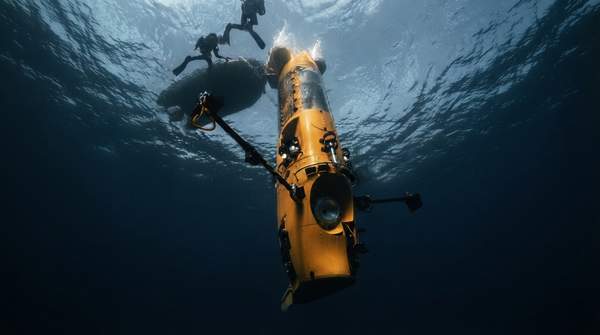
Exploring the extreme environments of deep-sea hydrothermal vents requires highly specialized equipment capable of operating under immense pressure and in challenging terrain. Researchers and students planning expeditions or developing research proposals must understand the distinct capabilities and limitations of available technologies to select the most appropriate tools for their scientific objectives. This article provides a comparative analysis of Remotely Operated Vehicles (ROVs), Human-Occupied Submersibles, Autonomous Underwater Vehicles (AUVs), and Submersible Incubation Devices (Vent-SIDs), detailing their functions, operational depths, and typical data outputs for hydrothermal vent studies.
Introduction to Hydrothermal Vent Research Equipment
Hydrothermal vents, first discovered in 1977 during an expedition near the Galápagos Islands, are fascinating deep-sea environments that host unique ecosystems. Studying these sites demands specialist equipment, as the rocky, uneven terrain makes simpler sampling devices like grabs and trawls unsuitable, according to the Natural History Museum. The museum further notes that the complexity and expense of exploring these vents necessitate the use of advanced technologies. Each piece of equipment is designed to address specific research needs, ranging from broad-area mapping to precise in-situ experimentation, enabling scientists to uncover the secrets of these extreme habitats.
Remotely Operated Vehicles (ROVs): Precision and Real-time Control
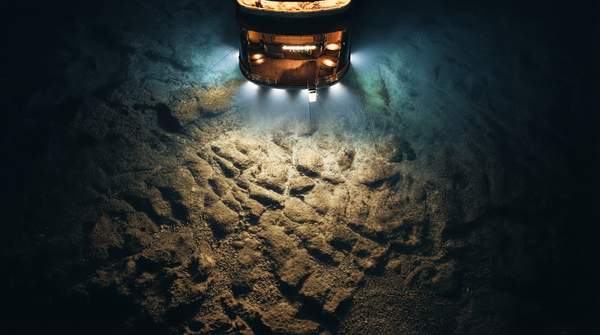
Remotely Operated Vehicles (ROVs) are indispensable for detailed surveys, data collection, sample retrieval, and deploying instruments in deep-sea environments. These tethered robots provide scientists with real-time control and observation capabilities from a surface vessel, allowing for immediate decision-making during complex operations. For instance, the ROV SuBastian has been equipped with a comprehensive suite of scientific instruments, including high-resolution cameras for visual documentation, conductivity, temperature, and depth (CTD) sensors for environmental profiling, pressure depth sensors, and a newly developed NOAA SBIR-funded methane analyzer.
This array of tools supports diverse data and sample collection needs, enabling researchers to gather visual data, measure critical environmental parameters, detect chemical signatures indicative of vent activity, and collect physical samples using manipulator arms. The Natural History Museum highlights that ROVs are equipped with lights, cameras, and manipulator arms specifically for collecting samples from the challenging vent terrain.