Scientists at the University of Tokyo have discovered a bacterium unlike almost anything previously catalogued, thriving beneath the skin of deep-sea sea pigs collected off the northern coast of Japan. The microbe, provisionally named Candidatus Abyssoplasma scotoplanesicola, carries one of the smallest bacterial genomes on record—about 649,000 DNA bases—yet devotes more than a quarter of that genome to building unusually large surface proteins. The researchers suspect the bacterium depends heavily on its host to survive, while what the sea pig gains in return remains an open question.
Deep-Sea Mystery: A New Bacterium in Sea Pigs
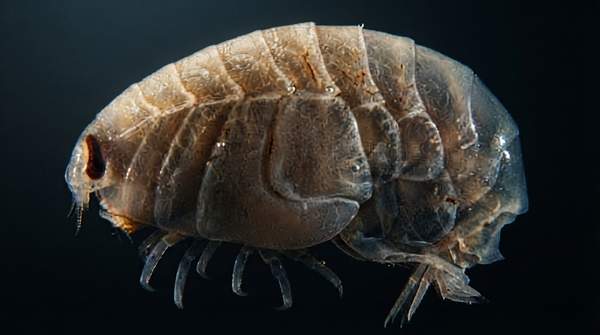
Sea pigs are soft-bodied echinoderms, relatives of sea cucumbers, that walk across the seafloor on enlarged, leglike tube feet, feeding on organic-rich sediments, including those around whale falls. According to the University of Tokyo's announcement, researchers used fluorescent imaging to pinpoint the bacterium's location within the sea pig's body wall, and DNA analysis revealed its strikingly minimized genome. The team's findings, published in ISME Host Microbe, describe what could be both a new species and a new genus of symbiotic bacteria.
Housing symbiotic bacteria under the skin is not itself unusual for echinoderms. What makes this discovery notable is the combination of genomic and spatial detail: the researchers could see exactly where the microbes sat and read nearly their entire genetic instruction set. That combination gives scientists an unusually complete picture of a deep-sea symbiosis.
The Sea Pig's Dominant Symbiont
The bacterium did not merely coexist with its host—it overwhelmed the alternatives. Across eight sea pigs representing three species, Candidatus Abyssoplasma scotoplanesicola accounted for 76.4 to 98.9 percent of the bacterial DNA found under the skin. As researcher Yoshida explained, one bacterium accounted for more than 70 percent of bacterial 16S rRNA gene sequences in body-wall samples from the three species, "so it truly dominated the body wall."
Fluorescence in situ hybridization confirmed that the bacteria form aggregates on the epidermal side of the body wall, clustered directly at the interface between host tissue and the outside world. The name itself encodes the relationship: "Abyssoplasma" joins the deep sea, the abyss, with the bacterial phylum Mycoplasmatota, while "scotoplanesicola" means an inhabitant of Scotoplanes, the sea pig genus. The "Candidatus" prefix marks the name as provisional pending formal description.
A Paradoxical Genome: Tiny Yet Protein-Rich
The genome itself is the discovery's centerpiece. At roughly 649,000 bases, it ranks among the smallest known for bacteria—a genuinely minimal toolkit. Yet the preprint describing the work reports that acidic cell-surface-associated proteins, including large proteins exceeding 5,000 amino acids, accounted for 27.6 percent of the complete genome. The largest protein measured 5,475 amino acids long, compared with roughly 300 for an average bacterial protein.
The preprint also notes that these surface-protein genes cluster near defense islands, regions associated with rapid genetic rearrangement. Comparison between two closely related genomes revealed localized plasticity in these regions, suggesting a possible mechanism for diversifying the cell-surface proteins at the host-symbiont interface.
The Paradox of 'Candidatus Abyssoplasma scotoplanesicola'
The central puzzle of this organism is the tension between what it has lost and what it has kept. The table below lays out the diagnostic logic researchers use to interpret it.
| Characteristic | Observed value | Implication for symbiosis |
|---|---|---|
| Genome size | ~649,000 DNA bases | Minimal for a bacterium; suggests loss of independent metabolic pathways and reliance on the host for essential nutrients |
| Surface-protein allocation | Over 25% of the genome | Unusually heavy investment in external structures rather than internal metabolism |
| Largest protein | 5,475 amino acids (vs. ~300 average) | Giant proteins likely mediate interaction with host tissue or bacterial aggregation |
| Dominance in host | 76.4–98.9% of body-wall bacterial DNA | A stable, specialized partnership rather than incidental colonization |
Read together, these features support a specific hypothesis: the bacterium has outsourced essential life functions to its host, freeing its shrunken genome to specialize in interacting with the sea pig's tissues. The University of Tokyo team suggests the giant proteins may function in host-tissue interaction or in clustering the bacteria into aggregates—consistent with the imaging—but the mechanism remains unconfirmed.
Implications for Deep-Sea Symbiosis
The dependency interpretation is a hypothesis grounded in genomic reduction: when a bacterium sheds the genes for building its own nutrients, it must obtain them from somewhere, and the obvious source is the host. The study, the researchers note, offers clues to which functions remain in symbiotic bacteria living closely with their hosts. Because Candidatus Abyssoplasma scotoplanesicola belongs to a lineage of symbiotic bacteria associated with marine invertebrates but differs substantially from other known types, it provides a fresh model for studying how host-microbe relationships evolve in extreme deep-sea environments.
These observations cover the eight sea pigs from three species collected off Japan's northern coast; the findings should not be generalized to sea pig populations elsewhere without further sampling.
Unanswered Questions and Future Research
Two mysteries dominate the research agenda. First, what do the giant surface proteins actually do? Second, what, if anything, does the sea pig gain from the arrangement? The assumption, as one report put it, is that some kind of mutually beneficial relationship exists, but it is not yet obvious. The researchers have hypothesized a possible protective role against pathogens, though this remains untested.
How this dominant relationship evolved in the deep sea is a further open question. The provisional name itself signals that formal taxonomic recognition is still pending.
Future Directions in Deep-Sea Symbiosis Research
Researchers will focus on elucidating the functional roles of the bacterium's giant surface proteins and determining the specific benefits, if any, the sea pig host derives from this dominant symbiotic relationship. The measurable indicator of progress will be the publication of follow-up studies detailing protein function or host-benefit mechanisms. Until those studies appear, the relationship beneath the sea pig's skin remains one of the ocean's more elegant puzzles: a microbe that gave up most of its genome yet invested extravagantly in its surface.
Sources
- Sea pigs from the abyss host unusual bacteria — The University of Tokyo
- Genomic, spatial, and evolutionary insights into a dominant Mycoplasmatota symbiont colonizing the… — bioRxiv
- Sea pigs from the abyss host unusual bacteria — Phys.org
- Scientists Just Found Something Strange Under the Skin of Sea Pigs — Yahoo News
- Something strange is living beneath the skin of deep-sea pigs — ScienceDaily