Geothermal power has always faced a geographic catch: the Earth's heat is virtually everywhere beneath us, but the naturally formed reservoirs that make it cheap to harvest are rare. Conventional hydrothermal systems only work where three things coincide underground—hot rock, fluid, and permeability that lets that fluid move. Enhanced Geothermal Systems (EGS) rewrite that requirement by manufacturing the missing pieces, injecting fluid into hot, impermeable rock to create pathways that nature did not. As Berkeley Lab scientists put it, EGS "create engineered pathways to access heat in more locations," a shift that could move geothermal from a niche regional resource toward something available almost anywhere.
Understanding Geothermal Energy: Conventional vs. Enhanced Systems
The core distinction is simple but consequential. The Department of Energy describes geothermal resources as reservoirs of hot water that either exist naturally or are human-made, at varying temperatures and depths. Wells drilled into these reservoirs bring steam and very hot water to the surface, where the heat can drive turbines and generate electricity. Deep underground, the presence of hot rocks, fluid, and permeability—the ability of that fluid to move among the rocks—offers the conditions from which electricity can be generated.
That trio of requirements is the whole story. Conventional geothermal taps into naturally occurring underground hot spots where all three elements already exist together. EGS, by contrast, targets rock that has the heat but lacks the fluid, the permeability, or both, and engineers a working reservoir where none formed on its own. The difference is not one of power-plant hardware but of where each technology can realistically be built.
Conventional Hydrothermal Systems: Tapping Natural Resources
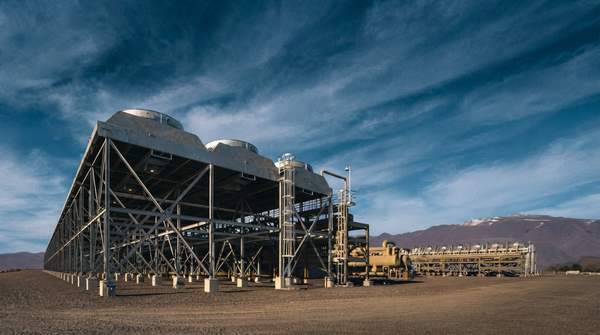
Conventional geothermal power generation uses renewable hydrothermal resources—water and heat—to power the turbines that create electricity. According to the U.S. Energy Information Administration, these high-temperature hydrothermal resources come from either dry steam or hot water reservoirs measuring 300°F to 700°F deep within the earth. The plant's job is largely to drill into what is already there and harvest it.
That simplicity is also the constraint. Because the system depends on a natural reservoir, development is confined to the limited places where hot rock, water, and connected fractures happen to align. The natural ability of fluid to circulate through hot rock is a prerequisite for electricity generation in these systems; without it, there is no way to carry the heat to the surface. Wells tap into existing reservoirs, and the resource does the rest.
Enhanced Geothermal Systems (EGS): Engineering Geothermal Potential
EGS starts from a different premise: the heat is abundant even where the reservoir is absent. The Union of Concerned Scientists notes that a vast amount of heat energy is available from dry rock formations very deep below the surface, at depths of roughly 4 to 10 kilometers. Using EGS, that heat could be captured for electricity production on a much larger scale than conventional technologies currently allow.
The engineering process works in three broad strokes. Developers drill into hot rock that lacks natural fluid or permeability, inject fluid—typically water—to create or reopen fractures, and then circulate that fluid through the engineered pathways so it absorbs heat and returns it to the surface. The result is a human-made geothermal reservoir, deliberately built where natural conditions were insufficient. The technology is still primarily in the development phase; the first demonstration EGS projects fed electricity to grids in the United States and Australia in 2013, and the EIA reports that the first large-scale commercial EGS power generator in the United States is under construction, with the company reporting in the agency's generator survey that it plans to bring the project online in June 2026.
Conventional vs. Enhanced Geothermal Systems: A Comparative Overview
The table below isolates each requirement in turn. Read down the columns and the decision boundary emerges: conventional systems need all three natural elements in one place, while EGS needs only the heat and supplies the rest through engineering.
| Dimension | Conventional Hydrothermal System | Enhanced Geothermal System (EGS) |
|---|---|---|
| Heat | Requires naturally occurring underground hot spots—areas where hot rocks are naturally present deep underground. | Targets hot rock formations, including those that are dry or lack natural permeability; EGS can access heat in more locations than conventional systems. |
| Fluid | Relies on naturally occurring hot water or steam reservoirs; these natural hydrothermal resources power the turbines. | Requires fluid (typically water) to be injected to create an engineered reservoir; injection is part of creating pathways and stimulating the rock. |
| Permeability | Needs natural permeability so fluid can move among hot rocks—a prerequisite for electricity generation. | Engineers or enhances permeability through stimulation, creating engineered pathways where natural permeability is insufficient. |
| Engineering process | Drilling into existing natural hot water or steam reservoirs; wells tap them to bring fluid to the surface. | Drilling into hot rock, injecting fluid to create or reopen fractures, and circulating fluid through engineered pathways—a human-made geothermal system. |
| Geographic applicability | Limited to rare locations where heat, fluid, and permeability naturally coincide. | Potentially widespread, including deep dry rock formations roughly 4–10 km below the surface. |
| Typical resource temperature | Dry steam or hot water reservoirs measuring 300°F to 700°F. | Hot rock at depth; temperatures vary by site and are a focus of ongoing demonstration work. |
One caution on the final row: the 300°F to 700°F figure is the EIA's characterization of the high-temperature hydrothermal resources used in conventional power generation. The evidence reviewed does not establish a single temperature range for EGS resources, which span varied geologic settings by design.
Engineering Challenges in EGS Development
EGS's promise is matched by its difficulty, and the Department of Energy is explicit about where the costs concentrate. Wellbore casing and cementing materials and operations represent around 30% to 40% or more of overall well costs, making wellbore construction a key requirement for expanding EGS use. Reducing those costs requires better means of evaluating well performance during construction and operation.
The materials problem is not trivial. According to the Department of Energy, available off-the-shelf solutions for well cement and casing evaluation are suitable for the upper end of the oil and gas industry's temperature needs, but are not generally considered adequate for hotter geothermal systems. In other words, EGS wells push beyond what existing industrial equipment was built to endure, and improved methods to build wells and assess their performance are needed to make geothermal electricity more cost-effective.
On the research side, the department's Office of Geothermal is attacking the problem from several directions. Its EGS Pilot Demonstrations initiative supports pilot projects that collectively demonstrate EGS in different geologic settings, using a variety of development techniques and well orientations. At a dedicated field research site, researchers have already demonstrated significant improvements in drilling rates and successful rock stimulation, with the site's collaborative platform aimed at identifying a replicable, commercial pathway to EGS. A related effort, Wells of Opportunity, explores whether the key to unlocking geothermal potential lies inside the millions of existing American oil and gas wells.
Expanding Geothermal's Reach: The Promise of EGS
The scale of the prize explains the investment. The Department of Energy's 2019 GeoVision analysis indicated potential for up to 60 gigawatts of electricity-generating capacity by 2050, alongside thousands of district heating systems and millions of geothermal heat pumps. EGS is central to that outlook because it decouples geothermal generation from the rare natural reservoirs that have historically capped the industry's footprint.
For readers weighing where each technology fits: EGS represents a critical pathway to significantly expand geothermal energy production beyond naturally occurring hydrothermal resources. The measurable indicator to watch is the increased deployment of EGS pilot projects and commercial-scale EGS power generators, alongside advancements in drilling and stimulation technologies. The June 2026 target date for the first U.S. large-scale commercial EGS generator, reported through the EIA's survey, is the nearest concrete milestone on that timeline.
Sources
- Newscenter
- Geothermal Basics — Energy.gov
- Enhanced geothermal systems could expand geothermal power generation - U.S. Energy Information Administration (EIA)
- How Geothermal Energy Works — Union of Concerned Scientists
- Enhanced Geothermal Systems — Energy.gov