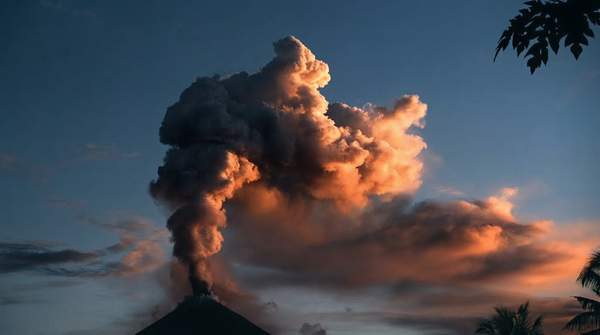
When scientists ask what makes a supervolcano blow, they arrive at two competing answers. One model holds that the eruption is driven from within, by the buoyancy of melt rising inside an enormous, maturing magma chamber. The other argues the trigger is external: the roof of rock above the chamber cracks or collapses, releasing what lies beneath. What both models agree on is that supervolcanoes do not erupt the way ordinary volcanoes do, and that this difference matters enormously for how we monitor them.
What Defines a Supervolcano?
According to the Natural History Museum, a volcano is categorized as a supervolcano if it can produce a magnitude-eight eruption on the Volcanic Explosivity Index, discharging more than 1,000 cubic kilometres of material. These are the biggest and most explosive eruptions of all, sometimes called "super eruptions." For scale, University of Illinois geologist Patricia Gregg notes that Mount St. Helens ejected about one cubic kilometre of material—meaning a supervolcano is more than five hundred times larger by volume.
Before eruption, magma collects in a chamber below the surface, and pressure builds until the magma ruptures Earth's crust. The eruption then empties the chamber, leaving the overlying rock unsupported. The ground can collapse into the void, forming a broad surface depression known as a caldera—such as the one that now holds Indonesia's Lake Toba.
Eruption Triggers: Common Volcanoes vs. Supervolcanoes
The mechanics of ordinary volcanoes are comparatively well understood. As Simon Redfern explained in The Conversation, modestly sized volcanoes are typically triggered by pulses of magma that increase pressure in the underground chambers feeding their vents. The chamber over-pressurizes and bursts. Smaller blasts can also follow from external events that release pressure on the magma—earthquakes, or even the melting of overlying glaciers, as observed in Iceland.
Supervolcanoes, by contrast, resist this explanation. Gregg, who led a study presented at the Geological Society of America's annual meeting in November 2015, argues that these massive magma chambers appear not to follow the conventional mechanics of internal pressure building until the volcano blows. Two leading models have emerged to explain what happens instead—models that differ in where the trigger originates.
Theory 1: Internal Magma Buoyancy
The first model keeps the trigger inside the chamber but changes the mechanism. Computer simulations by Luca Caricchi and colleagues at the University of Bristol, published in Nature Geoscience, found that the buoyancy of melt in maturing magma chambers is key to these huge events. As a chamber grows and matures, the melt within it becomes buoyant enough to drive an eruption on its own.
This contrasts sharply with smaller volcanoes, where blasts follow directly from rapid injections of new magma. In the buoyancy model, a supervolcano needs no sudden pulse from below. The steady accumulation and maturation of molten rock itself builds toward the inevitable. It is an internal process, but one of slow accumulation rather than sudden over-pressurization.
Theory 2: External Roof Collapse
The second model locates the trigger outside the chamber entirely. According to the Illinois study led by Gregg, supervolcanoes are likely triggered when the rock around them cracks or collapses—specifically, when the roof above the massive magma chamber fails structurally. This breach is what allows the magma to escape, rather than mounting internal pressure forcing it out.
Gregg is direct about the distinction: "It's very likely that supereruptions must be triggered by an external mechanism and not an internal mechanism, which makes them very different from the typical, smaller volcanoes that we monitor." It is worth stressing that neither model is settled science. The two theories may apply to different supervolcanic systems, or the processes may interact in ways researchers are still exploring.
Comparing Volcanic Eruption Triggers
| Volcano Type | Primary Trigger Mechanism | Key Process |
|---|---|---|
| Common volcanoes | Internal: rapid magma pulses | Magma injections increase chamber pressure until it over-pressurizes and bursts; external pressure releases such as earthquakes or glacier melt can also play a role. |
| Supervolcanoes (internal buoyancy model) | Internal: melt buoyancy | Computer simulations suggest buoyancy of melt in maturing magma chambers drives the eruption, rather than sudden magma injection. |
| Supervolcanoes (external collapse model) | External: roof failure | The chamber roof cracks or collapses, releasing the magma—differing fundamentally from typical internal pressure buildup. |
Read side by side, the framework clarifies the scientific debate: the question is not whether supervolcanoes are more powerful versions of ordinary volcanoes, but whether their trigger originates inside the melt or in the failing rock above it.
Global Climate Impacts of a Supereruption
Beyond local devastation, supereruptions can reshape climate worldwide. Volcanic eruptions release substances such as sulphur into the atmosphere, causing global air temperatures to drop. The clearest modern illustration is Mount Pinatubo in 1991, which released an estimated three megatonnes of sulphur and caused global air temperature to fall by 0.5°C between 1991 and 1993—an eruption far below supereruption scale.
The Young Toba Tuff supereruption, roughly 74,000 years ago, formed a caldera measuring 100 by 30 kilometres, now filled by Lake Toba. The Toba Catastrophe Theory proposes that this eruption sent the world into a decade-long volcanic winter, followed by a cold, dry climate lasting thousands of years—potentially altering the course of human history, though the Natural History Museum presents this as a claimed rather than settled effect.
Monitoring Supervolcanoes: An Ongoing Challenge
Scientists need a better understanding of supereruption triggers to effectively monitor supervolcanoes and assess their progression toward eruption. As Gregg put it, "If we want to monitor supervolcanoes to determine if one is progressing toward eruption, we need better understanding of what triggers a supereruption." The two models predict different warning signs—one keyed to internal melt behavior, the other to structural stress in the chamber roof—and this article makes no prediction about when or whether the next supereruption will occur. The measurable development to watch is new research that synthesizes or differentiates the internal and external trigger mechanisms, or advances in monitoring technologies capable of detecting precursors specific to either model. Until such findings arrive, the honest answer to how supervolcanoes erupt remains a genuine scientific contest between two compelling explanations.
Sources
- Supervolcanoes and their enormous eruptions — NHM
- Supervolcanoes likely triggered externally, study finds — News Bureau
- How Earth’s devastating supervolcanoes erupt — The Conversation
- What triggers supervolcano eruptions? | Earth — EarthSky | Updates on your cosmos and world