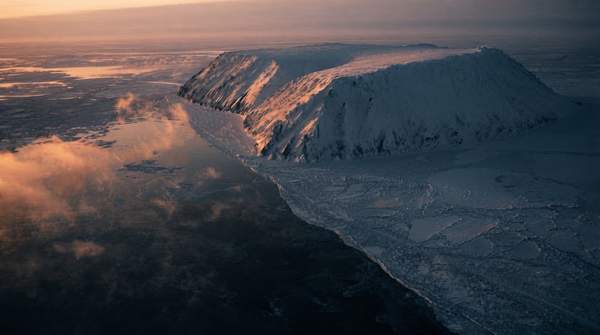
As global temperatures rise, the vast, frozen landscapes of the Arctic are beginning to thaw, releasing enormous quantities of stored organic carbon into the atmosphere as greenhouse gases. This process initiates a self-reinforcing cycle, often described as a "vicious cycle," where the release of these gases causes further warming, which in turn thaws more permafrost. This permafrost-carbon feedback loop has the potential to significantly accelerate climate change.
A Vast Frozen Carbon Store
Permafrost is ground that has remained frozen for at least two consecutive years, and it covers large portions of the Earth's high-latitude regions. Within these frozen soils lies a massive reservoir of organic carbon, the remnants of plants and animals that have been locked away in an icy state for thousands of years. According to a report highlighted by the National Oceanic and Atmospheric Administration (NOAA), the soils of the northern permafrost region hold between 1,460 and 1,600 billion metric tons of organic carbon. This is roughly twice the amount of carbon currently present in the entire Earth's atmosphere.
For millennia, this carbon has been safely sequestered. The cold temperatures have kept microbial life in a state of suspended animation, preventing the decomposition of the organic matter. However, this enormous carbon pool is climate-sensitive. As the high northern latitudes warm at an accelerated rate—by 0.6 degrees Celsius per decade over the last 30 years, according to an analysis in Carbon Brief—this frozen ground is no longer permanent.
The Mechanism of Thaw and Decomposition
The warming of the Arctic awakens the dormant microbes within the thawing soil. As if waking from a long hibernation, these microorganisms begin to feed on the newly available organic carbon. Through their metabolic processes, they break down this ancient organic matter, converting the carbon into greenhouse gases—primarily carbon dioxide and methane—which are then released into the atmosphere. This fundamental biological process transforms a stable, frozen carbon sink into an active source of atmospheric emissions. The release of these gases exacerbates warming, which can lead to cascading impacts on the environment, such as the drying of wetlands and changes in how water cycles through the ecosystem.
Carbon Dioxide vs. Methane: Conditions for Release
The specific type of greenhouse gas released from thawing permafrost depends on the local environmental conditions, particularly the presence of oxygen. In a 2015 article, Dr. Christina Schädel explained for Carbon Brief that the outcome is determined by whether the soil is dry or waterlogged.
In thawed soils that are relatively dry and have access to oxygen, microbes perform aerobic decomposition. This process breaks down the organic carbon and releases it primarily as carbon dioxide (CO2). Conversely, in saturated, waterlogged soils where oxygen is scarce, a different set of microbes takes over. Through anaerobic decomposition, these microbes release methane (CH4) in addition to some carbon dioxide. Methane is a significantly more potent greenhouse gas than carbon dioxide, although it has a shorter lifespan in the atmosphere.
While methane's potency might suggest wet soils pose a greater threat, the review in Carbon Brief notes that laboratory experiments show a crucial trade-off. The lack of oxygen in wet soils actually slows down the rate at which microbes can process the organic carbon. As a result, more total carbon is released from dry soils, even though it is in the less potent form of CO2.