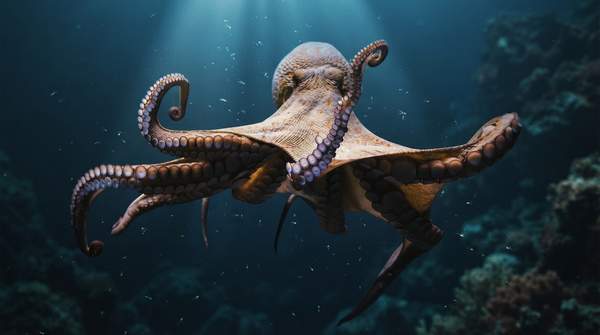
A major, ancient reorganization of the octopus genome is being proposed as a key factor in the evolution of its extraordinary intelligence, according to new research from scientists at the University of Vienna. A study published on October 9, 2026, in Nature Communications suggests that a dramatic change in the three-dimensional architecture of cephalopod DNA may have paved the way for one of the most complex nervous systems in the animal kingdom.
The findings provide a potential mechanism linking a previously known "population explosion" of mobile genetic elements to the development of the sophisticated cognitive abilities seen in octopuses, squid, and cuttlefish. Rather than evolving through the whole-genome duplication events that shaped vertebrate evolution, these marine animals appear to have followed a different path, one driven by extensive genomic remodeling and the reshuffling of their genetic code in 3D space.
The Role of 'Jumping Genes'
At the heart of this evolutionary story are transposable elements (TEs), often called "jumping genes." These DNA sequences can move from one location in the genome to another, contributing to genomic innovation and change. While many of these elements are inactive relics of evolutionary history, some remain functional. In fact, over 45% of the human genome is composed of transposons. Research has shown that a specific family of TEs known as LINE (Long Interspersed Nuclear Elements) retrotransposons are active in the human brain, particularly in the hippocampus, where they are believed to play a role in learning and cognitive function.
Scientists had previously discovered that the octopus genome is also rich with these jumping genes. One study noted that a "population explosion" of TEs coincided with the major genomic rearrangements that distinguish coleoid cephalopods from other molluscs. This finding suggested that the activity of these mobile elements was deeply involved in the evolution of the octopus's unique biology.