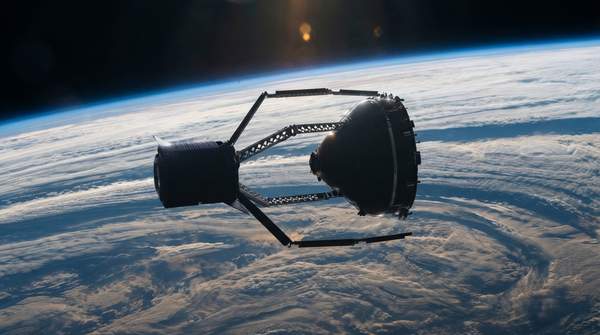
Space debris mitigation splits into three fundamentally different engineering philosophies: passive drag augmentation, which accelerates atmospheric decay; contactless laser systems, which nudge debris off collision paths without touching it; and active contact-based removal, which physically captures objects for controlled de-orbit. Each targets different debris populations and sits at a different maturity level, and the choice between them is increasingly shaped by one economic constraint—the need to remove many objects per mission rather than one.
The Growing Challenge of Space Debris
Orbital debris remediation has moved from theoretical concern to active engineering program. NASA's Office of Technology, Policy, and Strategy, in a cost-and-benefit analysis of orbital debris remediation, treats removal as a portfolio problem in which different techniques—drag devices, photon pressure, physical capture—address different portions of the debris population. The scientific literature frames the same landscape: a peer-reviewed analysis of removal methods catalogues sail-based, foam-based, and momentum-exchange approaches alongside contactless concepts, each with distinct advantages and limitations. What unites them is a shared goal of reducing long-term risk to operational spacecraft, a risk that grows as small-satellite constellations proliferate.