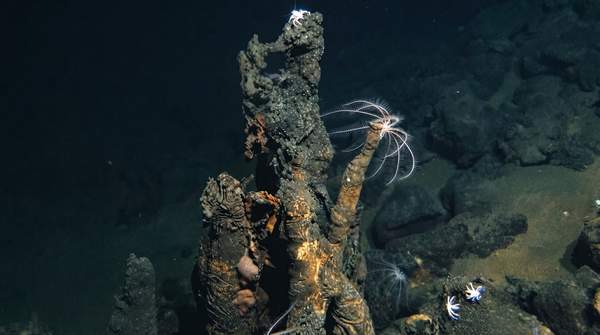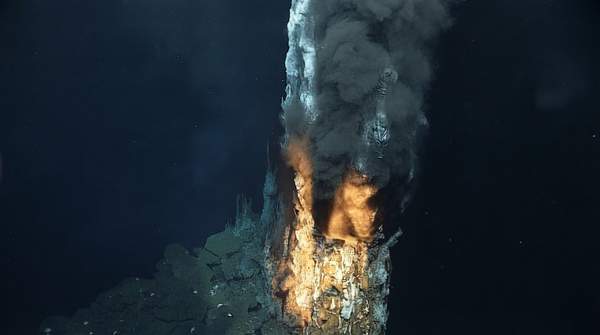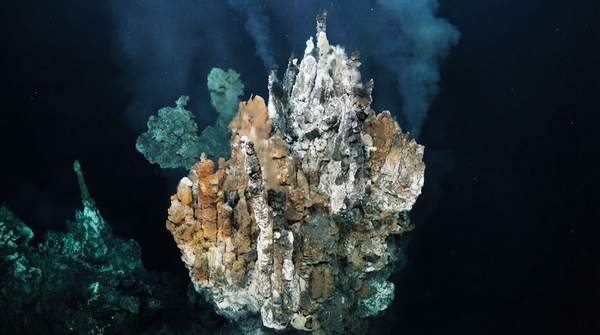
When I first began reading about hydrothermal vents, I assumed a vent was a vent—superheated water escaping the seafloor, full stop. The reality is more interesting. Scientists recognize at least three distinct vent styles, and you can tell them apart with three observations: how hot the fluid is, what color the plume turns as it meets the ocean, and whether a chimney has grown around the outflow. Black smokers run near 350° Celsius and belch dark, sulfide-laden water through towering chimneys. White smokers are cooler, at roughly 100–300° Celsius, and precipitate pale minerals like silica, barium, and calcium through smaller structures. Diffuse vents barely look like vents at all—warm, shimmering water seeping through cracked rock.
Introduction to Deep-Sea Hydrothermal Vents
Hydrothermal vents form where seawater percolates into the crust, is heated by underlying rock, and rises back toward the seafloor carrying a cargo of dissolved minerals. As that hot fluid escapes and meets the cold, pressurized ocean, its dissolved load precipitates out of solution, building chimneys, mounds, and terraces over time. As Robbie George, who documents these ecosystems, describes it, the resulting structures "vary dramatically depending on temperature, chemistry, and geological conditions." That variability is what splits vents into recognizable types. The same basic engine—hot mineral-laden water meeting cold seawater—produces a black smoker in one setting and a barely visible warm seep in another, and each style hosts its own community of organisms.