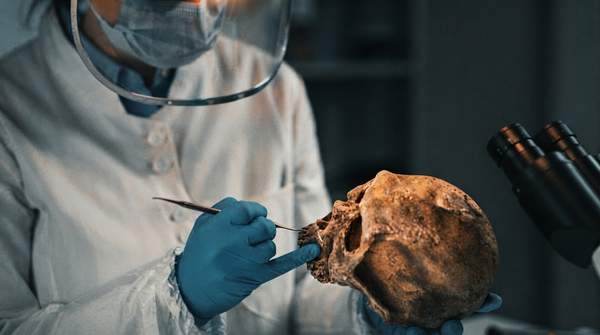
When researchers reconstruct the microbial communities that once lived in and on ancient human bodies, they inherit two ethical traditions at once. The remains themselves carry the sensitivities long recognized in ancient DNA research, while the microbial data carry the health-related stakes that ethicists of the modern microbiome era have only recently begun to map. Neither tradition alone is sufficient, and the field of ancient microbiome research—still young and without a dedicated ethical framework of its own—sits squarely at their intersection. What follows is my attempt to chart that intersection, drawing on the guidance that exists in each parent field.
Introduction: Navigating the Ethics of Ancient Microbiome Research
I find this field fascinating precisely because it is so new. Ancient DNA research matured through years of visible controversy over the handling of Indigenous remains, eventually producing formal recommendations approved by a professional organization—the American Society of Human Genetics published guidance, described in the ethics literature as the first such recommendations approved by a professional society, to promote ethical engagement between researchers and stakeholder communities in ancient DNA work. Microbiome research, for its part, has generated its own ethical literature, with authors of a 2023 review in the Journal of Medical Ethics and History of Medicine highlighting "the urgent need to develop ethical guidelines concerning informed consent, privacy, microbiome biobanks, disclosure of the results of microbiome research."
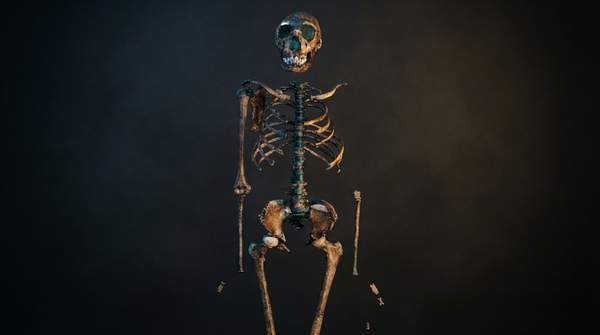
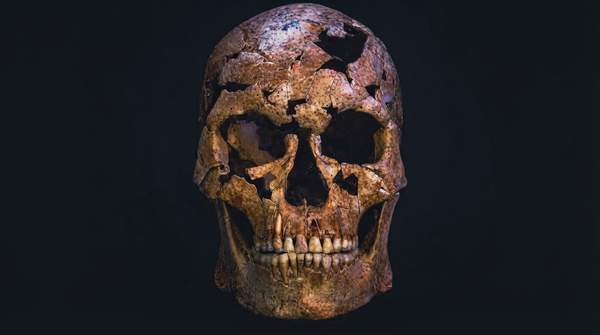
Ancient microbiome research borrows obligations from both. The analysis depends on human remains—skeletal bones and teeth being the major source of preserved material, as the Council on Undergraduate Research's own account of aDNA fieldwork notes—yet the data extracted can implicate health, diet, and disease in ancestral populations. That combination means the researcher must answer to descendant communities and to the interpretive caution microbiome science demands, simultaneously. The synthesis is genuinely absent from the literature: what exists is a set of principles waiting to be mapped onto a new application.
Foundational Ethical Principles from Ancient DNA Research
The ancient DNA community's hard-won lessons start with a candid admission about geography. Participants in a November 2020 virtual workshop on aDNA ethics, convened by David Reich and colleagues, reported "widespread agreement that globally applicable ethical guidelines are needed, but that recent recommendations grounded in discussion about research on human remains from North America are not always generalizable worldwide." For ancient microbiome researchers, that caution cuts twice: guidance imported wholesale from American practice may fail in other legal and cultural contexts, and the absence of a local precedent is never permission to proceed unilaterally.
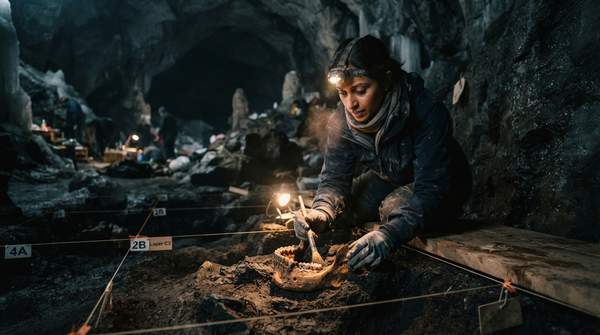
A second lesson concerns the physical remains themselves. The Council on Undergraduate Research's account of a field program in Pollentia describes how "how human remains are unearthed, handled, stored, and analyzed" became a central concern for the participating researchers—and, notably, that standard Institutional Review Board guidance is often not applicable to research involving human remains. That gap between regulatory review and ethical obligation is the practical starting point for most ancient microbiome projects: the IRB will not do this thinking for you.
Third, the aDNA field has a distinctive data culture. A 2015 PLOS ONE analysis of human paleogenetics, cited in the ethics literature, describes "the universal practice of fully public data sharing in ancient human DNA research, arguing this is key to establishing reliable and replicable scientific practices." That openness norm is worth carrying forward—though, as I will argue, microbiome data complicates it.
Unique Ethical Considerations for Microbiome Data
Why can't ancient microbiome data simply be treated like ancient DNA data, deposited openly and moved on? Because the two data types differ in what they reveal and how they sit with their source. The authors of a 2018 review on ethical considerations in human microbiome research observe that because of the symbiotic relationship between host and sample, "human microbiome biobanks present practical, social, and ethical problems, some of which are distinct from those of biobanks storing human tissue samples." In the living context this distinction drives consent and privacy debates; in the ancient context, it means microbial data about identifiable ancestral groups can carry health implications that descendants experience as sensitive.
The deeper interpretive problem is definitional. The 2023 Journal of Medical Ethics and History of Medicine review warns that despite growing enthusiasm to modify the human microbiome, "there is no exact definition for the healthy microbiome," and that "specific species of bacteria might be beneficial for one person and harmful for another." An ancient sample cannot be compared against a clean clinical baseline, because no such baseline exists. Any claim that an ancestral population had an "unhealthy" or "dysbiotic" microbiome is an interpretive leap, not a measurement—and in archaeology, such leaps have historically fed stigmatizing narratives about past peoples.
Finally, the broader microbiome ethics literature, including the 2018 review, treats the ethical, legal, and social implications of this research as complex and "worthy of careful consideration by researchers, healthcare professionals, and regulatory agencies alike." Ancient microbiome work inherits that whole apparatus of concern without yet having its own version of it.
Engaging with Stakeholder Communities: Best Practices
So how should an ancient microbiome researcher actually engage? The most concrete model I found comes from the Native BioData Consortium, as described by anthropologist Krystal Tsosie in Nature: investigators who want to work with the consortium "need to have established a partnership with the Native American communities," after which approved investigators receive assistance navigating the laws of Tribal Nations and tribal policies. Tsosie's condition for ethical microbiome research involving Indigenous communities is a tangible benefit to the people providing the data—investment in community health training or immediate access to any product the research helps create, not, as she puts it, "a long-term promise a couple decades down the line."
For ancient remains, where the "participants" are ancestral, engagement shifts to descendant and local communities. The aDNA guidance approved by the American Society of Human Genetics frames this as outreach beyond formal mandates to stakeholder communities. A 2026 paper in Microbiome, authored by Wim Van Daele and colleagues, adds an operational recommendation that I think translates directly: deploy social scientists and community interlocutors to understand the socio-ecological context of the population under study, and where communities are unfamiliar with the concept of microbes, broker "a prior intercultural and meaningful communication about microbiomes between scientists and identified stakeholders."
That same paper warns against a failure mode that ancient research is especially prone to: neo-colonial framing. Most Indigenous people are not living in an "ancient pristine past," the authors note—they are affected by historical contacts, pollution, climate change, and globalizing food systems. Understanding those contextual processes shaping human and microbial life, they argue, aids in avoiding neo-colonial frameworks of analysis. An ancient microbiome study that treats its subject population as a frozen, exotic baseline repeats exactly that error. A 2022 UNLV release on a related Nature Microbiology paper by anthropologists, human biologists, and a human rights activist makes the same point from the community side: Indigenous activists are casting a critical lens on how microbiome research is conducted with Indigenous peoples and calling for more ethical engagement with biological data collection.
Ethical Decision Framework for Ancient Microbiome Research
To make these principles usable, I have mapped them onto the stages of a research project, combining the aDNA obligations (community engagement, respectful handling of remains, open data norms) with the microbiome-specific obligations (interpretive caution around "health," privacy of health-linked data, and biobanking concerns). Each row pairs a stage with the operative principle, the questions a researcher should be asking, and the actions the evidence supports.
| Project Stage | Ethical Principle | Key Questions | Recommended Actions |
|---|---|---|---|
| Project design & consultation | Community engagement beyond legal mandates | Who are the descendant or local stakeholders? Do North American–derived rules fit this context? | Establish partnerships before sampling; apply globally minded guidance; document the consultation process. |
| Sampling & curation | Respect for human remains | Are excavation, handling, storage, and analysis practices sensitive to community expectations? Is IRB guidance adequate? | Treat IRB inapplicability as a prompt, not an exemption; involve community members in decisions about remains. |
| Data analysis & interpretation | Interpretive caution on health claims | Is there a defined baseline for "healthy"? Could findings stigmatize an ancestral population? | Avoid "healthy/unhealthy" labels without a defined reference; acknowledge that a species beneficial in one context may be harmful in another. |
| Data stewardship | Balanced sharing and privacy | What can microbial data reveal about descendant health? What should be public versus managed? | Weigh the paleogenetic open-data norm against microbiome-specific privacy concerns tied to the host–microbe symbiotic relationship. |
| Publication & return of benefits | Tangible reciprocity and anti-neo-colonial framing | Do communities receive immediate, concrete benefit? Are past populations contextualized rather than exoticized? | Share results with communities first; plan health training or data access benefits; contextualize findings within socio-ecological histories. |
The framework's central tension is visible in the stewardship row: paleogenetics treats full public data sharing as key to reliable, replicable science, while microbiome ethics treats biobanked, health-linked data as needing consent, privacy, and disclosure rules. An ancient microbiome dataset—microbial, health-relevant, tied to an identifiable ancestral population—genuinely sits between the two norms, and the researcher must resolve that tension explicitly rather than defaulting to either field's habit.
Ensuring Ethical Integrity in Ancient Microbiome Studies
The decision, then, is this: researchers must proactively integrate established ethical guidelines from ancient DNA research with the unique considerations of modern microbiome data, particularly regarding community engagement, data privacy, and responsible interpretation, throughout all project stages. Neither inherited playbook suffices alone, and neither regulatory default—aDNA's open-everything culture nor the microbiome field's still-forming consent and biobanking rules—should be allowed to substitute for deliberate judgment.
The measure of progress is concrete and checkable: the adoption and documented application of comprehensive ethical frameworks, including formal community consultation processes and transparent data management plans, within published ancient microbiome research. When a paper on ancient gut microbes names its consultation process and its data-sharing rationale, the field will have its own ethics to cite—not just borrowed ones. Until then, the framework above is a starting checklist for getting there.
Sources
- Ethical challenges in conducting and the clinical application of human microbiome research - PMC
- Ethical Considerations When Conducting Undergraduate Research — The Council on Undergraduate Research
- REICH
- Ethics of DNA Research on Human Remains: Five Globally Applicable Guidelines - PMC
- Help, hope and hype: ethical considerations of human microbiome research and applications - PMC
- An ethical way forward for Indigenous microbiome research — NATURE
- Toward ethical human microbiome research — SpringerLink
- New Paper Explores Ethical Challenges in Microbiome Research — UNLV