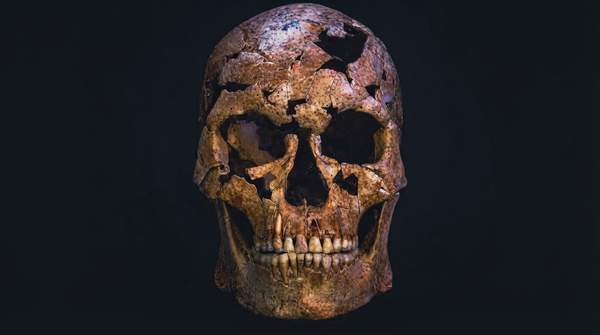
Scientists can now read the genetic code of pathogens that killed people hundreds or even thousands of years ago. By extracting degraded DNA from excavated teeth and bones, sequencing it, and placing the recovered genomes on an evolutionary tree, researchers have pinpointed where the Black Death began, shown how keeping animals helped drive the virulence of the bacteria behind brucellosis, and resolved a long-running dispute about when leprosy reached the Pacific Islands. The result is a new kind of disease history: one written in DNA rather than in chronicles and guesswork.
Unlocking the Past: The Power of Ancient Pathogen DNA
For most of modern medicine's history, the origins of ancient epidemics could only be inferred from written accounts, burial patterns, and skeletal lesions—evidence that is often ambiguous or absent. Ancient DNA analysis changed that. As a review of the field published in the journal PMC puts it, when pathogen genomes are "contextualized with historical and archaeological data," they provide "a novel approach for detecting how sociocultural and biological changes interact."
The power of the method lies in directness. Rather than deducing what sickened a medieval population, researchers can recover the pathogen's actual genetic material from the remains of the people it infected. A review of advancements in ancient DNA research notes that analysis of just seven individuals revealed the origin of the plague strain that caused the Black Death in present-day Kyrgyzstan—a conclusion that reshaped a centuries-old debate about the pandemic's source.
The approach has limits worth stating up front. Reporting by Nature on a large study of DNA from human teeth notes that the method cannot detect bacteria that enter the bloodstream only at low concentrations, or some viruses. Ancient DNA is a powerful lens, but not a complete one.
The Ancient Pathogen DNA Analysis Workflow
Every discovery in this field follows the same ordered pipeline, from a physical artifact in the ground to a conclusion about a pathogen's history. The sequence below traces that journey, stage by stage, and shows why each step exists.
| Stage | What happens | Purpose and key challenge |
|---|---|---|
| 1. Sample selection | Teeth and bones are chosen from archaeological human remains; the entire tooth root or the dental pulp specifically is targeted. | Tooth pulp and root are preferred for pathogen DNA because of better preservation there; a minimally destructive protocol described in the genetics literature also preserves morphology for future study. |
| 2. Extraction in a clean room | The sample is decontaminated and its DNA isolated using specialized multi-step protocols, such as a Qiagen QiaQuick-based method designed to recover fragments as short as 50 base pairs. | Ancient DNA is short, degraded, and scarce; a dedicated clean room and decontaminated tools prevent modern DNA from contaminating the sample. |
| 3. Library preparation and sequencing | The extracted DNA is prepared into sequencing libraries and read by next-generation sequencing machines. | This converts invisible chemical traces into raw genetic data—the step that makes any further analysis possible. |
| 4. Genome reconstruction and authentication | Bioinformatic tools assemble the pathogen's genome from millions of fragments and calculate metrics such as sample complexity and contamination rates for each extract. | Because ancient DNA is degraded and easily contaminated, authentication statistics are what distinguish a genuine ancient genome from a modern intruder. |
| 5. Phylogenetic analysis | The reconstructed genome is placed on an evolutionary tree alongside modern and other ancient strains. | This is where raw data becomes history: the tree's branching pattern dates emergence events and traces geographic spread. |
| 6. Historical interpretation | Genetic conclusions are read together with archaeology, burial evidence, and documentary records. | Genomes alone cannot explain why a disease moved; combining them with context yields conclusions about origins and spread. |
The chain is only as strong as its earliest links. Extraction protocols adapted for very short fragments, and statistical checks of contamination, are what let researchers trust that a genome assembled in step four truly belongs to a person who died centuries ago—rather than to a lab technician or a soil microbe.
Case Study: The Black Death and the Plague's True Origin
Where did the Black Death begin? Written sources tracked the fourteenth-century pandemic's course through Europe, but its ultimate origin remained contested. Ancient DNA delivered a direct answer: a review of the field reports that genetic analysis of seven individuals revealed the origin of the plague strain that caused the Black Death in present-day Kyrgyzstan.
The finding illustrates the workflow's full arc. Pathogen DNA recovered from carefully selected teeth was sequenced, assembled into genomes of Yersinia pestis, and slotted into a phylogenetic tree. The strain's position on that tree pinned its earliest known appearance to a specific time and place, transforming a debated historical question into a dated genetic fact. This research has altered the comprehensive understanding of the disease's past, showing that the pandemic's lineage was already present in Central Asia before it swept westward.
Case Study: Brucellosis and the Human-Animal Connection
Brucella, the genus of intracellular bacteria that cause brucellosis, was an early target of ancient pathogen DNA studies precisely because of its significant health and economic impact and its ability to leave characteristic skeletal changes in infected humans—lesions that let archaeologists pick promising samples in the first place.
The payoff came when researchers recovered ancient pathogen genomes from both humans and their domesticated animals in archaeological contexts. A review of ancient DNA insights into pathogens and their hosts reports that these genomes revealed human-animal interactions "precipitated host specialization and increased virulence." In other words, the DNA shows that as people and livestock lived in closer contact, the bacteria adapted to particular hosts and became more harmful. Brucellosis is therefore not just a disease with a long history; its history is a record of one of humanity's most consequential lifestyle changes.
Case Study: Leprosy's Ancient Roots and Global Spread
Leprosy's journey across the globe was long disputed, and one debate—when Mycobacterium leprae reached the Pacific Islands—had resisted resolution by conventional means. The breakthrough came from an unusual source of ancient material: formalin-fixed, paraffin-embedded biopsy blocks.
A review of the field describes how Blevins and colleagues recovered nine M. leprae genomes from these blocks, dating from 1998 to 2015 and representing various Pacific Islands. Based on the resulting phylogenetic pattern, the researchers could date the introduction of M. leprae to premodern times—settling a highly disputed question with genetic evidence. The case shows that "ancient" DNA methods apply to archival tissue as well as excavated bone, and that even recent samples can resolve deep historical puzzles about a pathogen's global spread.
Agriculture, Migration, and Disease: Broader Implications
Why does any of this matter beyond curiosity about the past? Because the largest shifts in human disease ecology appear to be tied to the largest shifts in human society. Reporting by Nature on ancient DNA extracted from human teeth—covering the history of diseases present in Eurasia over tens of thousands of years—shows that the advent of agriculture led to more infectious disease among humans.
The timing is striking. Astrid Iversen, professor of virology and immunology at the University of Oxford and a co-author of that work, said that before 6,500 years ago, only one pathogenic microorganism classifiable as a zoonosis appeared in the Eurasian samples; after that point zoonoses began causing deaths, and about 5,000 years ago "zoonoses really took off," according to the analyses of ancient human remains. This suggests a major shift in human disease ecology linked to societal change—livestock and settled life brought humans and their pathogens into sustained, close contact.
The same long view informs modern medicine. Reporting from the University of Chicago explains that researchers can use ancient data to understand how different populations developed susceptibility to certain diseases: if genomic data from living humans shows that specific genetic changes make people susceptible to an illness, scientists can look for those same changes in ancient DNA to see when and how the susceptibility evolved. As the review of ancient DNA insights concludes, the long-term view of pathogen evolutionary history is "important not just for understanding the past, but also for our present and future."
Connecting Past Pathogens to Present Health
The practical takeaway is clear: ancient DNA analysis is a vital tool for understanding the long-term evolutionary dynamics of pathogens and their interaction with human populations, informing modern disease research. Each recovered genome is a data point in a time series that no other method can provide, turning questions about where diseases came from and how they changed into answerable ones.
Readers can watch the field's progress through a concrete indicator: new scientific publications reporting ancient pathogen genome reconstructions, or revised timelines for disease emergence and spread. Every such publication—whether it rewrites another chapter of the plague's history, adds a new Brucella genome, or dates another leap of a pathogen between continents—extends the record that lets scientists connect how we lived then with why we get sick now.
Sources
- Ancient DNA insights into pathogens and their hosts - PMC
- A minimally destructive protocol for DNA extraction from ancient teeth - PMC
- AMNH
- Advancements and Challenges in Ancient DNA Research: Bridging the Global North–South Divide - PMC
- Ancient DNA reveals farming led to more human diseases — NATURE
- Ancient DNA helps scientists study human evolution: ‘It’s like a time capsule’ — University of Chicago News