Just 660 million years after the Big Bang, an object dubbed MoM-BH*-1 radiates 100 billion times more energy than any known star, forcing astronomers to rethink how the earliest cosmic giants formed. A new class of cosmic objects, identified as a 'black hole star', profoundly challenges established models of stellar and black hole evolution in the nascent universe, with its light emitted 13 billion years ago, according to Phys. The object, an extremely bright red spot in the early universe, was also noted by MIT News, underscoring its unprecedented luminosity so early in cosmic history.
Early universe objects were expected to be relatively nascent and less massive, but MoM-BH*-1 reveals a colossal, hybrid 'black hole star' already rapidly bulking up, contradicting assumptions of gradual development. The sheer scale and energy output of this entity directly conflict with prevailing astrophysical expectations for this epoch, where slower, more conventional growth pathways were anticipated for cosmic structures.
Our understanding of the universe's first billion years is likely incomplete, suggesting that supermassive black holes and their host galaxies may have co-evolved much faster than current models predict, necessitating a radical re-evaluation of cosmic giant formation and growth mechanisms that could produce such complex objects so quickly.
A Star Powered by a Black Hole
- The object, MoM-BH*-1, contains a central black hole estimated at 100,000 times the mass of the Sun, enveloped by a star-sized shell of stormy hydrogen gas, according to Mashable SEA.
- This configuration, featuring a black hole of 100,000 solar masses encased within a star-sized gas envelope, suggests a hybrid entity. This was also reported by Open Access Government, noting the surrounding hydrogen gas.
This unique composition suggests a hybrid object that blurs the lines between traditional stars and black holes, defying simple categorization. The presence of such a massive black hole within a gas envelope so early in the universe challenges the conventional understanding of initial black hole seed formation, which typically postulates smaller seeds forming from the collapse of early stars. The existence of MoM-BH*-1 implies that the initial seeds for supermassive black holes could have been far larger and grown much faster than current models predict, potentially bypassing slower stellar collapse pathways.
Unprecedented Energy and Spectral Clues
MoM-BH*-1 releases an extraordinary 100 billion times more energy than any known star, with its output aligning more closely with that of black holes, according to The Guardian. This immense luminosity signifies an energy generation mechanism far beyond typical stellar nuclear fusion. The spectrum of MoM-BH*-1 provides evidence of a gas cloak actively feeding an early-forming black hole, as detailed by Phys.org. This spectral signature confirms the dual nature of the object, where a massive black hole drives the extreme energy output.
Furthermore, the light from MoM-BH*-1 exhibits a distinct phenomenon known as a Balmer break, where its light abruptly disappears below a certain wavelength, according to Gizmodo. This specific spectral characteristic helps astronomers differentiate MoM-BH*-1 from other cosmic entities and suggests a complex interaction between the central black hole and its surrounding gas envelope. The combination of extreme energy output and unique spectral markers provides compelling evidence for a rapidly accreting black hole at the heart of this stellar-like object, challenging simple classification and blurring traditional cosmic definitions.
Rewriting the Early Universe's Story
The discovery of MoM-BH*-1 represents the earliest example of a black hole rapidly increasing in mass, appearing only 660 million years after the Big Bang, as reported by Mashable SEA. The discovery directly challenges conventional cosmological models that posit a more gradual development for such colossal objects in the universe's infancy. Existing theories often struggle to account for the formation of supermassive black hole seeds and their subsequent growth to such magnitudes within this restricted timeframe, raising questions about the initial conditions of the cosmos.
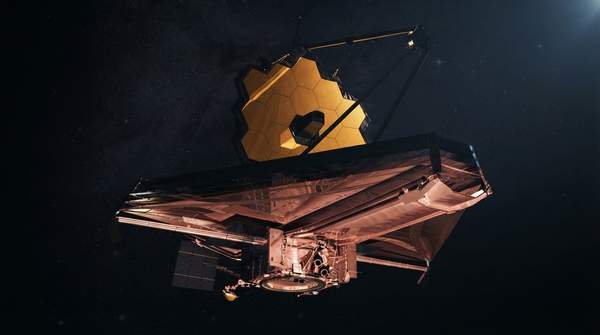
The immense scale and rapid formation of MoM-BH*-1 necessitate a significant re-evaluation of the initial conditions and evolutionary pathways available to massive structures in the early cosmos. The James Webb Space Telescope's unparalleled capability detects and characterizes phenomena that defy previous theoretical predictions, pushing the boundaries of astrophysical understanding. The data suggests that the universe's initial conditions fostered a much faster and more extreme path to cosmic giant formation than previously imagined, forcing astronomers to rewrite the opening chapters of cosmic evolution and revise models of early black hole formation that struggle to explain such massive, complex objects so soon after the Big Bang.
The Mystery of Its Power Source
A primary question arising from the discovery of MoM-BH*-1 concerns the precise nature of its energy generation. The black hole star produces 100 billion times more energy than nuclear fusion within standard stars can physically generate, according to Open Access Government. This extreme output suggests a mechanism distinct from typical stellar processes, likely involving highly efficient accretion onto the central black hole or complex interactions within the surrounding gas envelope. Understanding this power source is crucial for refining models of early universe energy budgets and the evolution of cosmic giants, as it implies a new, incredibly efficient, and previously unknown mechanism for energy generation.
Future research efforts will concentrate on detailed spectroscopic analysis to probe the physical conditions within MoM-BH*-1's gas envelope and the accretion disk around its black hole. Astronomers aim to determine how the black hole's energy output is processed or re-emitted by the surrounding stellar-like gas, contributing to its unique spectral signature. Such investigations could reveal entirely new forms of energy release in the early universe, moving beyond traditional definitions of 'star' and 'black hole' for these extreme objects. The traditional definitions of 'star' and 'black hole' are now obsolete for understanding the early universe's most extreme objects.
Your Questions About Black Hole Stars, Answered
What are black hole stars?
Black hole stars, such as MoM-BH*-1, are hybrid cosmic objects characterized by a central black hole enveloped within a massive, star-sized shell of gas, primarily hydrogen. The object MoM-BH*-1, also known as Mirage or Miracle-BH*-1, is extremely bright, radiating about 100 billion times more energy than any known star, according to Gizmodo. This extreme luminosity makes them distinct from both conventional stars, which generate energy through fusion, and typical black holes, which are not usually shrouded in such luminous stellar envelopes.
How are black hole stars different from regular stars?
Regular stars produce energy through nuclear fusion in their cores, converting hydrogen into helium. Black hole stars, conversely, derive their immense energy output not from fusion but from the accretion of matter onto their central black hole, which is then processed and re-emitted by the surrounding gas envelope. This fundamental difference in energy generation allows black hole stars to achieve luminosities far exceeding what is possible for even the most massive fusion-powered stars, fundamentally altering how astronomers categorize early cosmic giants. Their spectral signatures also differ, displaying unique features like the Balmer break.
What is the significance of discovering new cosmic objects like black hole stars?
Black hole stars like MoM-BH*-1 are significant because their discovery challenges long-held theories regarding the formation and evolution of cosmic structures in the early universe. Massive black holes and their stellar-like envelopes could form and grow to immense sizes much faster than previously modeled, just 660 million years after the Big Bang. This forces astrophysicists to revise models concerning the initial seeds of supermassive black holes and the co-evolution of galaxies, suggesting a more rapid and dynamic early cosmic history. Such findings reveal the limitations of existing frameworks and push the boundaries of theoretical astrophysics.
Are black hole stars a new discovery in 2026?
Yes, the identification of MoM-BH*-1 as the earliest 'black hole star' represents a significant discovery in 2026. This newly recognized class of cosmic objects provides direct observational evidence of hybrid entities existing in the very early universe, approximately 13 billion years ago. The James Webb Space Telescope's advanced capabilities made this detection possible, opening a new avenue for understanding the extreme conditions and rapid evolutionary processes.characterized the cosmos shortly after the Big Bang, with cosmologists and astrophysicists gaining new data to refine early universe models.