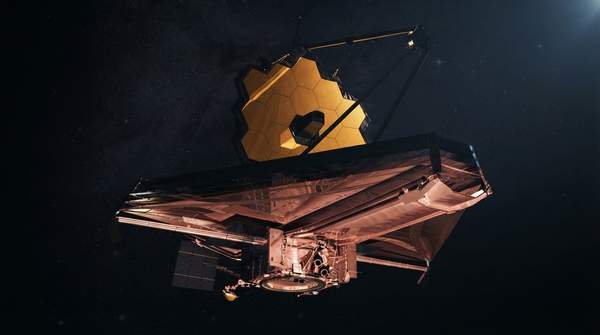
Launched on Sunday, NASA's Nancy Grace Roman Space Telescope will survey the sky with a field of view 200 times greater than Hubble's infrared capabilities, promising to map a billion galaxies and discover over 1,000 exoplanets. This successful deployment, achieved by a SpaceX Falcon Heavy rocket, initiates a mission poised to deliver a vast volume of cosmic data, significantly expanding humanity's observational reach across the universe, according to Reuters and NASA.
Historically, previous space telescopes have provided unparalleled detail within narrow observational fields, meticulously examining individual cosmic phenomena. However, the Nancy Grace Roman Space Telescope is explicitly engineered to prioritize a panoramic view, deliberately sacrificing some of that intricate individual object detail for a vastly expanded cosmic perspective, thereby altering established methodologies for celestial observation.
This mission is thus positioned to deliver a deluge of statistical data, which will likely reshape contemporary cosmological models and accelerate the discovery of new worlds, pushing the boundaries of astronomical research by emphasizing broad surveys over localized, qualitative insights, thereby fundamentally altering astronomical observation.
A New Eye on the Cosmos: Roman's Unprecedented Scope
The Nancy Grace Roman Space Telescope features a primary mirror measuring 7.9 feet (2.4 meters) in diameter, a dimension identical to that of the Hubble Space Telescope's primary mirror, as reported by science and roman. Despite this shared mirror size, Roman's Wide Field Instrument achieves a field of view that is significantly more expansive. Roman's field of view is reported to be over 100 times larger than Hubble's infrared capabilities by Euronews, science, and roman, while stsci indicates this advantage extends to 200 times greater. This significant increase in field of view (100-200 times greater than Hubble's infrared view, per Euronews.com, science, roman, and stsci) means astronomers are trading the exquisite detail of individual objects for an unprecedented statistical understanding of the universe's large-scale structure, fundamentally altering research methodologies and allowing Roman to capture vast cosmic landscapes with unparalleled efficiency compared to its predecessors.
Mapping the Universe: Billions of Galaxies, Thousands of Worlds
Roman's mission objectives include measuring light from a billion galaxies over its operational lifetime and performing a microlensing survey designed to identify more than 1,000 exoplanets, according to science. Roman's panoramic vision enables ambitious targets, positioning it to deliver a comprehensive census of the universe's large-scale structure and exoplanet populations, fundamentally advancing cosmology and planetary science. Based on Roman's ability to map a billion galaxies and discover over 1,000 exoplanets, the era of 'deep-dive' astronomical observation is giving way to a 'big data' approach, where the sheer volume of data will unlock secrets of the cosmos previously hidden by limited fields of view.
The Scientific Community's Eagerness
The Roman Science Support Center recently announced the selections for its inaugural Cycle 1 General Investigator Program, which features 118 approved programs chosen from a total of 374 submitted proposals, according to science. The overwhelming response to the initial investigator program shows the scientific community's eagerness to leverage Roman's unique capabilities for diverse and groundbreaking research projects. High demand for Roman's initial observation cycle indicates a strong shift in research focus towards large-scale surveys, reflecting the scientific community's readiness to embrace a wide-field observational strategy.
A New Era of Discovery
The data gathered by Roman is expected to provide profound insights into the nature of dark energy, the distribution of dark matter, and the processes governing galaxy formation. This strategic shift from high-resolution, deep-field imaging to broad, statistical surveys optimizes for sheer data volume over individual object detail, aligning with the mission's goal to accelerate discoveries in dark energy and exoplanet demographics. The Nancy Grace Roman Space Telescope, which commenced its operations in 2026, is set to provide foundational data for astrophysics that will inform future missions for decades.
Frequently Asked Questions About Roman
What is the main goal of the Nancy Grace Roman Space Telescope?
The primary objective of the Nancy Grace Roman Space Telescope is to investigate the accelerating expansion of the universe, attributed to dark energy, and to conduct a comprehensive census of exoplanets. It will achieve this by mapping the distribution of dark matter through gravitational lensing techniques and observing distant supernovae and galaxy clusters.
How will the Roman Space Telescope map the universe?
The Roman Space Telescope will map the universe through a combination of extensive large-scale surveys, including a wide-field imaging survey, a supernova survey, and a dedicated microlensing survey. Its Wide Field Instrument allows it to image vast areas of the sky efficiently, collecting data on the positions and distances of billions of galaxies and thousands of exoplanets across cosmic time.
What discoveries are expected from the Roman Space Telescope?
Roman is expected to make significant discoveries regarding the nature of dark energy, providing more precise measurements of its effects on cosmic expansion. It will also refine our understanding of dark matter distribution and yield a statistically robust picture of exoplanet populations, particularly identifying colder, more distant planets not readily detectable by other methods.