In a striking image released on October 6, 2026, the James Webb Space Telescope has captured a vibrant and chaotic stellar nursery known as NGC 7129, providing an unprecedentedly clear view of multiple stages of star formation occurring simultaneously. The image, described by NASA as a "cauldron of cosmic creation," reveals how young stars, from deeply embedded protostars to more mature pre-main-sequence stars, interact with and shape their surrounding environment of gas and dust. Located approximately 3,300 light-years from Earth, this region offers astronomers a unique laboratory to study the complete life cycle of stars.
The new observation showcases Webb’s unique ability to pierce through the dense, obscuring clouds that have long hidden the earliest phases of stellar birth. By capturing infrared light, the telescope unveils a complex tapestry where different colors correspond to distinct physical processes, allowing scientists to dissect the commotion within this cosmic nursery and build a more complete picture of how stars come into being.
Webb's Infrared Vision: Piercing the Dust
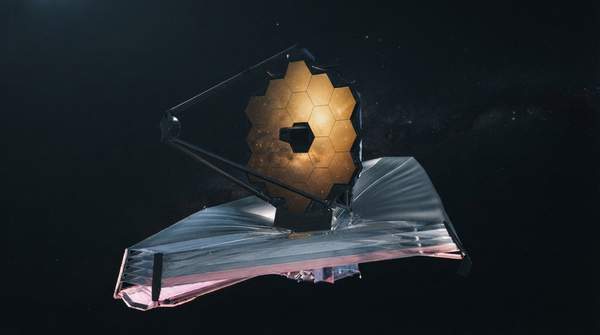
The remarkable clarity and detail in the image of NGC 7129 are a direct consequence of the James Webb Space Telescope's technological prowess, specifically its high degree of infrared sensitivity. Stars are born within cold, dense molecular clouds, environments so thick with gas and dust that they form "dusty cocoons" impenetrable to telescopes that observe in visible light. Webb, however, is designed to detect the longer wavelengths of infrared light, which can travel through these obscuring layers, allowing astronomers to witness the very beginning of the stellar life cycle.
The image was captured by Webb's Near-Infrared Camera (NIRCam). The vibrant colors are not merely aesthetic but are a critical data visualization tool. According to NASA, scientists assign different hues to the monochromatic images taken through various infrared filters. For instance, data from the F444W and F470N filters is assigned the color red, allowing researchers to map the location of specific materials like molecular hydrogen. This technique transforms the invisible infrared light into a detailed map of the nebula's composition and activity. A comparison with previous images from NASA's retired Spitzer Space Telescope highlights Webb's superior resolution, which reveals more intricate gas and dust filaments and a wealth of previously unseen background galaxies.