Reaching the subsurface oceans of Europa and Enceladus would require solving engineering problems that no space mission has ever faced: melting or drilling through kilometers of alien ice, powering a probe far from the Sun, communicating through a frozen crust, and doing it all autonomously. Current missions, such as NASA's Europa Clipper, are explicitly designed to assess whether these moons could support life from orbit — they are not life detection missions. The leap from remote reconnaissance to directly sampling an ocean is the central challenge now occupying mission planners at NASA and ESA, and the technologies to achieve it remain in development.
The Scientific Imperative: Why Explore Icy Moon Oceans?
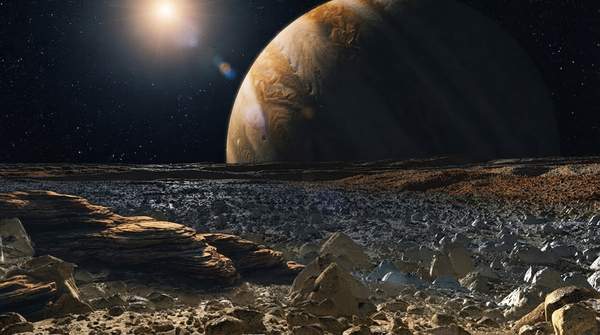
The rationale begins with chemistry. NASA describes Europa as potentially having all the "ingredients" needed for life as we know it: water — twice as much as Earth's oceans — organics from a variety of sources, chemical energy from both the surface and the sea floor, and conditions that may have remained stable for roughly four billion years. Beneath an ice crust estimated by planetary scientists at 19 to 25 kilometers thick lies an ocean containing more liquid water than all of Earth's oceans combined.
Enceladus adds a second, more dynamic draw. Researchers point to a remarkable series of findings that add credence to the belief that seafloor hydrothermal activity exists on Saturn's small moon. On Earth, such vents are known to harbor countless unique species, from bacteria to crabs and octopuses. Morgan Cable, a scientist whose remarks were reported by IEEE Spectrum, called these environments "great oases of life" — which is why hydrothermal systems on Enceladus are considered prime targets for habitability studies.
These priorities are now formalized in agency planning. ESA's Voyage 2050 recommendations state that a future ocean world mission should focus on the habitability of an ocean world by investigating the links between its interior and its surroundings, search for signs of past or present life, and seek to identify life-enabling chemistry at the surface. Answering those questions definitively, however, almost certainly requires in-situ exploration rather than remote sensing alone.