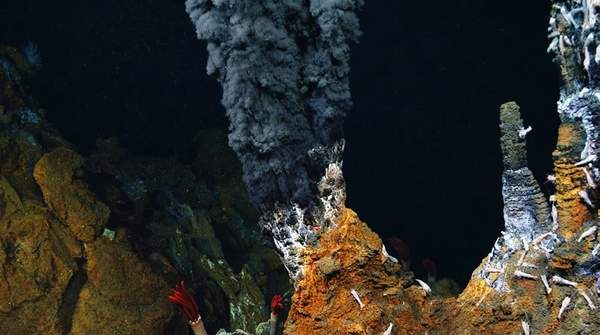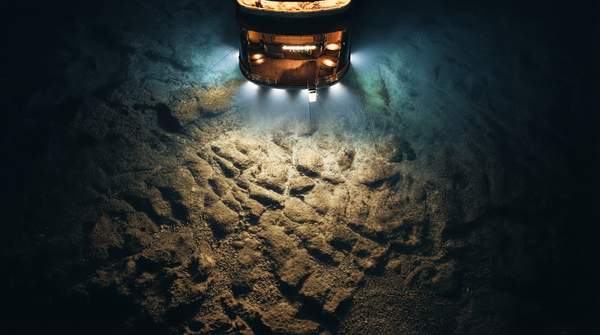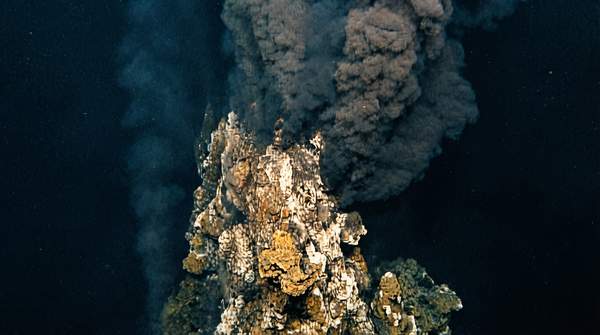
In the crushing pressure and total darkness of the deep ocean, life thrives around volcanic hydrothermal vents, powered not by the sun, but by chemical energy seeping from the Earth's crust. These unique ecosystems have redefined our understanding of the requirements for life and serve as a primary model for astrobiologists searching for life on other planets and moons. By studying the non-biological chemical processes that fuel these deep-sea oases, scientists can identify the specific geochemical signatures that might indicate a habitable environment far beyond our own world.
The significance of these vents lies in their independence from sunlight. Instead of photosynthesis, life here is built on chemosynthesis, a process where microbes convert mineral-rich fluids into energy. This discovery provides a compelling blueprint for how life could emerge and be sustained in the sunless, subsurface oceans believed to exist on moons like Jupiter's Europa or Saturn's Enceladus.
The Chemosynthesis Energy Pathway
At the heart of a hydrothermal vent ecosystem is a fundamental chemical imbalance. The process of chemosynthesis harnesses the energy created when hot, chemically-reduced fluids from the vent mix with cold, oxidized seawater. This chemical disequilibrium provides a free lunch for specialized microbes, which act as the foundation of the entire food web.
The pathway from raw chemicals to life-sustaining energy can be understood through several key steps:
- Source of Ingredients: The process begins with two distinct chemical sources. The hydrothermal vent itself spews geothermally heated fluid rich in reduced chemical species, which act as electron donors. The surrounding deep-ocean water provides electron acceptors, such as oxygen or nitrate, which ultimately originate from photosynthetic processes near the surface.
- Microbial Mediation: While these chemicals could react on their own, the process is often slow. Microbes dramatically accelerate these reactions. They capture the energy released when electrons are transferred from the vent chemicals to the seawater chemicals. This microbial transformation is the engine of the ecosystem.
- Energy Production: By mediating this flux of energy from a geothermal source, microbes produce ATP and organic carbon. According to research from Rutgers University's deep-sea microbiology lab, these molecules represent a form of biochemical energy that supports the microbes' own growth and becomes the primary food source for other vent organisms.
Bioenergetic models allow scientists to quantify the potential energy available in these systems. By measuring the specific chemical composition and physical conditions, researchers can calculate the Gibbs energy, a value that represents the energy yield from these microbial reactions. This provides a powerful tool for assessing whether a given chemical environment, on Earth or elsewhere, has the capacity to support life.