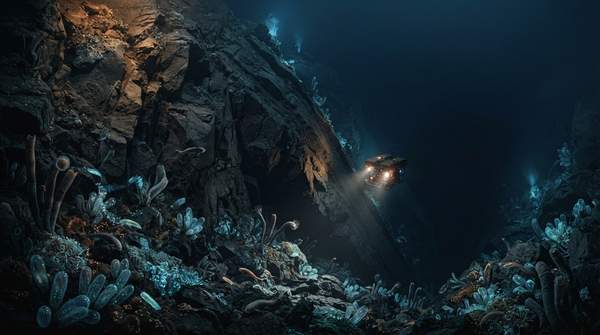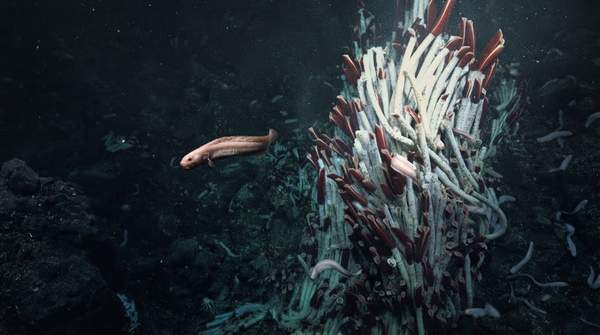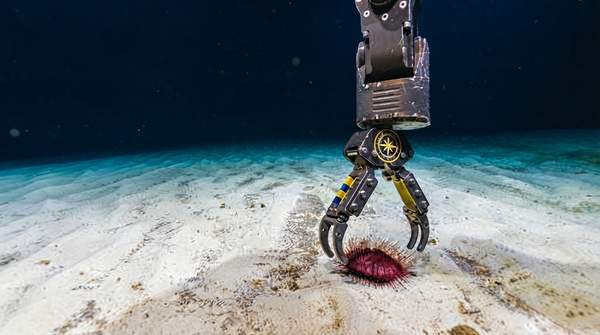
When I survey the deep sea's chemical landscape, four classes of compounds stand out as the most promising leads for biotechnology and medicine: eremophilane-type sesquiterpenoids from deep-sea fungi, venom-derived peptides like ziconotide, salinamides from marine actinomycetes, and robust marine enzymes. What makes these worth a researcher's attention is not just their bioactivity, but the story behind it: the crushing pressure, darkness and unusual chemistry of the deep ocean have pushed its inhabitants to evolve metabolic repertoires that shallower waters simply do not select for. Below, I lay out why that environment produces such distinctive chemistry, compare the four classes side by side, and then confront the practical hurdles that stand between a deep-sea specimen and an approved therapy.
Extreme Conditions Drive Unique Bioactive Chemistry
The deep sea is, as a review of deep-sea-derived fungi led by Guangrong Zhao and colleagues puts it, "the largest remaining unexplored aqueous habitat on Earth." Its residents face multiple extreme stresses simultaneously. To cope, the review explains, deep-sea organisms "have evolved specific genetic capabilities to produce a large number of metabolic products, including small molecules such as secondary metabolites, proteins and enzymes, saccharides, and so on." These products serve both species communication and adaptation—and, incidentally, supply the raw material for biotechnological and pharmaceutical applications.
A global inventory published in Scientific Reports by Lucy Harris and colleagues supports the environmental-pressure argument directly. The authors note that contrasting environments "can exert unusual selective pressures on organisms that may generate new bioactive compounds," and they single out the deep sea's heterogeneity in temperature, pressure and chemistry as the reason it has been highlighted as a promising frontier for drug discovery. Their compilation identified 2,909 deep-sea marine natural products from published sources and databases.
The scale of what remains unexplored is striking. Harris and her co-authors report that this inventory represents roughly 7.3 percent of all known marine natural products, even though the deep sea constitutes 90 percent of global ocean area and likely contains at least half of estimated marine biodiversity. In other words, the chemical record we hold is thin relative to the habitat itself.
Writing in Nature Sustainability, Erik Zhivkoplias and colleagues add an evolutionary timescale to this picture: marine organisms have adapted over millions of years to extreme conditions of temperature, salinity, light, pressure and water flow. World Ocean Review's account of marine-derived active compounds adds a functional explanation for why these molecules matter so much to their makers—secondary metabolites improve survival and are "enormously effective even in very small quantities." That potency in tiny amounts is precisely what drug developers look for, and precisely what makes sourcing so difficult, as we will see.
Key Classes of Deep-Sea Derived Compounds and Their Applications
Sorting the evidence by chemical class reveals a useful pattern: each class maps to a characteristic biological source and a characteristic application space. Sesquiterpenoids and nitrophenyl trans-epoxyamides emerge from deep-sea fungi; peptides trace back to venomous predators; salinamides come from actinomycete bacteria; and enzymes from marine microorganisms serve industrial rather than clinical ends. The table below cross-references these classes so you can see at a glance which organisms to target for which application.
Comparative Overview of Deep-Sea Compound Classes
| Compound Class | Biological Source | Example Bioactivity/Application |
|---|---|---|
| Eremophilane-type sesquiterpenoids | Deep-sea fungi | Inhibition of nitric oxide production in macrophage cells, indicating anti-inflammatory potential |
| Dimeric nitrophenyl trans-epoxyamides (chrysamides A–C) | Deep-sea fungus Penicillium chrysogenum SCSIO411001, Indian Ocean, 3,386 m depth | Isolated as new fungal metabolites; class identified among deep-sea fungal products |
| Peptides (ziconotide) | Venom of the cone snail Conus magus, living under 2,000 meters | Licensed anti-pain drug for severe chronic pain |
| Salinamides C and E | Marine actinomycetes | Light anti-inflammatory activity |
| Enzymes | Marine microorganisms | Antioxidant and anti-larvicidal activities; resistance to temperature, pH, salt and contaminants makes them promising biocatalysts for sustainable industrial processes |
Two rows deserve closer reading. The sesquiterpenoid entry comes from chromatographic isolation of thirty eremophilane-type compounds, twenty-six of them new, named eutyperemophilane A–Z. Eutyperemophilane I and J showed comparatively potent inhibition of nitric oxide production induced by lipopolysaccharide in Raw 264.7 macrophage cells, with IC50 values of 8.6 and 13 μM respectively—figures the reporting review interprets as promising anti-inflammatory potential. Note the qualification: this is cell-level inhibition data, not clinical evidence.
The peptide row is the field's clearest success story. A review of deep-sea anticancer drug discovery describes ziconotide (marketed as Prialt) as a synthetic form of a peptide extracted from the venom of the predatory cone snail Conus magus, living under 2,000 meters in the sea, and licensed by the European Medicines Agency as an anti-pain drug. It demonstrates that a deep-sea-derived structure can reach approval—though as a synthetic analog, not as a harvested natural product. The same review also catalogs preclinical deep-sea candidates with anticancer potential, including the cyclic peptide marthiapeptide A and diketopiperazines, alongside the salinamide entry: a review of marine bioactive compounds reports light anti-inflammatory activity in salinamides C and E, produced by actinomycetes, a bacterial group it credits with many bioactive natural products including antitumor properties.
The enzyme row points to industry rather than the clinic. Marine microorganisms yield enzymes whose resistance to temperature, pH, salt and contaminants makes them promising biocatalysts for new and sustainable industrial processes, with demonstrated antioxidant and anti-larvicidal activities. This is the class most likely to reach commercial deployment fastest, because industrial biocatalysis does not face the regulatory gauntlet that pharmaceuticals do.
Challenges and Future Outlook in Deep-Sea Bioprospecting
The obstacles fall into three tiers: getting to the organisms, getting them to produce chemistry, and getting that chemistry to patients. On access, the Harris inventory shows a sampling bias toward benthic and shallower habitats, with relatively fewer records from ocean areas beyond national jurisdiction and a heavy contribution from Exclusive Economic Zones such as the North Pacific. The deep sea is vast, but our sampling of it is geographically shallow and politically bounded.
On supply, the numbers are sobering. Reporting in GEN, Mike May quotes an assessment of eribulin, a chemotherapy drug inspired by halichondrin B from the marine sponge Halichondria okadai: an average of one ton of sponge yields just one gram of halichondrin B, meaning it "could never be made available for use in clinical trials through natural collection." As the piece puts it, many bioactive molecules are made in such small amounts that extraction in drug-development quantities is "neither economically viable nor ecologically sound." Synthesis or fermentation must fill the gap.
On timelines and economics, World Ocean Review reports that developing pharmaceuticals from natural substances usually takes 15 to 20 years before approval, and that most large corporations closed their natural product research departments in the 2000s in favor of "blockbuster drugs," leaving the field driven mainly by medium-sized and smaller pharmaceutical companies—even as commercial interest in marine genetic material grows steadily.
The outlook, then, is one of enormous headroom constrained by practical bottlenecks. With deep-sea natural products representing only about 7.3 percent of known marine natural products against 90 percent of ocean area, the discovery frontier is wide open; the constraint is converting rare, slow-growing, hard-to-reach organisms into scalable, clinically testable compounds.
Navigating the Future of Deep-Sea Bioprospecting
My read of the evidence leads to a clear decision for researchers: prioritize interdisciplinary collaboration and technological advancement to overcome bioprospecting challenges and unlock the full therapeutic potential of deep-sea compounds. Ziconotide's path shows the template—identify a potent natural structure, then produce it synthetically at scale—and the eribulin case shows the cost of failing to do so. The measurable indicator to watch is the increased number of deep-sea derived compounds entering preclinical or clinical trials. When that pipeline count rises, it will signal that the field is solving its supply and culturing problems; until then, the deep sea's chemical wealth remains mostly a promise.
Sources
- Frontiers | Deep-Sea-Derived Fungi as Valuable Producers of Cytotoxic Secondary Metabolites and Their Leads Potential
- Global distribution of deep-sea natural products shows environmental and phylogenetic undersampling with… — Nature
- Growing prominence of deep-sea life in marine bioprospecting - Nature Sustainability
- Marine-derived active compounds - World Ocean Review
- Deep sea as a source of novel-anticancer drugs — PMC
- MDPI
- Promising bioactive compounds from the marine environment and their potential effects on various diseases - PMC
- Drugs from the Deep — GEN - Genetic Engineering and Biotechnology News