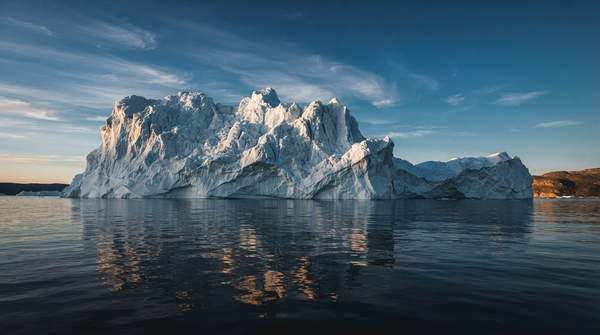
The first large-scale observational test of the theory behind the scariest sea-level rise projections delivers a split verdict: glacier cliffs can indeed break into the sea faster than climate models assume, but the retreat is short-lived and self-limiting, ruling out simple "doomsday" runaway collapse. The finding, published October 15, 2026, comes from a study led by the Woods Hole Oceanographic Institution with University of Michigan Engineering, based on more than 15,000 satellite and aerial images of glaciers in Greenland and Antarctica.
New Research Refines Glacier Cliff Collapse Models
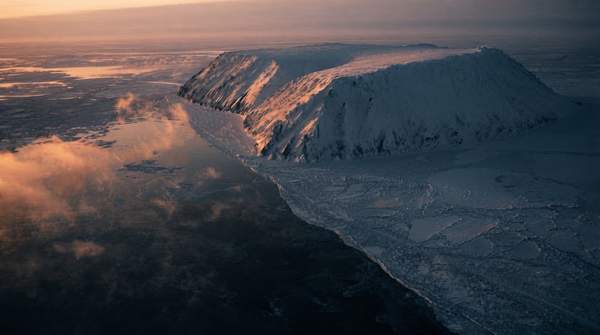
For years, one of the biggest question marks in sea-level projections has been what happens when a glacier's floating ice shelf disappears and leaves a sheer wall of ice standing exposed at the ocean's edge. The new study attacks that question with data rather than theory. Researchers at WHOI and Michigan collected and analyzed a dataset of satellite images and aerial photographs spanning both polar regions, producing what WHOI describes as the most comprehensive observational analysis yet of the towering ice cliffs that fringe Earth's ice sheets.
The headline result cuts both ways. The images show that large cliff faces can fall off glaciers faster than some climate models assumed, meaning that some higher and faster sea-level rise estimates, which some scientists had dismissed, could be more likely than previously thought. At the same time, the runaway effect is limited by ice thickness and the glacier's rate of thinning, meaning glaciers likely will not rapidly disintegrate in "doomsday" scenarios. The study's underlying data, archived as "Empirical constraints on ice-cliff calving," provides ice-cliff heights, calving rates, and other glaciological measurements for other researchers to test against their models.
Revisiting Marine Ice-Cliff Instability (MICI) Theory
To understand why this matters, it helps to revisit the theory under scrutiny. Marine ice-cliff instability, or MICI, proposes that extremely tall ice cliffs — taller than about 100 meters (328 feet) above the waterline — can become structurally unstable and trigger a cycle of rapid, self-sustaining ice loss. The idea gained prominence after a 2016 study published in Nature suggested that this previously unconsidered process meant Antarctic glaciers were more unstable than scientists had thought.
That 2016 work mattered because of what it implied for projections. Ice-sheet models that include MICI represent the highest projections of future sea-level rise, and Antarctic ice sheets in particular have proven to be a large source of uncertainty in those projections. Yet the hypothesis remained controversial, because self-sustaining retreat had never been directly observed — only inferred. Two parameterizations of ice-cliff calving, prescribing calving rates based on cliff height, were implemented in projection models; the original proposers suggested a critical cliff height of roughly 80–100 meters based on theory and limited observations, including the retreat of Sermeq Kujalleq (Jakobshavn Isbræ) and Crane Glacier. The new study is the first broad attempt to check those prescriptions against reality.
The Observed Self-Limiting Process
What the observations reveal is a process that starts like MICI predicted and then behaves differently. Glaciers can undergo faster periods of disintegration than previously assumed — the rapid phase is real. But the retreat does not sustain itself. The study's authors state it plainly: "These findings show that some of the processes described by marine ice-cliff instability occur in nature, but they also show that other factors can limit rapid retreat."
The limiting factors are physical and specific. Retreat depends sensitively on quantities like ice thickness gradients, not on cliff heights alone — a direct challenge to the height-based parameterizations used in existing models. The archived study data notes that model projections may underestimate cliff-calving retreat, but that the potential for instability hinges on those thickness conditions. The underlying research also describes conditions that suppress ice-cliff failure: a lower bed slope or ice thickness gradient may allow dynamic thinning to lower the cliff height below the critical height, facilitating advance rather than collapse. In plain terms, as the glacier thins and the cliff shrinks, the driving force for collapse weakens, and the glacier restabilizes.
Comparing Glacier Cliff Instability Models
The table below contrasts the theoretical MICI model with the observation-based model that emerges from the new study, showing how the same initial process leads to two very different endings.
| Aspect | Theoretical MICI model ("runaway collapse") | New observation-based model ("limited, episodic collapse") |
|---|---|---|
| Core mechanism | Tall ice cliffs become structurally unstable and trigger rapid, self-sustaining ice loss | Some MICI processes occur in nature, but other factors limit rapid retreat |
| Retreat behavior | Implied continuous rapid ice loss once a critical height is reached; self-sustaining retreat was never directly observed, only inferred | Glaciers can disintegrate faster than models assumed, but the retreat is short-lived and not a runaway process |
| Key controls | Cliff height above a critical threshold of roughly 80–100 meters, per height-based parameterizations | Ice thickness and thinning rate; ice thickness gradients rather than cliff height alone; thinning can lower the cliff below the critical height, facilitating advance |
| Sea-level implications | Models including MICI produced the highest projections of future sea-level rise, a major source of uncertainty not fully accounted for in earlier IPCC reports | Some higher-end scenarios previously dismissed become more plausible, while simple "doomsday" runaway scenarios are ruled out |
The comparison shows why the new evidence modifies, rather than eliminates, the MICI concern: the observed limiting factor — thinning-driven reduction in cliff height and the sensitivity to ice thickness gradients — was absent from the earlier theory.
Implications for Sea-Level Rise Projections
The practical stakes are considerable. Global sea level has already risen by around 0.2m since the late 1800s, and scientists project it will continue to rise throughout this century as ice sheets lose mass. For coastal communities and infrastructure, the difference between a mid-range and a high-end trajectory shapes planning horizons for decades.
The new study refines those models by providing empirical constraints on ice-cliff calving for the first time at scale. Higher estimates of sea-level rise gain plausibility because observed calving can outpace what models project; the unlimited runaway scenarios lose credibility because the observations show restabilization. This is one study, not a comprehensive accounting of all sea-level rise drivers, and it does not itself produce new projections — it constrains the models that produce them. The open question the researchers flag is whether the observed restabilization will hold as climate change pushes ice sheets further out of their historical range.
Refining Sea-Level Rise Projections
For climate modelers and the policymakers who rely on their output, the decision this research supports is to incorporate the observed self-limiting behavior of glacier cliff collapse — acknowledging rapid but short-lived retreat while ruling out unlimited runaway scenarios. The measurable indicator to watch is future IPCC assessment reports or climate model updates that reflect these refined understandings of Marine Ice-Cliff Instability. When the next round of projections appears, whether the ice-cliff component has been recalibrated against these 15,000 images will show whether the field has absorbed the lesson.