When I first encountered the field of paleogenetics, what struck me was not the technology itself but the reversal it represents: for most of history, pathogens recorded our story invisibly, and now we read their broken genes to recover it. Ancient pathogen DNA analysis gives scientists direct molecular evidence of the co-evolutionary relationship between humans and disease—evidence that can trace prehistoric migrations, quantify the toll of pandemics, and expose the selective pressures that shaped our immune systems. Two examples make the point vividly: a common oral bacterium that hitchhiked with humans across the globe, and the plague agent that killed a third to a half of Europe.
Unearthing the Past: The Power of Ancient Pathogen DNA
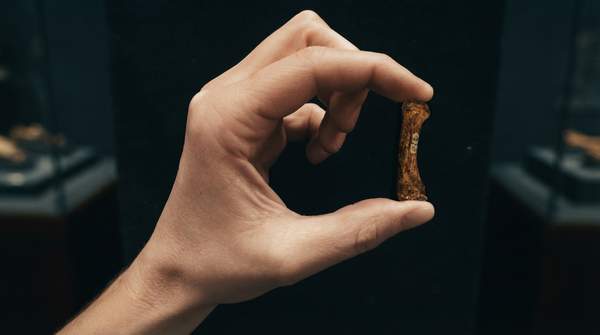
The premise of the field is simple, even if the practice is not. When a person dies, the microbes that lived in and on their body can leave fragments of DNA behind in the same skeletal remains that preserve the host's own genome. Archaeologists recover those remains—teeth, bones, and especially dental calculus, the mineralized plaque that forms on teeth and can trap oral bacteria over a lifetime—and molecular biologists extract whatever genetic material has survived.
Survival is the central challenge. DNA degrades after death, fragmenting into short, chemically damaged pieces, and remains also accumulate DNA from the surrounding environment and from the microbes of later handlers. Researchers must therefore distinguish authentic ancient pathogen sequences from modern contamination, a task that relies on the characteristic damage patterns and short fragment lengths that mark genuinely old DNA. Once authentic sequences are isolated, scientists can compare them against known microbial genomes, reconstruct portions of ancient pathogen genomes, and place those genomes on evolutionary trees.
What makes this powerful is the comparison. As the Becoming Human project, an educational resource on human evolution, explains, comparing ancient pathogen genomes to their modern descendants reveals how an organism has changed over time, offering insight into its evolutionary past and clues about how it may continue to evolve. The relationship runs both ways: just as pathogens and their diseases have influenced human evolution, human behavior has shaped pathogen evolution. When humans and their ancestors migrated around the globe, they brought their pathogens along, creating new distributions of disease.
Human cultural practices feed back into this loop, too. The sharing of eating and drinking vessels, the frequency of group gatherings, and even historical methods of medical treatment all shape the pathogen's evolutionary environment and the selective pressures it faces. Ancient DNA lets researchers see both sides of that exchange directly, rather than inferring them from written records, which for most of human history do not exist.
Pathogens as Historical Guides: Tracing Human-Disease Co-evolution
Not all pathogens tell the same kind of story, and that is precisely what makes them useful as historical documents. A scientific review of ancient DNA research into pathogens and their hosts, published in the open-access literature indexed by the National Library of Medicine, draws a distinction I find clarifying: some microbes are long-term commensal companions whose distribution mirrors our own movements, while others are acute agents of catastrophe whose fingerprints mark moments of intense selection.
Consider the oral bacterium Tannerella forsythia, which is involved in periodontal disease and has a longstanding relationship with humans. Ancient DNA from this microbe has been identified in several ancient individuals, including medieval Europeans and pre-contact Native American ancestors from Mexico and the United States. Because transmission of T. forsythia requires close physical contact between humans, the review's authors argue that the most parsimonious explanation is that the bacterium was already established in the human populations that first peopled the Americas. In other words, a gum-disease bacterium becomes a proxy for human migration—evidence that the founding populations of the Americas carried it with them across the Beringian corridor and beyond.
Contrast that with Yersinia pestis, the bacterium responsible for plague. The Black Death is estimated to have killed between 30 and 60 percent of Europeans in the 1300s, making it the deadliest pandemic in recorded human history. Beyond the staggering death toll, it reshaped the cultural environment of affected populations—values, norms, and social structures all changed—and it left a biological mark as well, shaping the evolutionary history of Europeans. Ancient genomic studies of Y. pestis show that humans have likely hosted the plague pathogen since at least the Late Neolithic period, and that they carried it across the European continent via human networks. The pathogen's spread is thus a map of our own connectivity.
The comparison below distills the essential contrast: a commensal organism as a slow-moving record of co-migration, versus an acute pandemic agent as a record of sudden, intense selection.
Comparing Pathogen Insights: Migration vs. Selection
Use this table to distinguish how ancient DNA from different pathogens can serve different historical purposes: tracing long-term human population movements, or identifying specific moments of intense natural selection.
| Pathogen | Key Finding from Ancient DNA | Implication for Human History |
|---|---|---|
| Tannerella forsythia (oral bacterium involved in periodontal disease) | Ancient DNA identified in medieval Europeans and pre-contact Native American ancestors from Mexico and the United States. | Because transmission requires close physical contact, its presence across diverse ancient populations is most parsimoniously explained as co-migration: the bacterium was already established in the populations that peopled the Americas, making it a tracer of long-term human population movements. |
| Yersinia pestis (plague bacterium) | Responsible for the Black Death, estimated to have killed 30–60 percent of Europeans in the 1300s; genomic evidence indicates humans hosted it since at least the Late Neolithic and spread it across Europe via human networks. | Reveals the impact of acute pandemic events on human populations—both cultural transformation and biological selection pressures that shaped the evolutionary history of Europeans. |
The pattern that emerges is the analytical payoff: T. forsythia DNA primarily reveals human migration patterns, while Y. pestis DNA highlights the impact of acute selective pressures from pandemics. A quiet companion documents where we went; a killer documents what we survived. Different pathogen types, in short, offer unique and complementary insights into human-disease co-evolution.
Modern Relevance: Ancient Insights for Future Health
Why does this matter beyond curiosity about the past? Because the evolutionary race between humans and pathogens has a scoreboard, and ancient DNA lets us read it. The scientific review notes that pathogen population dynamics tied to historical events can be examined alongside patterns of adaptation, both in the pathogen and in its hosts. These signals of selection illuminate the evolutionary contest between humans and microbes, including the period before and after the introduction of drugs and vaccines.
For humans, such signals can provide insights into disease susceptibility or resistance for people with specific immune profiles—why some populations carry variants that reflect centuries of pressure from particular diseases. For pathogens, understanding their evolutionary and zoonotic history can suggest paths for designing what the review's authors call "evolutionarily smarter" drugs or vaccines: interventions designed with the pathogen's capacity to adapt explicitly in mind, rather than treating evolution as an afterthought.
There is a humility embedded in this field, too. The review is candid that our understanding of pathogen evolutionary and zoonotic history is only possible through close collaboration among disciplines—archaeology, anthropology, genetics, and microbiology each contribute a piece that the others cannot supply alone. Ancient DNA is powerful, but it is a collective enterprise, not a single laboratory's trick.
Applying Ancient Wisdom: Informing Modern Health Strategies
The practical decision this research supports is to integrate evolutionary insights from ancient pathogen DNA into modern public health and medical research. The measurable indicator to watch is concrete: new drug or vaccine development strategies that account for long-term pathogen evolution or identified genetic susceptibilities in human populations. When a vaccine design cites pathogen evolutionary history, or when a study of immune-profile-specific susceptibility draws on selection signals documented in ancient genomes, the promise of paleogenetics is being kept.
The story of human evolution is, as the Becoming Human project puts it, intimately connected to the evolution of pathogens—our "constant and unsolicited companions." Ancient DNA has finally given us a way to read their travel logs and battle scars, and the next chapter belongs to medicine.