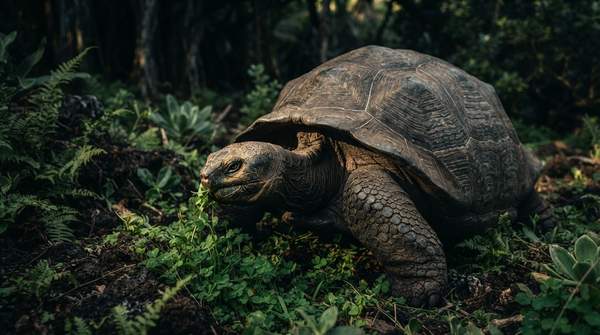
A new genetic analysis of Jonathan, the 194-year-old Aldabra giant tortoise recognized as the world’s oldest living land animal, has uncovered a unique biological strategy that may explain his extreme longevity. Researchers have identified a combination of specialized gene variants and remarkably stable gene regulation that appears to protect him from the typical ravages of aging, offering potential insights into cellular decline in other species, including humans.
The study, detailed in a scientific preprint, reveals that Jonathan’s resilience is not due to a single factor but a multi-layered defense system. This system includes an enhanced genetic toolkit for repairing DNA, combined with an unusual ability to maintain youthful control over which genes are switched on or off, particularly those essential for producing cellular energy. These findings provide some of the first concrete clues into the molecular underpinnings of one of nature's most durable lifespans.
A Superior Genetic Toolkit for Cellular Maintenance
At the foundation of Jonathan's longevity is a unique set of genes. The analysis identified 287 gene variants unique to him when compared to other Aldabra tortoises. According to the preprint, these variants are found in biological pathways critical for staving off age-related damage, including those associated with DNA repair and the regulation of telomeres—the protective caps on the ends of chromosomes that shorten with age.
This genetic endowment provides a robust defense against the constant wear and tear that cells endure over a lifetime. Justin Gerlach, a researcher involved in the analysis, noted that Jonathan possesses genes that are "particularly good for DNA repair and reducing inflammation," two key mechanisms known to counteract aging processes. This superior genetic blueprint for cellular maintenance appears to be a crucial first line of defense, allowing his body to effectively manage damage that would lead to decline in other animals.
Stable Epigenetic Control Preserves Youthful Gene Expression
Beyond his genes, Jonathan’s ability to regulate them appears equally important. The research team examined his epigenome—the system of chemical tags, or "switches," that tell genes when to turn on and off. In most animals, this system becomes chaotic over time, leading to errors in gene expression that contribute to aging and disease. Scientists measure this disorder as increasing entropy.
While Jonathan’s overall epigenetic entropy was higher than that of younger tortoises, as expected for his age, the researchers found a remarkable exception. According to Stephen Clark, a study co-author from the Kallel Foundation, the switches controlling genes for DNA repair and metabolism were surprisingly stable and very similar to those in younger tortoises. This stability allows Jonathan to "continue expressing the right genes at the right levels even in old age," a process that typically breaks down much earlier in other animals. "Jonathan has still got the genetic controls of a much younger animal," Gerlach added.
Jonathan's Longevity: A Multi-Layered Biological Strategy
The scientific findings point to an interconnected strategy that operates on multiple biological levels to sustain Jonathan's health for nearly two centuries. This model breaks down how his unique genetics, stable gene regulation, and resulting cellular functions work together to resist aging.
- Genetic Level (The Blueprint): Jonathan possesses a unique genetic code with variants in pathways crucial for cellular health. The scientific preprint highlights variants associated with DNA repair and telomere regulation, which are fundamental for maintaining genomic integrity over a long lifespan. This provides him with an inherently robust system for self-maintenance.
- Epigenetic Level (The Conductor): His body maintains unusually stable control over how his genes are used. Chemical tags called methyl groups, which act as on/off switches, have resisted the chaotic drift typically seen with aging, especially for genes related to metabolism and DNA repair. This ensures the correct genetic instructions are executed consistently, preserving function as if in a much younger animal.
- Cellular Level (The Result): The combination of superior genes and stable control leads to highly efficient cellular function. The preprint specifically notes that the most stable regions of Jonathan's epigenome are rich in genes for the electron transport chain—the core process of energy production in mitochondria. This "high-fidelity transcription" suggests his cells have maintained pristine energy production, a vital component for sustaining life over an extreme timescale.
Broader Implications for Understanding Aging
While the research focuses on a single giant tortoise, its implications extend to the broader scientific quest to understand aging. The mechanisms identified in Jonathan—robust DNA repair, stable gene expression, and efficient energy metabolism—are all areas of intense focus in human longevity research. The findings provide a natural example of how these systems can work in concert to achieve an exceptionally long and healthy life.
Researchers state that the analysis offers potential clues that could one day inform the development of treatments aimed at slowing age-related cellular decline in people. However, they caution that this is a long-term prospect. The immediate value lies in identifying candidate genes and biological pathways that warrant further investigation for their role in promoting healthspan and lifespan across the animal kingdom.
Future Directions in Longevity Research
The analysis of Jonathan's genome and epigenome marks a significant step, but it also opens new avenues for inquiry. The next phase of this work, as outlined by the research team, is to confirm the precise function of the identified candidate genes and epigenetic patterns. Researchers will continue to investigate the functional roles of the identified candidate genes and epigenetic patterns to understand exactly how they contribute to his longevity.
Future progress in this field can be tracked through the publication of follow-up studies confirming gene functions or exploring these mechanisms in other long-lived species. This ongoing research will determine whether the secrets of Jonathan's long life can offer a roadmap for promoting healthier aging for all.
Sources
- Epigenomic insights into extreme longevity in the world’s oldest terrestrial animal, Jonathan — bioRxiv
- 194-year-old tortoise reveals stable gene switches that may help resist aging — Phys.org
- The oldest known land animal is 194. How did he get so ancient? — Scientific American
- The secret to longer life? Scientists believe a 194-year-old tortoise could unlock clues — CNN
- Jonathan the giant tortoise, 194, offers up insight into secrets of longevity — the Guardian