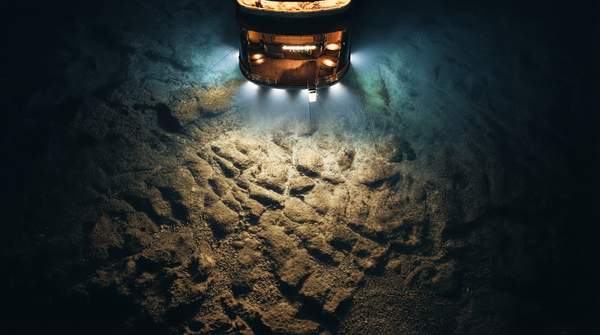
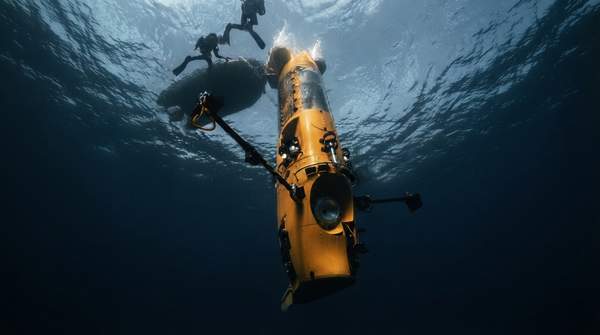
In February and March 2024, the Manta Ray prototype uncrewed underwater vehicle (UUV) completed full-scale, in-water testing off the coast of Southern California. Its sleek, ray-like form gliding through the Pacific signals a new era of deep-sea access. Humans are physically limited in these crushing environments, but advanced autonomous underwater vehicles now operate there for extended periods. This profound shift means companies and research institutions will increasingly rely on AUVs to unlock the deep ocean's mysteries and resources. This will accelerate marine science and introduce new geopolitical considerations.
What are Advanced Autonomous Underwater Vehicles?
Autonomous Underwater Vehicles (AUVs) are self-propelled robotic explorers, distinct from traditional submersibles. They operate without direct human control, offering unmatched autonomy, flexibility, and efficiency, states ScienceDirect. These machines free human researchers from constant vigilance, enabling sustained data collection across vast, hostile ocean stretches.
Northrop Grumman's Manta Ray exemplifies a new class of Uncrewed Underwater Vehicles (UUVs). Northrop Grumman's Manta Ray represents a leap beyond incremental AUV improvements, focusing on long-duration, long-range missions that conventional AUVs cannot sustain. The Manta Ray's innovative design allows it to maintain a persistent presence in remote underwater territories, fundamentally reshaping deep-sea exploration and potentially altering how nations assert influence in contested waters.
Unlocking the Deep: Unprecedented Depth and Endurance
Advanced AUVs dramatically expand our reach into the ocean's depths. The AUV Sentry, for instance, surveys topographic features up to 6,000 meters (3.7 miles) in hadal zones, collecting invaluable data, reports Oceanexplorer. This capability far surpasses vehicles like the AUV REMUS 6000, which operates at 45-50 meters (148-164 feet). This stark contrast reveals a new era where specialized AUVs can target specific deep-sea exploration needs, from shallow coastal monitoring to abyssal mapping.
The Manta Ray, developed by Northrop Grumman, takes this further with its design for long-duration, long-range missions. It can remain submerged for weeks or months, gathering continuous data from vast, unexplored regions. This sustained presence, a radical departure from brief human-crewed dives, promises to reveal dynamic deep-ocean phenomena and ecosystems previously impossible to observe, fundamentally altering our understanding of ocean processes.
Ingenious Design and Engineering Challenges
These vehicles often draw inspiration from nature. Ray-inspired robots, for instance, offer efficient locomotion and maneuverability, vital for ocean exploration and monitoring, as detailed in Nature. This biomimicry reduces energy consumption and enhances stealth, crucial for prolonged, covert deep-sea operations.
Developing such sophistication presents immense logistical and technical hurdles. The Manta Ray prototype shipped in subsections from Maryland to California, DARPA reports, demonstrating the essential modularity for complex system deployment and maintenance. Overcoming pressure, corrosion, and power management in the deep demands relentless innovation in materials science, propulsion, and artificial intelligence. This relentless pursuit of engineering breakthroughs is not just about building better machines; it's about pushing the very limits of what human ingenuity can achieve in the most hostile environments on Earth.
Beyond Human Limits: The New Frontier of Exploration
Advanced AUVs venture where humans cannot. Northrop Grumman confirms the Manta Ray will operate in crushing depths and frigid waters instantly lethal to unshielded divers. This is not merely an extension of human reach; it is a fundamental shift in access, opening vast, previously unreachable territories for sustained observation.
While individual vehicle capabilities advance rapidly, coordinating multiple AUVs remains a significant challenge. Digital twin-based approaches for AUV swarm control have struggled with ocean current disturbances or collision avoidance, reports Nature. Mastering single-vehicle endurance is one thing; orchestrating autonomous fleets in dynamic ocean environments demands further innovation. This unsolved problem means the true power of networked, collaborative deep-sea exploration is still years away, a critical hurdle for comprehensive ocean mapping and resource management.
Frequently Asked Questions About Deep-Sea AUVs
How are autonomous underwater vehicles used in oceanographic research?
AUVs collect vast datasets for oceanographic research. They map the seafloor, monitor currents and temperatures, detect chemical plumes from hydrothermal vents, and track marine life migrations, all without constant human intervention. These missions provide critical insights into climate change, marine biodiversity, and geological processes.
What are the challenges of deep-sea exploration with AUVs?
Challenges extend beyond swarm coordination. Water properties severely limit communication with surface vessels, hindering real-time data transmission. Energy storage for long missions, precise navigation in featureless environments, and remote repair or recovery remain significant hurdles for current technologies.
What is the future of AUVs in marine science?
The future involves sophisticated sensor integration and AI-driven data analysis, moving from data collection to autonomous decision-making and adaptive sampling. Researchers foresee AUVs collaborating in networks, sharing information to create comprehensive, real-time ocean models. This could uncover entirely new species and geological features by 2030.
The Future is Autonomous: A New Era for Ocean Discovery
The Manta Ray UUV's successful testing signals a profound shift: human-crewed deep-sea exploration is yielding to persistent robotic presence. This strategic investment by defense and research institutions in modular, long-endurance autonomous platforms will unleash a deluge of data from inaccessible depths. This volume demands parallel advancements in AI-driven data processing and interpretation. Our understanding of the ocean's deepest secrets will accelerate dramatically, driven by these tireless mechanical pioneers.
By 2026, the Manta Ray and similar advanced AUVs will likely operate routinely in previously inaccessible deep-sea environments. This will dramatically expand global marine datasets and reshape our relationship with the planet's most mysterious realm.