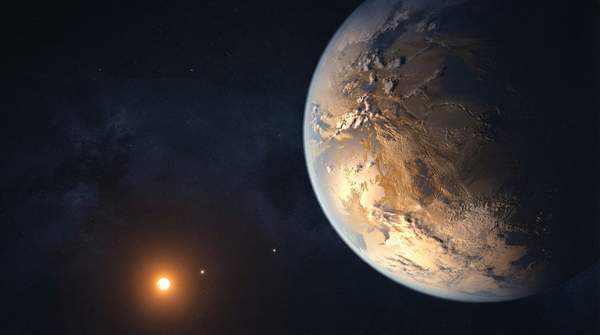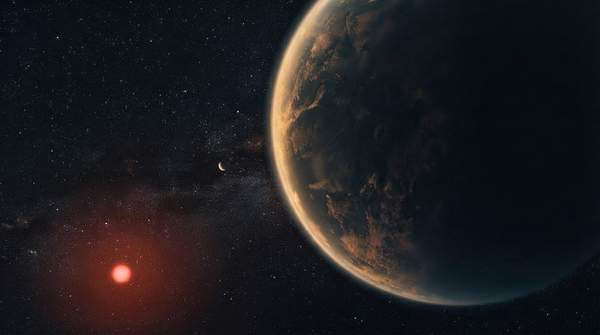
Characterizing the interior of a rocky exoplanet rests on a surprisingly thin observational foundation: almost everything scientists can infer about a distant planet's core, mantle, and possible volatile layers begins with just two measured numbers, its mass and its radius. From that sparse starting point, researchers have developed a toolkit of methods—mass-radius scaling relationships, Bayesian inference models, and machine-learning approaches—that trade simplicity for detail. This guide compares what each method requires, what it can reveal, and where it fails, with a central caveat that recurs throughout: different interior compositions can produce the same observed mass and radius, so no current method yields a unique answer.
Introduction to Exoplanet Interior Characterization
The goal of studying exoplanet interiors, as Sara Seager's research group frames it, is "to learn what individual exoplanets are made of, and even what their internal structure might be." That ambition collides immediately with a hard constraint: only a planet's mass and radius can be measured directly, with no other information about the interior available from a distance. Mass and radius, as a review of interior modeling fundamentals explains, "encapsulate information about the integrated interior structure and composition of an exoplanet" and can constrain first-order characteristics—but they compress an entire planet into two numbers.
Everything beyond those numbers is inference, and the methods below differ chiefly in how much structure they can responsibly extract from that inference, and how honestly they report their own uncertainty. This article focuses on terrestrial and rocky planets, the domain where these methods are developed and applied.