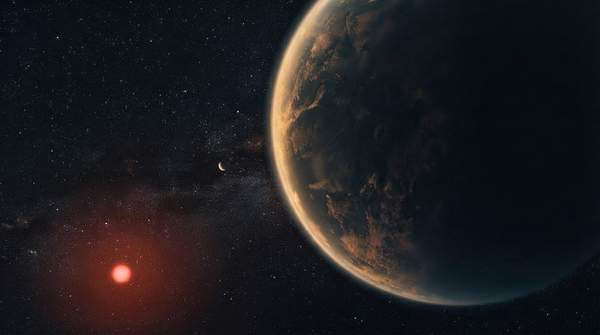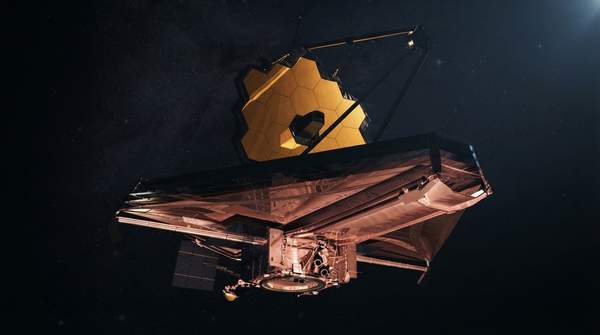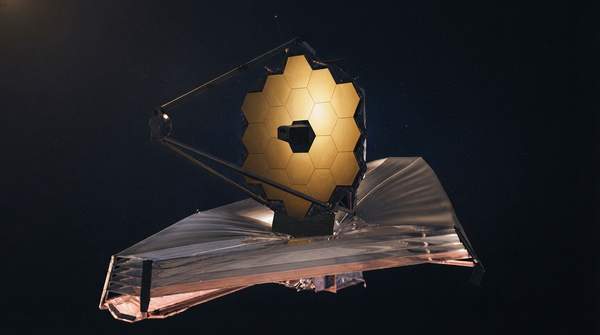
The James Webb Space Telescope takes pictures of exoplanets by solving one problem above all others: a planet is staggeringly faint next to its star. Direct imaging, which astronomers also call high-contrast imaging, is the only method capable of capturing photons emitted directly from planetary bodies, and it depends on two techniques working in sequence. A coronagraph physically blocks the host star's overwhelming glare so the planet can be seen at all, and a spectrograph then splits the surviving planetary light apart to reveal the chemical fingerprints of the planet's atmosphere.
The Challenge of Direct Exoplanet Imaging: Overcoming Starlight
The core difficulty is contrast. Planets can be billions of times dimmer than their host stars, so they are usually lost entirely in the glare, as NASA's direct-imaging explainer puts it. A review of exoplanet direct imaging posted to arXiv quantifies the same problem from the instrumentation side: imaging an object roughly a million times fainter than its parent star necessitates state-of-the-art optics. Whether the ratio is a millionfold or more, the consequence is identical — without active suppression of starlight, the planet's photons are buried beneath the star's.
There is a second, geometric difficulty. A planet orbiting far from its star appears at a wider angular separation on the sky, which makes it easier to pick out from the residual glare; a close-in planet sits so near its star on the detector that even a suppressed star still swamps it. That is why the technique's practitioners describe high-contrast imaging as especially advantageous for scrutinizing nascent planetary systems, where young planets shine brilliantly in the infrared because they still retain the heat of their formation.
How a Coronagraph Creates an "Internal Eclipse"
The coronagraph is the mechanism that makes the observation possible, and it is best understood as a staged sequence rather than a single device. The framework below traces the path from raw starlight to a detected planet, using the instrument specifications documented by NASA and the Space Telescope Science Institute.
| Stage | What enters the telescope | What the coronagraph does | Result on the detector |
|---|---|---|---|
| 1. Unocculted view | Mixed light from the star and any orbiting planet | Nothing — the planet is invisible, billions of times dimmer than the star | Star dominates; planet is lost in the glare |
| 2. Mask insertion | The same mixed beam | An opaque or phase-shifting mask is placed at the star's image within the optical path | The star's central glare is blocked or canceled |
| 3. Off-axis light survives | Light arriving at wider angles — where a wide-separation planet lies | The mask blocks only the star's on-axis position; off-axis light passes around it | The planet's photons reach the detector |
| 4. Detection and spectrum | The isolated planetary signal | The spectrograph disperses the planetary light | An image plus an atmospheric spectrum |
The essential physical idea is that the mask sits inside the telescope, at the plane where the star's image forms, acting as an artificial eclipse in the optical path. Because the planet is physically offset from its star, its light arrives from a slightly different angle and skirts the mask. Webb carries these masks on two instruments: NIRCam, which observes from 0.6 to 5 microns and offers imaging, coronagraphy and grism slitless spectroscopy, and MIRI, which observes from 5 to 28 microns and carries its own coronagraphs specifically for exoplanet work.
MIRI's implementation shows how deliberately the masks are engineered. Its imaging channel holds four coronagraphs covering wavelength bands from 10 to 23 microns: one classical Lyot-type coronagraph with an inner working angle of roughly 3.3 λ/D, and three 4-quadrant phase-mask coronagraphs that achieve a smaller inner working angle of about 1 λ/D at 10 to 16 microns, according to the Space Telescope Science Institute's JWST user documentation. The inner working angle defines how close to the star a planet can orbit and still be resolved — the tighter that angle, the more compact a planetary system the instrument can probe.
Spectroscopy: Unveiling Exoplanet Atmospheric Composition
Blocking the star is only half the mission. Once planetary photons are isolated, Webb's spectrographs disperse that light into a spectrum, and molecules in the atmosphere leave absorption signatures at specific infrared wavelengths. As NASA's Webb mission team explains, by viewing infrared light with its sensitive spectrographs, Webb can pick up chemical fingerprints that cannot be detected in visible light.
The payoff is concrete. In observations of the HR 8799 system, Webb's NIRCam obtained spectra showing that the four giant planets are rich in carbon dioxide — the first time that molecule had been identified in directly imaged exoplanets, according to NASA's release on the finding. Laurent Pueyo, an astronomer at the Space Telescope Science Institute in Baltimore who co-led that work, framed the result as a stepping stone: "We have other lines of evidence that hint at these four HR 8799 planets forming using this bottom-up approach," he said, adding that how common such formation is among directly imageable planets remains unknown and is the subject of proposed follow-up Webb observations.
Webb's first directly imaged exoplanet, HIP 65426 b, illustrates the same pipeline from image to characterization. The planet orbits an A-type star roughly twice the Sun's size, at a distance of about 60 to 100 astronomical units — about double Pluto's distance from the Sun — and is about seven times Jupiter's mass. Its wide separation is precisely what made it a tractable target for a coronagraphic observation.
Ideal Targets: Young, Wide-Separation Gas Giants
Direct imaging is not a general-purpose planet hunter, and its selectivity follows directly from the physics above. The technique works best for young, nearby planetary systems whose planets are especially bright in the infrared — the self-luminous glow of a gas giant still cooling from formation. Older, colder planets, and any planet orbiting close to its star, fall below the contrast and angular-separation limits that the masks and inner working angles impose.
There is a complementary logic, noted in the arXiv review of Webb's exoplanet atmosphere capabilities: because the indirect transit and radial-velocity detection methods are inherently much less sensitive to wide-separation planets with long orbital periods, direct imaging is the best available method for defining the outermost extents of planetary systems and building a more complete picture of how common planetary-mass companions are around nearby stars. The two approaches do not compete; they sample different regions of the same systems.
Observing the Unseen: JWST's Path to Exoplanet Discovery
The decision this article supports is straightforward: Webb's combined use of coronagraphy and spectroscopy provides a powerful, direct approach to exoplanet research, particularly for characterizing young, widely separated gas giants. The coronagraph answers whether a planet can be seen at all; the spectrograph answers what that planet is made of; and the population best served by both is the one that is intrinsically bright and angularly resolvable.
The measurable indicator to watch is continued scientific publications detailing new direct images and atmospheric compositions of exoplanets, especially those with wide orbital separations and detectable chemical signatures. The HR 8799 carbon dioxide result and the proposed follow-up observations Pueyo described mark exactly that trajectory: each new spectrum of a directly imaged planet extends the census from "a point of light beside a suppressed star" to a world with a known atmosphere.
Sources
- Direct imaging of exoplanets — arXiv.org
- Direct Imaging - NASA Science
- Webb's Impact on Exoplanet Research - NASA Science
- MIRI Coronagraphic Imaging - JWST User Documentation — JWST DOCS
- NASA's Webb Images Young, Giant Exoplanets, Detects Carbon Dioxide - NASA Science
- NASA’s JWST Takes Its First-Ever Direct Image of Distant World — United States Navy
- Exploration of Exoplanet Atmospheres with the James Webb Space Telescope — ARXIV