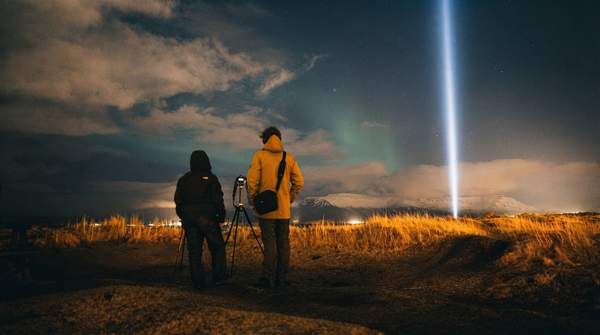
The "sunlight at night" demonstration that drew attention across California's Sierra Nevada in October 2026 was not a test of an orbiting mirror. On the evening of October 10, Reflect Orbital set up powerful, generator-powered spotlights along Horseshoe Meadows Road, near Lone Pine in the shadow of Mount Whitney, and ran them from roughly 7 p.m. to midnight to simulate what future orbiting mirrors might deliver to the ground. No Reflect Orbital satellite has launched. The Los Angeles-based startup plans to place mirror satellites in low-Earth orbit to deliver sunlight on demand, with its first in-space test slated to begin later this year aboard a SpaceX Falcon 9 rideshare mission.
The "Sunlight at Night" Event: A Ground-Based Simulation
The event, near the town of Lone Pine in the Sierra Nevada region, was the latest step in the company's plan to erect thousands of giant mirrors in space to reflect sunlight onto the Earth during night-time, as the Guardian's Oliver Milman reported. That plan envisions launching 50,000 satellites over the next decade to illuminate parts of the world at night — a scale that helped set public expectations that any test would involve an orbiting craft.
The October 10 test involved members of the China Lake Mountain Rescue Group, an all-volunteer, 501(c) nonprofit that operates under the auspices of the Kern County Sheriff's Office, providing search-and-rescue services at no cost. The volunteers practiced searching and training with night-time equipment during the controlled tests between 7 p.m. and midnight, according to veteran space journalist Leonard David's reporting on the event. The lighting itself came entirely from terrestrial spotlights — a simulation, not an actual space mirror, and a terrestrial location, not an orbital one.
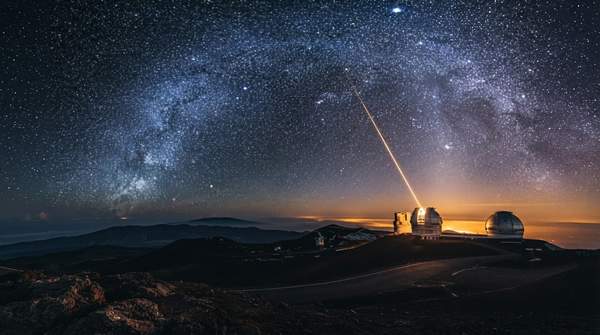
The demonstration has drawn criticism even before any satellite has flown, as the Guardian's coverage noted. Astronomers have voiced concerns regarding the impact on their observatories due to the increasing number of satellites in the night sky. For instance, the approximately 10,000 Starlink satellites managed by SpaceX frequently create bright streaks in images captured by ground-based telescopes.