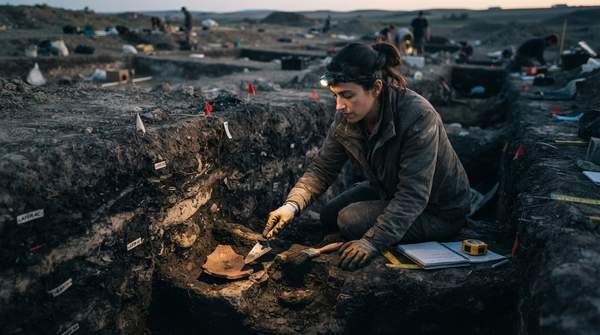
In many archaeological reports, the complete absence of information on survey effectiveness makes it impossible to truly evaluate claims about the presence, density, or character of ancient materials. This critical gap leaves fundamental questions about early human settlements and their true scale unanswered, injecting unquantifiable uncertainty into narratives of past civilizations.
Sophisticated methods exist to ensure archaeological survey quality. Yet, the widespread absence of effectiveness data in many reports prevents any true evaluation of claims about ancient materials. This creates a profound tension between our technical capabilities and the transparency of our published findings.
Without a systemic shift towards mandatory, transparent reporting of survey methodologies and their effectiveness, our understanding of ancient civilizations remains built on an unquantifiable foundation of uncertainty, risking historical misinterpretations and undermining the very integrity of archaeological claims.
The Foundation of Discovery: Why Standards Matter
Reliable insights into ancient civilizations hinge entirely on the quality of archaeological surveys. As PMC notes, confidence in results demands assurance that surveys meet a high standard. Without this foundational commitment to verifiable execution, any subsequent archaeological findings—and claims about artifact distribution or historical population densities—are built on shaky ground, compromising the scientific validity of our understanding of human origins.
Quantifying the Unseen: Methods for Ensuring Accuracy
To assess the probability of missing artifacts, archaeologists can employ robust, quantifiable methods. Techniques like resurvey, measurement of surveyor 'sweep widths,' and realistic estimates of survey coverage are available to evaluate potential omissions, as detailed by PMC. These tools provide a clear pathway to verify the thoroughness of any search.
These techniques quantify and mitigate inherent uncertainties in discovering ancient sites, offering a measure of confidence in both what is found and what might be missed. Consistent application could profoundly transform the reliability of data concerning ancient civilizations.
The Limits of Technology: Cost and Resolution Challenges
While advanced tools aid archaeological discovery, practical limitations often constrain their comprehensive application. Some remote sensing technologies, for instance, have low temporal and spatial resolution, according to Spiedigitallibrary, meaning they may not always capture the fine details necessary for precise interpretation.
Furthermore, the expense associated with certain remote sensing technologies presents a significant barrier, as Spiedigitallibrary notes. These inherent technical limitations and significant financial constraints mean no single method offers a perfect, all-encompassing view of the past, necessitating careful, strategic application.
Building Trust in the Past: A Call for Transparency
Despite possessing sophisticated quality control methods, the archaeological community often operates with a self-imposed blind spot. As PMC observes, the rigor of scientific verification is frequently traded for the convenience of incomplete reporting. This omission prevents external parties from truly trusting the resulting data.
The true value of archaeological discovery hinges not merely on finding artifacts, but on the verifiable quality of the methods used to find and report them. A pivotal shift is anticipated: in the future, the global archaeological association aims to implement new mandatory reporting standards for survey effectiveness. This crucial step will ensure greater transparency in future claims about ancient civilizations, finally addressing the systemic trust deficit observed in current reporting and allowing us to build a more certain understanding of our shared human past.