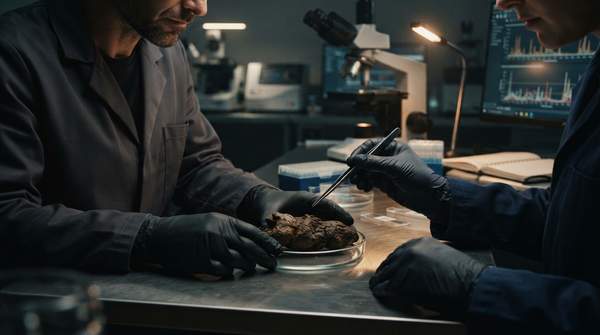
Frozen in desiccated chunks of human feces from caves in the southwestern United States and Mexico, scientists have recovered a record of the gut bacteria our ancestors carried a thousand to two thousand years ago. A large-scale analysis published in Nature reconstructed 498 medium- and high-quality microbial genomes from eight authenticated samples of paleofeces, and the picture that emerges is striking: modern industrialized guts appear to have lost dozens of bacterial species, along with much of their overall diversity. That erosion matters because, as prior studies cited in the paper note, lower gut microbial diversity in industrial populations correlates with higher rates of chronic diseases such as obesity and autoimmune conditions.
Unearthing the Past: What Paleofeces Reveal
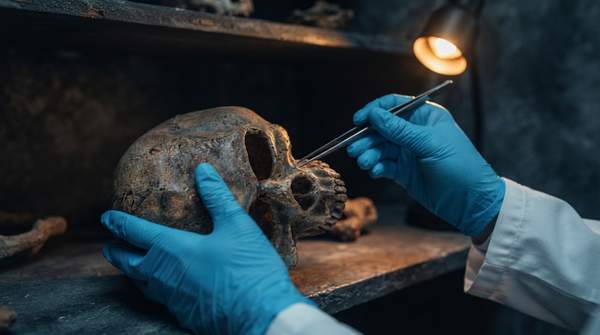
Paleofeces are ancient human feces that survive when conditions—dry caves, for instance—preserve them. For microbiologists, they are unusual gifts. Unlike bones or teeth, feces pass directly through the digestive tract, carrying with them a snapshot of the community of microbes living in the gut at that moment. The field of ancient human microbiomes has pursued several paths to reconstruct our ancestral microbial companions, including studies of dental calculus and of present-day rural peoples, but paleofeces offer the most direct readout of the gut itself.
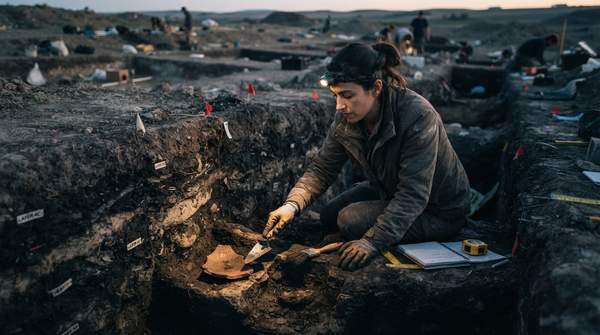
What makes these samples scientifically valuable is also what makes them difficult. Relatively little was known about the composition of pre-industrial gut microbiomes before this work, the Nature authors write, largely because well-preserved ancient fecal DNA is rare and contamination from soil microbes is a constant hazard. The eight samples in this study—ranging from 1,000 to 2,000 years old, from what is now the southwestern United States and Mexico—had sufficiently well-preserved DNA to permit deep genomic analysis.
The Science of Ancient Poop: How Paleofeces are Analyzed
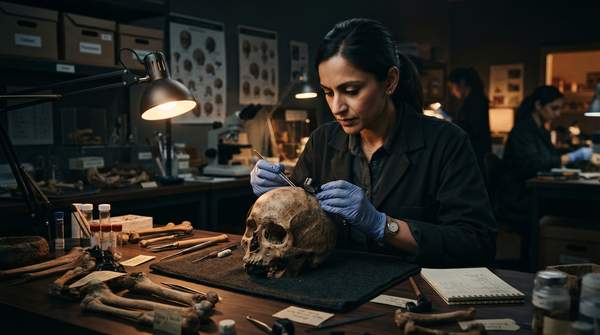
The process begins with authentication. Not every preserved coprolite is human, and not every preserved fragment preserves genuine ancient DNA. The research team first confirmed the samples' human gut origin, then worked with the DNA itself, which bears chemical signatures of age. Of the 498 reconstructed microbial genomes, 181 were classified as gut-derived and, as Dark Daily's report on the study describes, carried "extensive DNA damage, consistent with an ancient origin"—a hallmark that distinguishes truly ancient genetic material from modern contamination.
The genomes themselves were assembled through de novo metagenomic reconstruction—piecing together genomes directly from shotgun sequencing data without a reference template, recovering what are called metagenome-assembled genomes (MAGs) and species-level genome bins (SGBs). This approach, the Nature paper explains, is an emerging way to recover high-quality genomes, including species never before described. It effectively turns a fragmentary archaeological sample into a genomic catalog of an entire vanished microbial ecosystem.
Ancient vs. Modern Gut Microbiome: A Comparative View
Placing the reconstructed ancient genomes beside those of people living today reveals how far the industrialized gut has drifted. The table below juxtaposes the two, dimension by dimension, using the findings from paleofeces analysis.
| Dimension | Ancient Gut Microbiomes | Modern Industrialized Gut Microbiomes |
|---|---|---|
| Overall microbial diversity | Greater diversity, based on comparisons with present-day human gut samples. | Lower diversity, correlated with industrial lifestyles and associated with increased chronic disease incidence. |
| Presence of novel species | 39% of the 181 gut-derived ancient genomes showed evidence of being newly discovered species. | Many species common in ancient microbiomes are now rare or absent. |
| Antibiotic resistance markers | Absent from the ancient samples. | Commonly present, linked to widespread antibiotic use. |
| Prevalence of specific genera (e.g., Treponema) | Present in every paleofeces sample across all geographic sites studied. | Virtually unknown, even in present-day non-industrialized populations. |
Two rows deserve emphasis. First, the completeness of the Treponema finding: as the study's lead author Aleksandar Kostic told Science, the genus appears "in every single one of the paleofeces, across all the geographic sites. That suggests it's not purely diet that's shaping things." Second, the presence of a potentially commensal Treponema spirochete has also been documented in present-day rural peoples in Africa and South America, according to earlier microbiome research—though notably, Dark Daily reports it as virtually unknown even among most current non-industrialized people, suggesting these lineages were lost relatively recently.
The Lost Diversity: Implications for Modern Health
The comparison carries medical weight. As the Nature authors state in their abstract, the loss of gut microbial diversity in industrial populations is associated with chronic disease. Reporting on the study for Dark Daily, Jillia Schlingman notes that other research has linked lower gut bacterial diversity to higher rates of modern diseases including diabetes, obesity, and allergies. The study's authors suggest that over the past millennium, the human microbiome has lost dozens of bacterial species and become measurably less diverse—and, as Kostic bluntly put it, "These are things we don't get back."
It is worth being precise about what this does and does not establish. The disease connection is a correlation repeatedly observed in studies, not a proven causal chain, and the Nature paper frames the ancestral microbiome as a route to understanding human–microbiome symbioses that have become altered in the industrialized world—not as a prescription. Notably, too, the ancient samples lacked antibiotic resistance markers entirely, underscoring how recent an ecological force antibiotics have been. A separate curiosity also emerges from this literature: bacteria now considered pathogenic, such as H. pylori, may once have been routine members of pre-industrial guts.
Understanding Our Ancestral Guts: A Path to Future Health
The clear next step, and the one this body of work points toward, is that researchers should continue to explore ancient microbiomes to identify beneficial microbial species and metabolic functions that have been lost in modern populations. The paleofeces record establishes that the loss is real, quantifiable, and recent enough to have occurred within roughly the last millennium.
The measure of progress will be concrete: the identification and characterization of specific ancient microbial species or metabolic pathways that are rare or absent in modern industrialized populations. The 39% of gut-derived ancient genomes representing previously unknown species are the natural starting candidates. Each recovered genome is a data point in a census of what the human gut used to hold—and a template for what, in principle, it might one day hold again.