
Conservation
14 articles
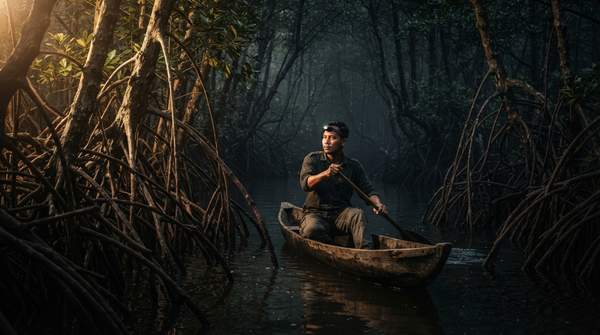
Southeast Asia's Mangroves: The World's Largest Blue Carbon Opportunity Meets Its Hardest Challenges
Southeast Asia's mangroves, holding one-third of the world's total, represent a critical blue carbon opportunity, functioning as a substantial net carbon sink. However, escalating threats from land conversion and policy implementation challenges hinder their full climate mitigation potential.
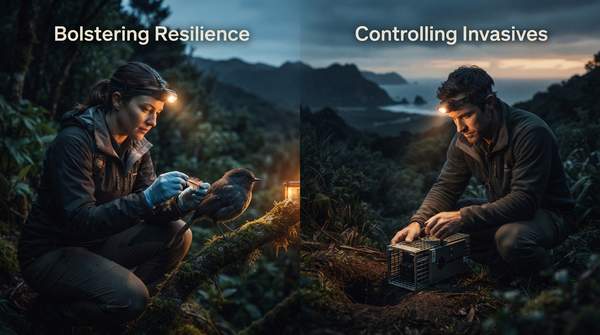
CRISPR's Two Paths in Conservation: Bolstering Resilience vs. Controlling Invasives
CRISPR gene-editing offers two distinct conservation strategies: enhancing endangered species' resilience or controlling invasive populations. Both approaches require careful evaluation of their unique ecological risks and ethical implications.

CRISPR-Cas9: Precision Gene Editing Beyond Human Therapeutics
CRISPR-Cas9 is a revolutionary genome editing technology offering unparalleled precision in modifying DNA sequences. Its applications extend far beyond human medicine, transforming agriculture, conservation efforts, and fundamental biological research.

What Are Keystone Species and Why Do They Matter for Ecosystems?
On Tatoosh Island, a tidal plain witnessed a drastic collapse.

What Are Deep-Sea Chemosynthetic Ecosystems and Why Do They Matter?
At temperatures exceeding 100°C, where water should boil, specialized Archaea like Pyrolobus fumarii not only survive but thrive, with an optimal growth temperature of 106°C, according to ScienceDirec

Scientists Discover New Deep-Sea Species in Indian Ocean Expedition
An expedition near Christmas and Cocos islands in the Indian Ocean has just unveiled 149 previously unknown marine species, alongside a 'Shark Tooth Graveyard' holding 1,000 teeth spanning 22 million

Environmental amnesia is erasing our connection to nature, threatening conservation efforts.
In Abu Dhabi, the International Union for Conservation of Nature (IUCN) congress is set to vote on a proposal to ban genetically modified wildlife, a decision that could shape the future of biodiversi

Underwater drone discovers resilient coral reef off West Africa
More than 175 feet beneath the waves off the coast of Benin, West Africa, a coral reef once considered dead for six decades has been rediscovered, alive and thriving.

What Are the Ethical Considerations of De-Extinction?
In 2003, a team of scientists embarked on a monumental task.

Whale Carcasses Fuel Pacific Seabed Life for 15+ Years, Study Shows
For 15 years, scientists have watched a whale carcass off Vancouver Island slowly shrink, its bones becoming a vibrant, enduring city for thousands of deep-sea organisms at a depth of 1,288 meters.

Biscayne Bay Ecosystems Face Intensifying Threats Despite Seagrass Recovery
In a bay increasingly defined by rising temperatures and acidity, Biscayne Bay's overall condition surprisingly improved from "poor" to "fair" in its 2026 Report Card, according to CBS News , even as

Koalas Crashed Once Before: Genomic Study Dates a 100,000-Year-Old Population Collapse
A genomic study reveals koalas suffered a severe population collapse around 100,000 years ago, driven by climate upheaval before humans arrived in Australia. Modern koalas descend from a single surviving population, and understanding this ancient history is key to addressing current human-caused threats.

Santa Rosa Island fire impacts 18,379 acres of rare ecosystems
The Santa Rosa Island fire, which scorched a verified 18,379 acres, passed directly through the island's stronghold of rare Torrey pine trees, thereby threatening a species found almost nowhere else o

Scientists discover multiple new ocean species on deep-sea expeditions
Since last April, the Ocean Census project alone has identified 1,121 previously unknown ocean species, tearing back the veil on a hidden world far beyond our current understanding.