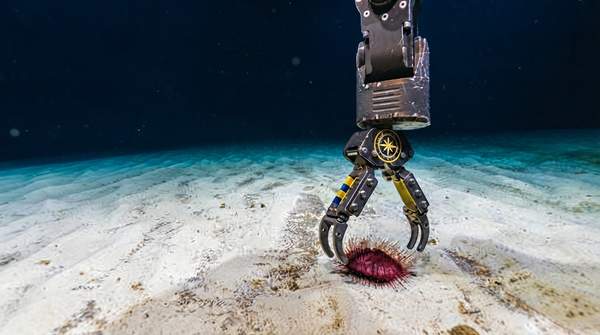
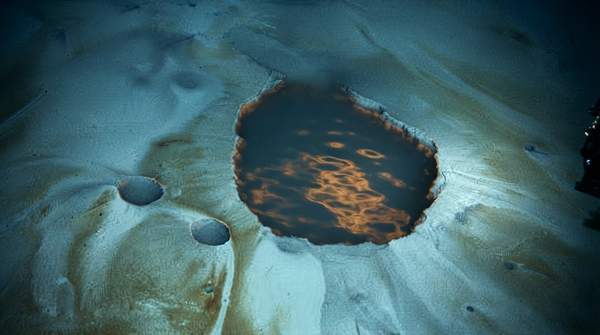
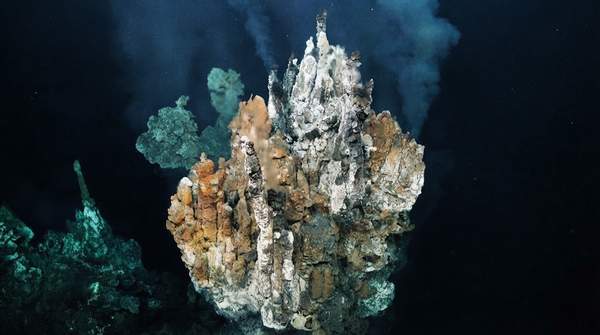
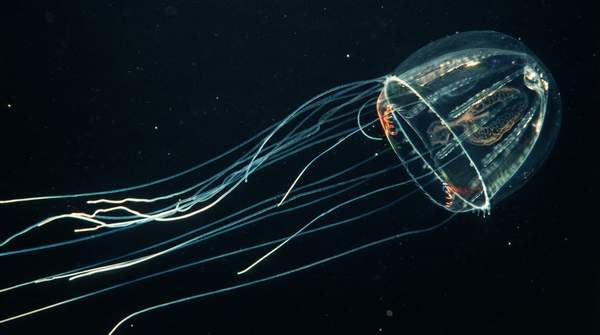
An expedition near Christmas and Cocos islands in the Indian Ocean has just unveiled 149 previously unknown marine species, alongside a 'Shark Tooth Graveyard' holding 1,000 teeth spanning 22 million years. This biological richness defies imagination. Yet, its continued existence hangs in a precarious balance: humanity uncovers ancient secrets while simultaneously facing the imminent loss of untold biodiversity. Scientists are rapidly discovering hundreds of new deep-sea species, but these same fragile ecosystems are under increasing threat from human activities like mining and climate change. This is a harrowing race; our understanding is outpaced by environmental degradation. Without urgent conservation and continued exploration, a significant portion of Earth's undiscovered deep-ocean biodiversity risks being lost before it can even be understood.
Unveiling Life in the Abyss
Researchers identified 149 previously unknown marine species during a deep-sea expedition near Christmas and Cocos islands, surveying unexplored seamounts from 94 to 5,431 meters deep, according to Mongabay. Among these, 24 new species of deep-sea crustaceans were confirmed, as reported by Nhm Ac Uk. These findings reveal life thriving in extreme conditions, suggesting the deep ocean harbors an unimaginably vast, largely undocumented biodiversity, far exceeding current scientific estimates.
A Glimpse into Ancient Oceans
At 'The Shark Tooth Graveyard,' 1,000 shark teeth were discovered, spanning over 22 million years of evolution, according to Mongabay. This unique site offers an unprecedented window into ancient marine ecosystems, revealing secrets from millions of years ago. Such a graveyard proves the deep ocean's historical stability as an evolutionary cradle. Its current rapid degradation by human activity is an unprecedented, potentially irreversible disruption to millions of years of natural processes.
The Race Against Time
The urgency to explore deep-sea ecosystems intensifies with threats from warming oceans, pollution, overfishing, and deep-sea mining, as reported by Mongabay. These human pressures threaten fragile, remote environments before we can even understand them. We are not just losing biodiversity; we are actively erasing entire branches of the tree of life before they are named, fundamentally undermining our understanding of Earth's ecosystems.
Charting the Future of Deep-Sea Discovery
Continued expeditions are crucial, not just for cataloging new species, but for informing policy to protect these vulnerable habitats. The simultaneous unveiling of ancient evolutionary records like 'The Shark Tooth Graveyard' and the immediate threats from deep-sea mining and warming oceans reveals a profound ethical failure: prioritizing short-term resource extraction over irreplaceable natural heritage and future scientific discovery. By 2030, numerous deep-sea expeditions, like those by the Schmidt Ocean Institute, are projected to be critical to document biodiversity before rising ocean temperatures and proposed deep-sea mining operations accelerate species loss.