Quantum computing is not a single, monolithic technology but a field with two principal and fundamentally different approaches: the universal gate-based model and the specialized quantum annealing model. While both leverage the strange and powerful principles of quantum mechanics, their core operational methods diverge significantly. This split determines the types of problems each can effectively solve, making one a targeted tool for complex optimization and the other a more flexible, though currently less mature, platform for general computation. For companies and researchers exploring real-world quantum applications, understanding this distinction is the critical first step toward choosing the right hardware and approach for a given challenge.
Core Operational Principles: Finding the Lowest Point vs. Following a Recipe
The profound differences between quantum annealing and gate-based computing begin with their physical operating principles. Quantum annealing is an analog process designed to find the lowest energy state in a complex system, which corresponds to the optimal solution of a problem. This method is governed by the adiabatic theorem, a fundamental principle in quantum mechanics. According to a paper on quantum annealing applications, the process begins by preparing a system of qubits in an easy-to-solve initial configuration, or Hamiltonian. From there, external magnetic fields slowly and continuously evolve the system into a final, complex Hamiltonian whose lowest energy state—its ground state—encodes the solution.
A key mechanism in this evolution is quantum tunneling, which allows the system to pass through energy barriers to find a global minimum, rather than getting stuck in a local one. This contrasts with classical methods that must laboriously "climb" over these barriers.
In sharp contrast, gate-based quantum computing is a procedural, step-by-step digital approach. It relies on the coherent evolution of a quantum state through a sequence of discrete operations known as quantum logic gates. Much like classical computer programming, a developer defines a precise sequence of these gates to create an algorithm. These abstract instructions are then translated by a compiler into physical pulses, such as microwave bursts or lasers, that precisely alter the state of the qubits. Each quantum logic gate is represented mathematically as a unitary matrix, a type of transformation that preserves the quantum state's integrity. This model is designed to be universal, meaning a small set of basic gate types can be combined to construct any possible quantum operation, allowing it to run a vast range of algorithms.
Comparative Explanatory Model of Quantum Computing Paradigms
| Feature | Quantum Annealing | Gate-Based Quantum Computing |
|---|---|---|
| Operational Principle | Finds the lowest energy state (global minimum) of a system using adiabatic evolution and quantum tunneling. | Transforms a quantum state step-by-step using a predefined sequence of quantum logic gates, which are unitary transformations. |
| Computational Process | The system naturally evolves toward its ground state, which is engineered to represent the optimal solution to an optimization problem. | Executes a specific, pre-written algorithm composed of sequential gate operations on qubits to reach a final state representing the solution. |
| Problem Type Suitability | Specialized for solving complex optimization problems, machine learning, and physical simulations. | Universal, designed to be capable of running any quantum algorithm, including those for cryptography (Shor's) and search (Grover's). |
| Hardware Maturity | More mature for near-term, real-world applications. Systems are less susceptible to noise, allowing for more qubits. | Less mature for practical applications due to significant challenges with qubit reliability, environmental noise, and error correction. |
Quantum Annealing's Niche: The World of Optimization
Quantum annealing's unique design makes it a natural fit for a specific but crucial class of computational tasks: optimization problems. The primary goal of an annealer is to find the optimal solution among a vast number of possibilities by minimizing an energy function. This capability has direct applications in fields where finding the best configuration is paramount. For example, researchers are exploring its use in logistics to determine the most efficient delivery routes, in financial modeling to construct ideal investment portfolios, and in drug discovery to identify the most stable molecular structures. As the hardware improves and algorithms mature, quantum annealing is positioned to become a valuable tool in industries where classical methods struggle with the sheer scale and complexity of the problem space.
However, this specialization comes with a significant limitation that defines its role in the broader quantum ecosystem. Quantum annealers are not universal quantum computers. Their narrower applicability means they cannot execute many of the most famous and powerful quantum algorithms. For instance, a research paper on the topic explicitly notes that a quantum annealer is unable to run Shor’s algorithm for factoring large numbers. This particular algorithm is a key driver for the development of gate-based systems because of its potential to break modern cryptographic standards. The inability to perform such tasks confines annealing to its optimization niche, preventing it from being a general-purpose computational device.
Current Hardware Readiness and Performance Benchmarks
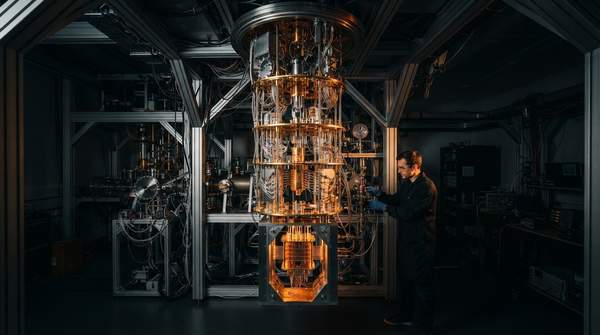
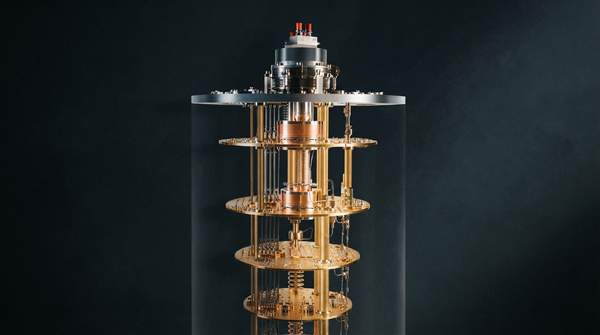
The theoretical differences between the two models are starkly reflected in the practical maturity of their respective hardware. Gate-based quantum computers, developed by companies like IBM, Google, and Intel, face substantial engineering hurdles. These devices require extremely low temperatures to function, and building reliable, high-fidelity qubits that can be scaled into large, interconnected chips remains a major challenge. According to technical analyses, the susceptibility of these systems to environmental noise is a primary obstacle to achieving fault-tolerant quantum computation, where errors can be corrected faster than they occur.
Quantum annealers, while also complex, are generally considered less susceptible to noise, which has allowed them to incorporate more qubits and tackle specific problems sooner. A direct comparison of the two approaches on a tile placement problem highlights this performance gap. In a benchmark study, researchers applied both a D-Wave quantum annealer and an IBM gate-based machine to the same task. The study reported that quantum annealing on D-Wave's hardware successfully produced usable results, significantly outperforming a classical brute-force search by completing the task in 0.137 seconds versus 14.8 seconds.
In contrast, the researchers found that the gate-based Grover's algorithm on IBM's hardware was "dominated by noise and failed to yield solutions." While the D-Wave results did exhibit a "hardware-induced bias" where not all equally optimal solutions appeared with the same probability, the findings led the study's authors to suggest that for near-term engineering applications, quantum annealing shows more immediate promise.
Deciding Between Quantum Annealing and Gate-Based Computing
For immediate, specialized applications in complex optimization problems, quantum annealing offers a more mature and potentially competitive solution. Its design is purpose-built for finding optimal configurations, and current hardware has demonstrated a practical advantage over both classical methods and today's noisy gate-based systems for a limited set of real-world problems. For broader, universal quantum computational tasks, gate-based quantum computing remains the long-term goal, despite its current hardware limitations. Its inherent flexibility promises to unlock a wider range of applications, from cryptography to materials science, once the significant engineering challenges of qubit stability and error correction are overcome.
The continued release of benchmark results comparing D-Wave's quantum annealers with classical solvers for specific optimization tasks will be a key indicator of annealing's evolving practical value. For the gate-based model, the measurable next development to watch is the progress in qubit count, coherence times, and error rates for systems from providers like IBM, which will signal their readiness for the era of fault-tolerant, universal quantum computation.
Sources
- Gate-based Quantum Computing vs Quantum Annealing — QUICS — Quantum Innovation and Computing for SMEs
- Quantum annealing applications, challenges and limitations for optimisation problems compared to classical solvers - PMC
- Quantum Annealing: Revolutionizing Problem Solving — Bluequbit
- What Is Gate-Based Quantum Computing? Importance & Challenges — QUERA
- Anastasia Marchenkova
- MEDIUM
- Cambridge