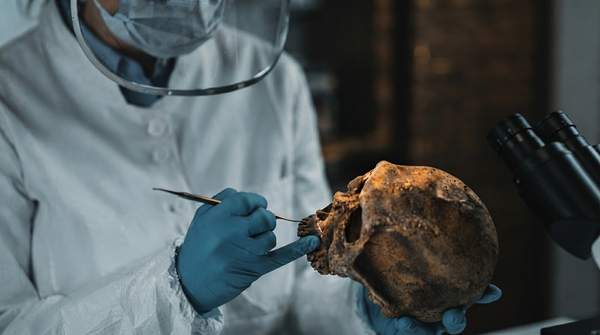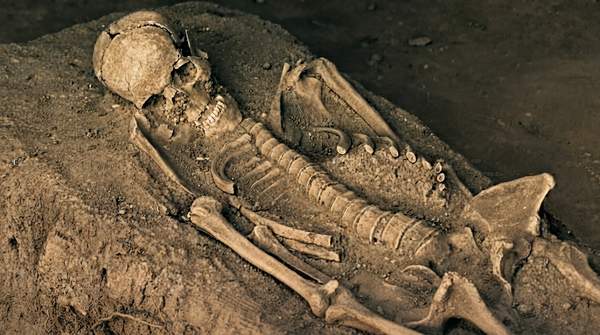
Ancient DNA (aDNA) analysis has revolutionized our understanding of prehistoric human migration patterns and population dynamics, offering a direct window into the past that modern genetic studies can only approximate. By examining genetic material preserved in ancient remains, researchers can reconstruct migration events, identify admixture pulses, and trace population replacements that have left little to no discernible trace in contemporary genomes.
This field provides time-stamped genetic evidence, allowing us to directly document the genetic identity of populations that no longer exist and track the spread of specific lineages across millennia. The methodologies involved are highly specialized, designed to overcome the unique challenges posed by ancient genetic material, from its degraded state to potential contamination.
The Power of Ancient DNA in Reconstructing Human History
Ancient genomes offer direct, time-stamped genetic evidence that provides a more precise reconstruction of human population history than inferences drawn solely from modern DNA. This direct evidence has been transformative, revealing migration events, admixture pulses, and population replacements that were previously ambiguous or undetectable through modern genetic analysis alone, as noted by CD Genomics. The ability to document the genetic identity of extinct populations and track lineage spread across centuries is a core strength of aDNA research.
Researchers utilize these methods to uncover patterns of human mobility, integrating genetic findings with archaeological and historical data for a more nuanced understanding of our past. This interdisciplinary approach helps to retrace migration routes, places of origin, and the local and global ancestries of past populations, according to an article in PMC.
Unique Characteristics and Challenges of Ancient DNA
Ancient DNA presents distinct characteristics that necessitate specialized handling and analytical techniques. As CD Genomics highlights, aDNA is typically found in short fragment lengths, often exhibiting oxidative damage and post-mortem cytosine deamination, which results in C-to-T substitutions. These factors mean that genuine ancient genetic material is present in minute quantities and is highly degraded.
The inherent fragility and scarcity of aDNA make it particularly susceptible to contamination from modern DNA, whether from researchers, environmental microbes, or even later human contact with the remains. Distinguishing authentic ancient sequences from contaminants is a critical challenge that must be addressed at every stage of the analysis to ensure the reliability of findings.
Specialized Laboratory Preparation: From Sample to Library
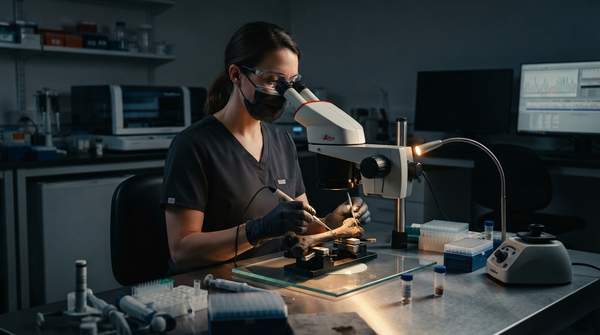
Given the degraded nature of ancient DNA, specialized laboratory techniques are crucial for maximizing the recovery of usable genetic material. One of the most significant advancements is single-stranded DNA (ssDNA) library preparation. This method, as described by CD Genomics, is particularly effective because it can recover significantly more endogenous DNA from highly degraded samples compared to traditional double-stranded protocols.
The process involves denaturing the DNA into single strands, followed by the ligation of adapters and subsequent amplification. This approach is vital for capturing the short and damaged fragments characteristic of aDNA, which might otherwise be lost. These specialized preparation steps are fundamental to obtaining sufficient genetic material for meaningful sequencing and analysis.
Sequencing and Authentication of Ancient DNA
After library preparation, the ancient DNA samples undergo shotgun sequencing to provide genome-wide coverage. For samples with very low endogenous DNA content, target capture enrichment may be preferred to focus sequencing efforts on specific genomic regions. However, sequencing alone is not enough; authentication is a non-negotiable quality control step in any aDNA study, according to CD Genomics.
Authentication is critical for differentiating genuine ancient DNA from modern contamination. A key signature of aDNA damage is an increased frequency of C to T transitions, particularly at the ends of DNA reads. Bioinformatic tools like mapDamage 2.0 are used to quantify these damage patterns and rescale base quality scores, helping to distinguish true ancient genetic signals from sequencing errors caused by degradation. This process ensures that the data analyzed accurately reflects the ancient genome rather than modern contamination.
Ancient DNA Analysis Workflow for Migration Studies
The following framework outlines the sequential steps and critical considerations in ancient DNA analysis, from sample characteristics to bioinformatic interpretation, specifically for reconstructing human migration and admixture.
| Stage of Analysis | Key Method/Tool | Purpose/Application | Challenges Addressed |
|---|---|---|---|
| Sample Characteristics | Nature of aDNA | Ancient DNA is highly degraded, fragmented, and present in minute quantities, often with chemical modifications like cytosine deamination. | These characteristics necessitate specialized handling and analysis techniques. |
| Laboratory Processing | Single-stranded DNA (ssDNA) Library Preparation | This technique recovers short or damaged DNA fragments that traditional methods miss, significantly increasing usable aDNA yield. | It involves denaturing DNA into single strands, followed by adapter ligation and amplification. |
| Sequencing | Authentication | Authentication is crucial to differentiate genuine aDNA from modern contamination, often by checking for characteristic damage patterns. | Increased C to T transitions at read ends are a common signature of aDNA damage. |
| Bioinformatic Analysis | mapDamage | mapDamage is used to analyze and account for aDNA damage patterns, such as C to T transitions, which are critical for authentication and accurate variant calling. | This tool helps distinguish true ancient genetic signals from sequencing errors caused by degradation. |
| Bioinformatic Analysis | D-statistics (ABBA-BABA test) | D-statistics detect admixture by measuring the excess sharing of alleles between two populations relative to a third, indicating gene flow. | It is a powerful tool for identifying gene flow between populations. |
| Bioinformatic Analysis | f-statistics (f3, f4) | f-statistics infer population relationships, identify shared ancestry, and quantify admixture proportions, being central to admixture graph tools. | These statistics are fundamental for constructing admixture graphs and testing hypotheses about population splits and mergers. |
| Application | Reconstructing Human Migration | Ancient DNA, through these methods, provides direct, time-stamped genetic evidence to reconstruct prehistoric human migration patterns. | This direct evidence reveals migration events and population replacements previously undetectable by modern DNA alone. |
| Application | Understanding Population Admixture | Admixture-based techniques using aDNA, combined with anthropological data, help identify population admixture events and genetic diversity. | Ancient genomes have revealed admixture pulses that were previously poorly understood. |
Bioinformatic Analysis: Decoding Genetic Footprints
Once sequenced and authenticated, ancient DNA data enters a sophisticated bioinformatic pipeline. Core tools, as outlined by CD Genomics, include BWA for aligning short reads to a reference genome, often with parameters adjusted for aDNA's unique characteristics. Following alignment, mapDamage 2.0 is again employed for damage quantification and base quality rescaling, which is essential for accurate variant calling, especially in low-coverage ancient genomes.
Other tools like ANGSD are used for genotype likelihood-based population genetic analysis. For classifying non-target reads and estimating contamination, MEGAN provides taxonomic profiling. These initial bioinformatic steps are crucial for cleaning the data and preparing it for more complex population genetic analyses, ensuring that the genetic footprints are accurately decoded.
Inferring Migration and Admixture with Population Genetic Statistics
To infer prehistoric human migration routes and population admixture events, researchers rely on specific population genetic statistics. D-statistics, also known as the ABBA-BABA test, are powerful tools for detecting admixture by measuring the excess sharing of alleles between two populations relative to a third, thereby indicating gene flow. This helps identify instances where populations have mixed genetically.
F-statistics, including f3 and f4 statistics, are central to inferring population relationships, identifying shared ancestry, and quantifying admixture proportions. These statistics are fundamental to admixture graph tools, which model complex population histories involving splits, mergers, and gene flow. By applying these statistical methods to ancient DNA data, researchers can test hypotheses about past population movements and genetic mixing, providing quantitative evidence for migration and admixture events, as discussed in PMC.
Applying Ancient DNA to Uncover Human Mobility
Ancient DNA analysis, utilizing specific laboratory and bioinformatic methods, provides direct evidence to reconstruct prehistoric human migration and population admixture events, overcoming limitations of modern DNA inference. It is important to note that all aDNA analyses described here are for research use only and are not intended for clinical or forensic diagnostic applications.
Researchers and students can confidently interpret findings from ancient DNA studies on human migration and admixture by understanding the specific laboratory and bioinformatic methodologies employed. The continued publication of new ancient DNA studies that refine or challenge existing models of human population history, particularly those detailing specific migration routes or admixture events, will indicate the ongoing impact and evolution of these methods.